
Categories
For Real Estate Pros Industry News

Non-Warrantable Condo: Why Fannie & Freddie Say No

TL;DR: The March 2026 condo rule changes from Fannie Mae and Freddie Mac (Lender Letter LL-2026-03) make condos easier to finance in three ways and harder in two. A non-warrantable condo is a building the agencies won’t finance, and the two tightening changes will push more buildings into that bucket starting August 3, 2026. Before you list a condo or write an offer, send me the project name, city, and state and I’ll tell you exactly where it stands.

What is a non-warrantable condo?

We’re all used to checking whether a condo is FHA approved. That part hasn’t changed: FHA still keeps a public approved-condo list. If the project isn’t on it, an FHA loan is off the table unless you pursue a single-unit approval. (Worth knowing when you’re weighing FHA vs conventional for a buyer.) But more and more frequently the bigger problem isn’t FHA. It’s that Fannie Mae and Freddie Mac are disapproving condo buildings for conforming loans.

A non-warrantable condo is a project that doesn’t meet Fannie or Freddie eligibility, so the agencies won’t buy a loan secured by a unit in it. When that happens, conventional financing dries up for every unit owner in the building, not just one borrower. A condo can be non-warrantable for a long list of reasons. Too much commercial space, one entity owning too many units, litigation against the HOA, pending special assessments, underfunded reserves, low owner-occupancy on a prior-standard file, or insurance that misses the HOA master-policy requirements. Fail one criterion and the whole project is out.

Here’s the part that catches agents off guard: a building can look perfectly normal, sell fine last year, and still be non-warrantable today. The borrower’s credit and down payment don’t fix it. The project itself has to qualify.

3 ways condos are getting easier (and 2 ways they are getting harder)

On March 18, 2026, Fannie Mae issued Lender Letter LL-2026-03 and Freddie Mac issued a matching bulletin. These are the most significant changes to condo underwriting since the agencies started tightening after the Surfside collapse in 2021. The simplest way to hold it all in your head: condos get easier to finance in three ways, and harder in two. Three of the changes are already live. The two that tighten things arrive on set dates you can put on your calendar.

Easier: 3 changes that took effect immediately

All three of these are already in force, and each one puts buildings back in play that conventional financing had shut out:

  • 1. Investors can buy again. The old rule required 50% owner-occupancy for an investment-property loan under full review on an established project. That threshold is gone. It unblocks a lot of urban and rental-heavy buildings.
  • 2. Insurance requirements loosened. Lenders can now lean on Guaranteed Replacement Cost or Extended Replacement Cost to satisfy coverage sufficiency. Inflation guard is no longer required, and roofs and certain property qualify on an actual-cash-value basis. Buildings the agencies previously flagged “unavailable for lending” over insurance can return to eligible.
  • 3. More projects qualify with less red tape. Waiver of Project Review now reaches established condo projects with 10 or fewer units (no master association, no condotel activity). And Florida new construction no longer needs mandatory PERS submission, so lenders can review those projects under standard new-construction review types.

So if you’ve got a deal that died on a condo last year over insurance or investor mix, it’s worth a second look. It may be financeable now. The two changes below cut the other way.

Condo building with 2026 Fannie Mae and Freddie Mac rule-change deadline illustration
The 2026 condo rule changes arrive on set dates — August 3, 2026 and January 4, 2027.

Harder: 2 changes coming on set dates

Both of these tighten the screws, and both land on dates you can put on the calendar right now:

  • 1. Limited Review goes away — August 3, 2026. For loan applications dated on or after that day, Fannie and Freddie eliminate Limited and Streamlined Review for established projects with more than 10 units. Every one of those loans moves to Full Review.
  • 2. Reserves get stricter — August 3, 2026 and January 4, 2027. Starting August 3, lenders must use the highest recommended reserve allocation in the study, not a baseline number. Then on January 4, 2027, the minimum annual reserve contribution rises from 10% to 15% of budgeted assessment income.

The first one is the gut punch. Limited Review was the fast lane: if a buyer put enough down (often 10% on a primary), the lender could approve the loan by verifying basic property and insurance data without digging into the association’s full financials. Industry estimates put 40% to 65% of current condo loans in that lane. Closing it means more documentation, more HOA paperwork, and longer underwriting on a huge share of condo files. The borrower’s down payment no longer changes that.

It also costs more. Full Review leans on a full lender condo questionnaire completed by the HOA or its management company, and those carry a fee the buyer usually pays. A standard or limited questionnaire often runs around $75 to $150, but the full lender version typically lands in the $200 to $350 range, and sometimes higher, with rush fees of $50 to $100 on top if the file is on a clock. Many associations route these through third-party providers like CondoCerts or their management company, so the cost and the turnaround are out of your hands once the request goes in. With Limited Review gone, more files will trigger that full questionnaire, which means more upfront cost and more waiting on the association before a deal can close.

The reserve changes hit the building, not the borrower. For a lot of HOAs, getting to 15% means an owner vote and higher dues. Read all of this as a timeline, not a checklist. A condo that sails through in spring 2026 may need more documents by late summer and may stumble on reserves in early 2027. The same building, three different answers depending on the application date.

Mortgage broker comparing non-QM condo loan options at a desk
As a broker, non-QM and portfolio options can finance condos that conventional loans can’t.

How do you check if a condo is warrantable before you list it?

You don’t have to guess. Send me the condo name, city, and state of any project you’re about to list or that your buyer is eyeing. I’ll look up its status. We can catch a non-warrantable problem early instead of three days before closing. It’s the same reason I tell agents to vet a pre-approval up front.

And here’s why I’m a broker and not a single-bank loan officer: when Fannie and Freddie say no, I’m not done. I work with tens of lenders that have non-QM condo products with different rules, different options, and different pricing. A building that’s non-warrantable for conventional financing is often perfectly financeable elsewhere. A portfolio or non-QM lender underwrites the project differently. That’s the whole point of having options. One door closes, I’ve got a dozen more to try for your client.

FAQ

What is the difference between a warrantable and non-warrantable condo?

A warrantable condo meets Fannie Mae and Freddie Mac project eligibility, so it qualifies for conventional financing. A non-warrantable condo fails one or more of those criteria, so the agencies won’t back a loan on it. Non-warrantable units typically need a portfolio or non-QM loan instead, often with different down payment and pricing terms.

Does a bigger down payment fix a non-warrantable condo?

No. As of August 3, 2026, the end of Limited Review means a larger down payment no longer replaces a full project review. Approval depends on whether the condo project meets Fannie and Freddie standards, not just the borrower’s equity or credit strength.

Can you still get a loan on a non-warrantable condo?

Yes, often through a non-QM or portfolio lender. These lenders underwrite the project under their own guidelines instead of Fannie or Freddie rules. As a broker I work with many of them, so a building that’s off-limits for conventional financing can still have a path. Terms and pricing vary by lender and project.

Is a non-warrantable condo the same as a condo that isn’t FHA approved?

No. FHA approval is a separate HUD list for FHA loans. “Non-warrantable” refers to Fannie Mae and Freddie Mac conventional eligibility. A condo can be FHA approved but non-warrantable for conventional, or the reverse, so check both depending on the loan type.

If you have a client weighing a condo and you’re not sure where the building stands, send the project my way and I’ll check it before it costs anyone a contract.


Don’t just take my word on condo financing

If you want a read on how I work with clients before sending one my way, here’s where past borrowers and partners have weighed in:

Reviews on Mortgage Matchup ↗ Reviews on Google ↗

Follow along:


Categories
For Financial Advisors & CPAs Mortgage Education Reverse Mortgages

Reverse Mortgage Principal Limit: HECM and Proprietary

TL;DR: The reverse mortgage principal limit is the percentage of your client’s home value they’re allowed to borrow against. For a HECM, only two inputs matter to ballpark it: the youngest borrower’s age and the home value. No credit pull, no income docs, no tax returns. Proprietary reverse mortgages follow the same logic but stretch the limits for higher-value homes. If you can ask the age and a Zillow estimate, you can tell a client in 30 seconds whether the math is worth a real conversation.

What the reverse mortgage principal limit actually is

The reverse mortgage principal limit is the dollar amount your client is allowed to draw, in total, against the equity in their home. Think of it as the borrowing ceiling. It’s expressed as a percentage of home value (HUD calls that the principal limit factor, or PLF), and it gets set up front based on two inputs: the age of the youngest borrower and the home’s appraised value. That’s it. No credit score, no W-2s, no DTI calculation just to see if the deal pencils.

This is the part that surprises advisors and CPAs the most. We can run a real, useful first-pass conversation with a client based on age and a property estimate. If the math doesn’t work, we know in five minutes and nobody wastes anyone’s time. If it does work, then we move into the actual application — financial assessment, counseling, the works. (For condo clients specifically, there’s also a separate HOA checklist worth walking through before the principal limit conversation gets very far.)

Row of potted plants growing progressively larger labeled Year 1 through Year 20, illustrating how an unused HECM line of credit grows over time

How HECM principal limits get calculated

For a Home Equity Conversion Mortgage — the FHA-insured product most reverse mortgage clients end up in — the principal limit factor comes from a HUD-published table. Two variables feed it:

  • Age of the youngest borrower (or non-borrowing spouse). Older = higher PLF. A 62-year-old gets a lower percentage than an 82-year-old, because the loan is expected to compound over fewer years.
  • Expected interest rate. Lower expected rates mean a higher PLF. Higher rates compress the percentage your client can access.

The home value matters too, but it’s not in the PLF formula itself — it’s the multiplier. The PLF is a percentage; the home value (capped at the FHA lending limit, currently $1,249,125 for 2026) is what it gets multiplied by. So a 75-year-old with a $600,000 home and a 70-year-old with a $600,000 home get different dollar amounts even though the home value is identical.

One nuance worth knowing: HUD revises the PLF tables when interest-rate conditions shift materially. The percentages aren’t static. What looked like a 50% PLF for a borrower last year might be a few points different now. We always quote off current numbers, never a stale table.

Where proprietary reverse mortgages change the math

Proprietary reverse mortgages — sometimes called jumbo reverse mortgages — are the lane for clients whose home value exceeds the HECM lending limit. They’re privately insured (not FHA-backed), and the principal limit math gets recalibrated for higher property values.

Three things shift:

  • The home value ceiling lifts. Some proprietary products go up to $4 million or more in eligible value. The HECM cap of $1,249,125 disappears.
  • Minimum age may drop. A few proprietary products go down to age 55 instead of 62. Useful for clients still working but planning a retirement transition.
  • The PLF curve looks different. Each proprietary investor sets its own table. Some are more generous than HECM at the high end; others are more conservative. Always quote both side by side when the home value is in the overlap zone.

For a $1.8 million home owned by a 70-year-old, the HECM caps out using the FHA lending limit — the borrower’s home value above $1,249,125 effectively doesn’t count. A proprietary product can underwrite against the full value. That gap is the entire reason proprietary exists.

Retired couple toasting wine at sunset on a waterfront deck with travel maps and passports on the table, illustrating what clients do with reverse mortgage proceeds

Why this is a low-friction first conversation for your client

If you have a client who’s curious whether a reverse mortgage solves something — paying off an existing forward mortgage, opening a standby line of credit, funding long-term care without selling appreciated assets, or funding the renovations that let them age in place — the first question isn’t “will they qualify.” It’s “do the numbers work.”

Because the principal limit calculation skips credit and income, we can answer that question without pulling credit, without asking for tax returns, and without the client feeling like they’ve started an application they can’t back out of. Two pieces of info, one phone call, and your client knows whether to keep going.

The three questions I usually get back from advisors after that first conversation:

  1. Can the principal limit pay off the existing mortgage with room to spare? (If yes, monthly payment obligation goes away.)
  2. What does the line of credit look like five or 10 years out, given the growth feature on unused HECM credit? (Most advisors are surprised by this number.)
  3. Does it make sense to set this up now, before rates or HUD tables move, even if the client doesn’t need to draw yet?

None of those need a credit pull to answer at the napkin-math stage.

What your client receives with a principal limit estimate

When I run a principal limit, the client doesn’t get a wall of numbers — they get an interactive presentation built around their own scenario. The fastest way to understand what that looks like is to see one. Here’s a fully interactive example built on a sample scenario (a 71-year-old borrower, ~$869K home):

View the example HECM presentation →

It walks through the gross principal limit and how it’s derived, what gets paid off at closing, the line of credit that’s left over, and — the part advisors tend to linger on — a slider that shows how the unused line of credit grows year by year. There’s also a build-your-own amortization tool where you can model draws, voluntary payments, and different appreciation assumptions across 30 years. That’s the same output your client gets, personalized to their age, home value, and existing mortgage.

What to send me to get a real number

If you want me to run a principal limit for a client, send three things and I’ll have a quote back same day:

  • Date of birth of the youngest borrower (and non-borrowing spouse if applicable)
  • Estimated home value (Zillow, Redfin, or recent appraisal — we’ll order a real appraisal later)
  • Approximate balance on any existing mortgage

That’s the full intake to get a written principal limit estimate, an amortization, and a line-of-credit projection — delivered as an interactive presentation like the example above. The full application — counseling certificate, financial assessment, title work — only happens after the client sees the numbers and wants to move.

FAQ

What is the principal limit on a reverse mortgage?

The principal limit is the maximum amount a reverse mortgage borrower can draw against their home’s equity. For a HECM, it’s calculated as a percentage of the home value (the principal limit factor, or PLF) based on the youngest borrower’s age and the expected interest rate. The home value used is capped at the FHA lending limit, currently $1,249,125 for 2026.

Does a reverse mortgage require a credit check?

Not to calculate the principal limit. We can quote a number based on age and home value alone. Credit and income come into play later, during the financial assessment step of the full HECM application — but only after the client has seen the numbers and decided to move forward.

How is a proprietary reverse mortgage different from a HECM?

A HECM is FHA-insured and capped at a home value of $1,249,125 for 2026. A proprietary reverse mortgage is privately insured, often allows home values up to $4 million or more, and may start at age 55 instead of 62. The principal limit percentages differ between products, so for high-value homes it’s worth quoting both side by side.

What age does a borrower need to be to qualify for a reverse mortgage?

62 for a standard HECM. Some proprietary reverse mortgages go down to 55. The youngest borrower (or non-borrowing spouse) determines which age is used for the principal limit calculation.

Why does the principal limit go up with age?

The loan compounds over the borrower’s remaining time in the home. An older borrower has a shorter expected horizon, so HUD’s PLF tables let them borrow a larger share of equity up front without the loan balance running past the home value over time.

If you have a client weighing a reverse mortgage and you want a real principal limit before recommending anything, send me their age, the home value, and the existing mortgage balance. Same-day turnaround on a written quote.

If you have a client weighing a reverse mortgage and want to read how I work with referral partners before sending one my way, here’s where past borrowers and partners have weighed in:

Reviews on Mortgage Matchup ↗ Reviews on Google ↗

Follow along:


Categories
Mortgage Education

VantageScore Mortgage: Why Credit Karma Scores Finally Matter

VantageScore mortgage approvals are here. Fannie Mae, Freddie Mac, and lenders like UWM now accept VantageScore 4.0 on conventional loans. Brokers can pull both FICO and VantageScore on the same credit report and use the higher of the two. That means the Credit Karma score your client checks on their phone is finally relevant to their home loan — and for borrowers near a pricing tier breakpoint, with thin files, or with old medical collections, it can change qualifying and rate.

The “but Credit Karma says…” conversation just changed

If you’ve worked with buyers for any length of time, you know the conversation. I pull credit, I give them their score, and they say: “Wait — Credit Karma says I’m a 740.” Then I explain that FICO and VantageScore are two different scoring systems, and Fannie and Freddie don’t use VantageScore for mortgage lending.

That second part isn’t true anymore. This year, Fannie Mae and Freddie Mac validated VantageScore 4.0 for mortgage lending. UWM — along with a short list of other approved lenders — now pulls both FICO and VantageScore on every credit report. Brokers use whichever score gives the borrower a better outcome. No extra cost. No extra steps.

This is genuinely new. Only a handful of lenders have it right now, and the broker channel got it first. So when your client asks why their Credit Karma score doesn’t match the lender’s score, the answer is no longer “they’re different systems and we don’t use that one.” The answer is now “we can use that one — and there are real situations where it’ll help.”

What is a VantageScore, and why is it different from FICO?

VantageScore is a credit scoring model the three credit bureaus — Equifax, Experian, and TransUnion — built as a competitor to FICO. The current version is VantageScore 4.0. It uses the same 300-850 range as FICO, but it weighs the underlying credit factors differently and includes a few things FICO doesn’t.

Three differences that matter for your clients:

  • Trended data. VantageScore 4.0 looks at up to 24 months of balance and payment patterns, not just a snapshot. A borrower paying balances down over time looks better than the same balance held flat.
  • Thinner files score. FICO needs at least six months of credit history to generate a score. VantageScore can score someone with as little as one month of credit activity. That matters for younger buyers, recent immigrants, or anyone rebuilding.
  • Medical collections don’t count. VantageScore 3.0 and 4.0 ignore medical collection accounts entirely, regardless of amount or whether the borrower paid them. The mortgage-specific FICO models we’ve used for decades — Equifax Beacon 5.0, Experian/Fair Isaac V2, TransUnion Classic 04 — treat a medical collection the same as a credit card charge-off.

That last point is worth pausing on. The CFPB tried to ban medical debt from credit reports entirely in early 2025. A federal court struck down the rule that July. So medical collections over $500 still hit credit reports, and the older mortgage FICO scores still hammer borrowers for them. VantageScore does what the regulation couldn’t.

Why Credit Karma matters for VantageScore mortgage approvals

Credit Karma displays a VantageScore — specifically VantageScore 3.0, from TransUnion and Equifax. It’s not the exact same model the lender uses (mortgages pull VantageScore 4.0 across all three bureaus). But the philosophy and weighting sit far closer to each other than either does to FICO.

For years, that Credit Karma number was background noise in the mortgage conversation. We had to explain it didn’t count. Now it counts. The directional read — “my score is around here” — is now useful information for qualifying and pricing.

Smartphone displaying a 741 VantageScore credit score next to a mortgage application, illustrating why Credit Karma numbers now matter for home loans
A 741 on a credit-monitoring app used to be background noise. With VantageScore now accepted in mortgage pricing, that number finally has weight.

Where a higher VantageScore mortgage tier actually changes the deal

Three scenarios where pulling both scores and using the higher one moves the needle:

A borrower sitting just below a pricing tier breakpoint

The Fannie and Freddie loan-level price adjustment grid has hard breakpoints at 720, 740, 760, and 780. A buyer at 736 FICO sits in a worse pricing tier than a buyer at 742. If their VantageScore comes back at 745 or 750, we just jumped a tier. Same loan, same down payment, materially cheaper money — either lower rate at the same cost, or lower costs at the same rate. This is the same kind of structural pricing improvement we covered with the UWM 1.0 buydown. A small change in the inputs translates to real dollars at the closing table.

Illustration of mortgage credit score pricing tier breakpoints at 720, 740, 760, and 780 where a higher VantageScore can move a borrower into a better rate bucket
LLPA pricing tiers have hard breakpoints at 720, 740, 760, and 780. Crossing one changes the math on every dollar of the loan.

A borrower with old medical collections

Say your client has a $1,500 hospital bill in collections, dragging their mortgage FICO down 40 or 50 points. Their VantageScore will look very different — because VantageScore ignores it entirely. For a borrower who’s otherwise clean, that single change can flip them from “barely qualifies” to “qualifies at a normal rate.”

A thin-file borrower

Young buyers, recent immigrants, anyone whose credit history is short and sparse — these are the borrowers who often hear “come back in six months once you have more history.” VantageScore can score them today. Working out of West Seattle, I see this often: first-time buyers in their late twenties, one credit card, steady job, 5% down payment ready to go. The only thing holding them back is a FICO thin enough that they got told no last year. That’s exactly the borrower VantageScore was built to evaluate. Worth checking against the FHA vs. conventional decision too, since a higher VantageScore can shift which loan type prices best.

Why VantageScore mortgage adoption matters for your clients (and your business)

For real estate agents: when a buyer with marginal credit sits on the sidelines, this is a reason to send them back through pre-approval. The answer they got six months ago — even three months ago — may not match the answer they get today. I see this most often with West Seattle, Burien, and South King County buyers who got an early “no” before VantageScore was on the table. For a fuller list of what to ask a lender during that conversation, see questions to ask a lender about a pre-approval.

For financial advisors: clients who are reverse-mortgage-curious, refinance-curious, or buying a second home — and assuming their score won’t qualify them at a good rate — may now have a path they didn’t before. Worth a conversation, especially for clients whose medical history has quietly suppressed their FICO. If you’re not sure which loan type fits, that’s worth a 15-minute call.

The competitive piece: this is a broker-channel advantage right now. Retail banks tend to move slower on new models. Most are still building their internal approval workflow. A solo broker working with UWM has dual-score pricing today. That’s a real reason for your client to call a broker before walking into their bank.

The honest caveats of VantageScore mortgage adoption

A few things to keep front of mind so you can manage expectations:

  • Credit Karma uses VantageScore 3.0. The mortgage version is 4.0. They’re related but not identical, so the Credit Karma number won’t match the mortgage VantageScore exactly.
  • Credit Karma pulls TransUnion and Equifax. Mortgage credit pulls all three bureaus and uses the middle score. So a high Credit Karma reading is encouraging but not a guarantee.
  • UWM and other approved lenders apply a conservative haircut to the VantageScore before pricing — a guardrail while the new model gets tested at scale. The borrower’s VantageScore typically needs to land meaningfully higher than their FICO to actually change the pricing tier.
  • This is conventional-loan territory right now. FHA acceptance is announced but rolls out separately. Government-loan adoption sits on a slower timeline.
  • Underwriting standards haven’t loosened. Documentation, debt ratios, reserves — all the same. This is a pricing and qualifying optimization, not a relaxation of standards.

FAQ

Is VantageScore accepted for mortgage loans now?

Yes — for conventional loans. The FHFA validated VantageScore 4.0 for use by Fannie Mae and Freddie Mac, and approved lenders like UWM now pull both FICO and VantageScore on every file. FHA acceptance has been announced and rolls out separately. VA and USDA timelines are still in progress.

Will my Credit Karma score match what the VantageScore mortgage lender sees?

Not exactly. Credit Karma shows VantageScore 3.0 from TransUnion and Equifax. Mortgage credit pulls VantageScore 4.0 from all three bureaus, uses the middle score, then applies a conservative haircut before pricing. The Credit Karma number is now a useful directional read. It isn’t the final mortgage number.

Does VantageScore ignore medical collections?

VantageScore 3.0 and 4.0 ignore medical collection accounts entirely, regardless of the amount or whether the borrower paid them. The mortgage-specific FICO models still count them. For a borrower with a medical collection on file, that single difference can swing their qualifying score meaningfully.

Who benefits most from VantageScore in mortgage lending?

Three groups: borrowers sitting just below a pricing tier breakpoint, borrowers with medical collections on their report, and thin-file borrowers like first-time buyers, younger borrowers, or recent immigrants who don’t yet have six months of credit history.

Does using VantageScore cost the borrower anything extra?

No. With UWM’s current rollout, both FICO and VantageScore come back on the same credit pull at no additional cost to the borrower or broker. We use whichever gives the better result.

Don’t just take my word on VantageScore mortgage approvals

If you want a read on how I work with clients before sending one my way, here’s where past borrowers and partners have weighed in:

Reviews on Mortgage Matchup ↗ Reviews on Google ↗

Follow along:

If you have a client whose Credit Karma score has always run higher than what lenders quote them, send them my way. We can pull both scores at no cost and see if there’s a path that wasn’t there six months ago.


Categories
For Real Estate Pros Special Offers

UWM 1-0 Buydown: Real Year-One Savings, Honest Trade-Offs

UWM is paying for a 1-0 temporary buydown right now. It drops a buyer’s first-year mortgage rate by a full percentage point. No out-of-pocket cost. On a $600,000 loan, that’s about $280 a month, or roughly $3,400 across the first 12 months. There’s a real trade-off: a slightly lower permanent rate exists without the buydown. The break-even between the two is around 3.5 years. The 10-year Treasury is back near where it was a year ago. The odds of a refinance window opening before then are good. For a West Seattle or Burien buyer stretching to make a $600,000 purchase work, that first-year breathing room can be the difference between buying now and waiting twelve months.

UWM Free 1-0 Buydown promotional graphic — bright neon arrow pointing at the words FREE 1-0 BUYDOWN on a dark background
UWM’s Free 1-0 Buydown promotion — currently funded by the lender at no out-of-pocket cost to the buyer.

What the UWM 1-0 Buydown Actually Does

UWM is running an aggressive promotion. It’s a “Free” 1-0 temporary buydown they fund out of their own pricing margin. The mechanics are simple. For the first 12 months, the buyer pays as if their rate is 1% lower than the note rate. In Year 2 through Year 30, the full note rate kicks in. The subsidy sits in an escrow account at closing and pays the difference each month during Year 1.

UWM is funding the buydown. It does not come out of the buyer’s pocket. It does not eat into a seller credit. It does not require any negotiation in the purchase contract. From a buyer’s cash-to-close perspective, it is genuinely free.

How Much Does It Save in Year One?

On a $600,000 loan, the 1-point rate reduction is worth roughly $280 a month in lower principal and interest. Over 12 months that totals around $3,400. Real affordability relief in the first year — when buyers are also absorbing moving costs, furniture, and repairs that nobody quotes them on the GFE.

For a buyer on the fence because the monthly payment was just outside their comfort zone, this changes the math. It reframes what’s actually affordable in the first year of ownership.

Where’s the Catch? The Real Trade-Off Against the Permanent Rate

Calling it Free is technically accurate from the buyer’s side. It is not free in the absolute sense. UWM is spending pricing margin on the Year 1 subsidy that could otherwise have gone toward a slightly lower permanent rate. On the same rate sheet, the same buyer can typically lock about a quarter-point lower rate for the full 30 years. No buydown, no Year 1 cushion. Just a permanently cheaper payment.

So the choice is a real trade-off. Year 1 cushion versus permanent monthly savings over the life of the loan. Anyone telling a buyer it is a no-brainer either way is oversimplifying.

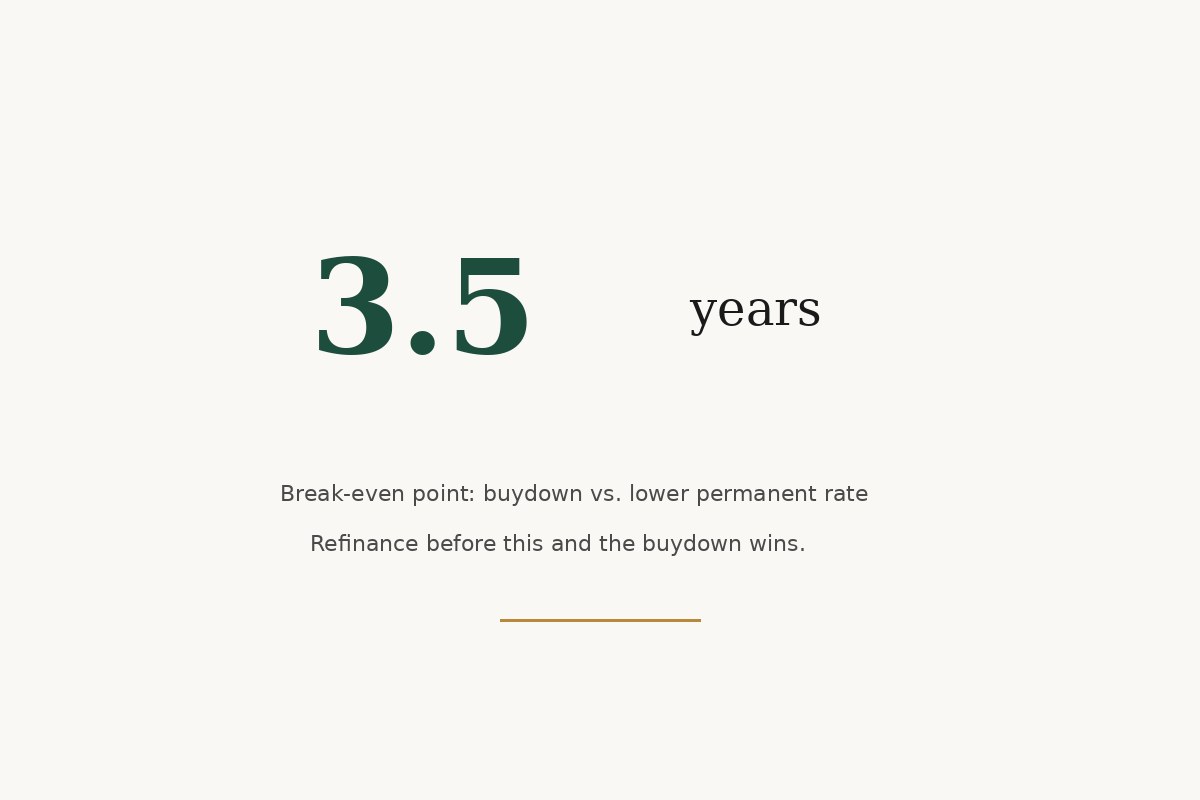
3.5 years break-even point for UWM 1-0 buydown versus lower permanent mortgage rate
The break-even point: hold the loan past about 3.5 years and the lower permanent rate beats the buydown.

When Does the UWM 1-0 Buydown Win?

The break-even between the buydown and the lower permanent rate works out to roughly 3 years 7 months. If the buyer refinances or sells before then, the buydown wins. If they hold the loan past that point, the lower permanent rate pulls ahead. And stays ahead for the rest of the term.

The math is straightforward. The buyer banks about $3,400 in Year 1 with the buydown. Then they pay roughly $110 a month more than they would have on the lower permanent rate, every month after that. Those $110 chunks chew through the $3,400 head start over about 31 months in Year 2 onward. Total time to break even: 12 plus 31, or 43 months.

Why a Refi Window Inside 3.5 Years Is More Likely Than Not

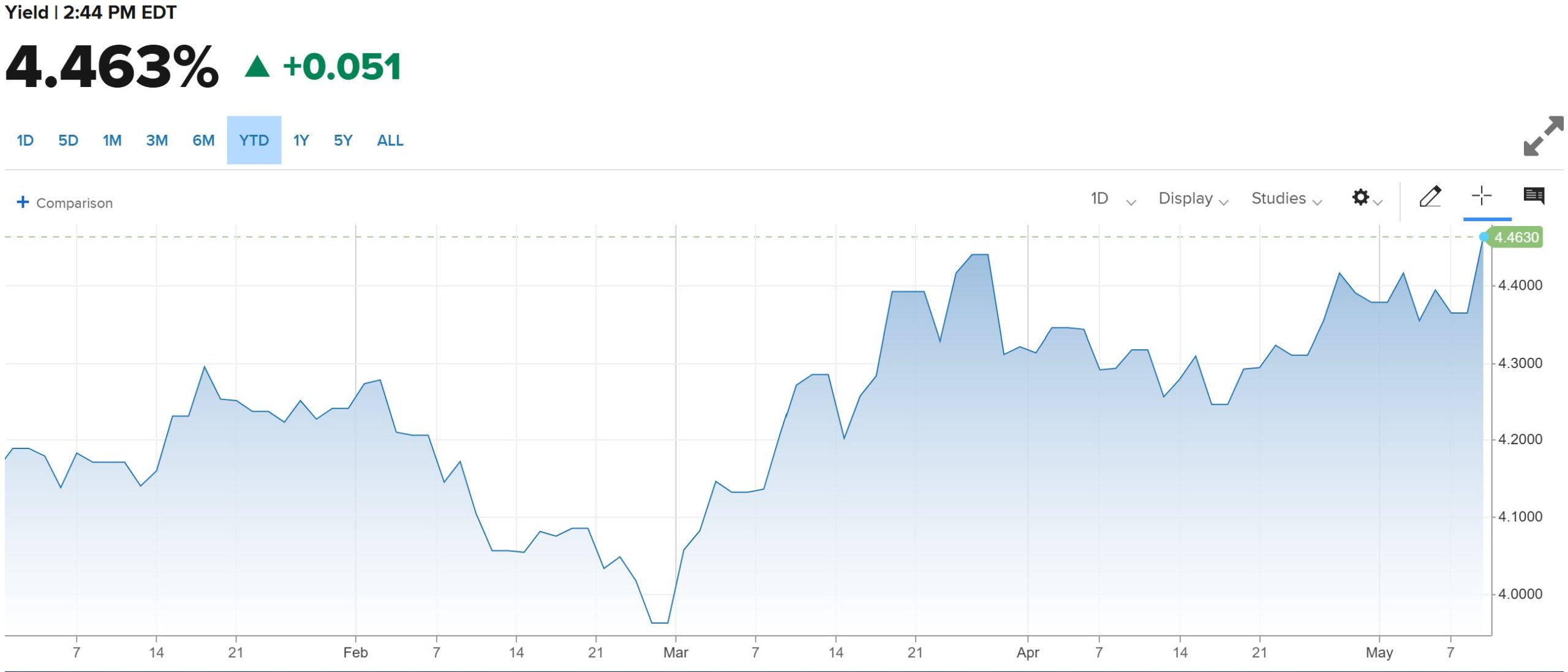
This is where the timing question matters. The 10-year Treasury drives mortgage rates more than any other single input. It closed at 4.46% as of mid-May. That’s up from a late-February low near 3.97%. That’s roughly half a percentage point of upward move in about ten weeks. It puts the 10-year right back near where it was a year ago.

10-year Treasury yield year-to-date chart showing rise from late-February low near 3.97 percent to 4.463 percent in May 2026
10-Year Treasury YTD 2026: up from a late-February low near 3.97% to 4.46% in mid-May — almost half a percentage point of upward move in about ten weeks.

The directional implication is simple. There’s real room for the 10-year to fall back toward that February low. That happens if economic data softens or the Fed signals more accommodation. Most major forecasters expect 30-year fixed rates to drift lower through late 2026 and into 2027. That includes the Mortgage Bankers Association and Fannie Mae. Whether the move is gradual or sharp depends on the data, but the directional consensus is clear.

For a buyer choosing between the buydown and the lower permanent rate, that backdrop tilts the decision. A refinance opportunity opening in the next 24 to 36 months is more likely than not. That’s well inside the 3.5-year break-even window where the buydown wins.

How to Frame the Math for a Client on the Fence

The buyer needs three pieces of information to make this decision. None of them are about the buydown itself:

  • How long they realistically plan to hold the loan. The median U.S. homeowner stays put for 11.8 years. But the average mortgage only lives 5 to 7 years — because refinances end loans too. If they refi inside 3.5 years, the buydown wins.
  • What their cash-flow priorities look like in Year 1 specifically. First-year homeownership tends to be the most cash-strained year for any new owner — especially for Puget Sound buyers absorbing property taxes that are higher than what their lender estimated. The $3,400 Year 1 cushion has different value to a buyer who’s stretched than to a buyer who isn’t.
  • Their rate forecast posture. If they believe rates are flat or rising for the next several years, the lower permanent rate looks better. If they think rates are likely to drop and they will refinance, the buydown looks better. The 10-year’s recent move suggests the latter is plausible.

The math is not the hard part. The judgment about which lever to pull is. That is the conversation worth having before lock day.

FAQ

Is the UWM 1-0 buydown actually free?

Free from the buyer’s perspective — they pay nothing out of pocket for the buydown. UWM funds it from their pricing margin. The trade-off is that the same buyer could lock a slightly lower permanent rate without the buydown. So while there is no upfront cost, there is an opportunity cost compared to the alternative permanent rate.

What is a 1-0 temporary buydown?

A 1-0 temporary buydown means the borrower’s effective interest rate is 1 percentage point lower than the note rate for the first 12 months. After that, it steps up to the full note rate for Year 2 through Year 30. The Year 1 subsidy is funded by a lump-sum credit at closing. That credit sits in an escrow account. It pays the lender the difference each month during the buydown period.

How much does the UWM 1-0 buydown save on a $600,000 loan?

On a $600,000 loan, the 1-point reduction is roughly $280 a month in lower principal and interest. That runs for 12 months, or about $3,400 in total first-year savings. The exact figure varies slightly based on the underlying note rate, but the order of magnitude holds across the typical conventional loan range.

What happens if the borrower refinances during Year 1?

If the loan is refinanced or paid off before the 12-month buydown period ends, any unused buydown funds in escrow are typically applied as a credit toward the new loan. Or returned to the borrower per the lender’s specific buydown agreement. The funds do not disappear, but the exact treatment depends on UWM’s program terms. Verify in writing before the loan closes.

When does the buydown beat the lower permanent rate?

The break-even sits around 3 years 7 months on a typical loan. Hold the loan less than that, and the buydown wins. Hold it longer, and the lower permanent rate wins. Many mortgages do not survive 3.5 years anyway. Between refinances and home sales, the average mortgage lifespan in the U.S. is 5 to 7 years. Many end sooner when rates drop.

The Bottom Line

UWM’s “Free” 1-0 buydown is a meaningfully good product right now. Not because it’s free in the absolute sense. Because the current rate environment makes the trade-off lean in its favor. The buyer gets real Year 1 relief. The cost is borne by the lender. The break-even falls well inside the window where most mortgages get refinanced anyway. For a buyer on the fence about whether the monthly payment works, this is the kind of product that moves the needle.

The trade-off against the slightly lower permanent rate is the conversation worth having before the buyer commits to either path. Run the numbers on their actual loan size. Ask the right questions about how long they plan to keep the loan. The right answer is almost always specific to the buyer, not the product.

Related reading: how UWM’s 0% down product is qualifying more buyers. Also: the questions to ask a lender about a pre-approval. And how a reverse 1031 lets clients buy before they sell. For broader options, the full loan menu is here.

If you have a client weighing affordability options, or deciding between a temporary buydown and a permanent rate, send them my way. Happy to walk through the math on their specific loan.


Don’t just take my word on the UWM 1-0 buydown

If you want a read on how I work with clients before sending one my way, here’s where past borrowers and partners have weighed in:

Reviews on Mortgage Matchup ↗ Reviews on Google ↗

Follow along:

If you have a client weighing the UWM 1-0 buydown against a buy-down of the permanent rate, send them my way. We’ll run the actual numbers on their loan size, target rate, and realistic hold horizon.


Categories
Aging in Place

Aging in Place West Seattle: Why I Support The Center

Aging in place West Seattle is the goal for most clients of real estate agents and financial advisors over 60 — but staying home is a community problem, not just a financial one. The Center for Active Living serves over 1,600 West Seattle neighbors aged 50+ with affordable meals, programming, and wellness services that make staying home actually viable. Member dues cover only 7% of the budget; donations cover 22%. I serve as Board Treasurer, and I’m asking 20 of my connections to chip in any amount during this month’s annual fundraising campaign.

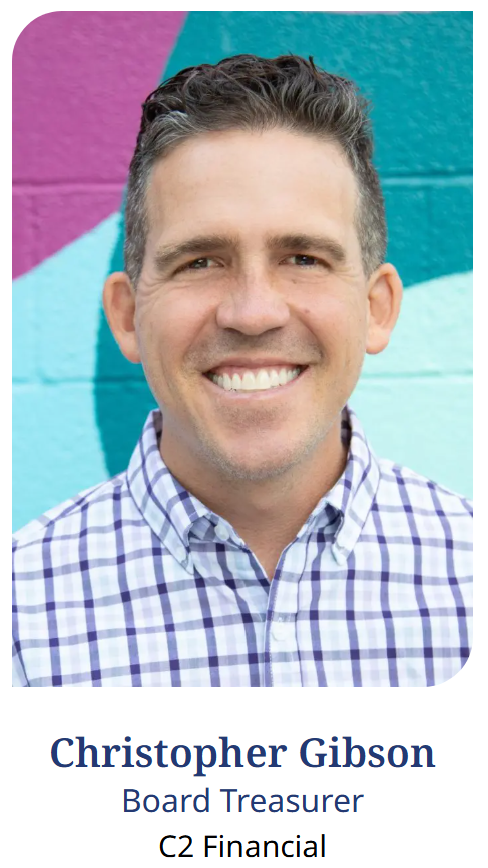
Chris Gibson, Board Treasurer for The Center for Active Living, supporting aging in place West Seattle through the nonprofit's annual fundraising campaign

Aging in place West Seattle is a community problem, not just a financial one

If you’re a real estate agent or financial advisor in West Seattle, you’ve had a version of this conversation: a client over 60, sitting in a paid-off home, asking some flavor of “should I stay or should I sell?” The financial side is usually the easier half. Equity is liquid if they need it. A reverse mortgage, a HELOC, a rental of part of the home — there are tools. The harder half is the part nobody talks about until it’s a crisis: can they actually live here, day to day, for the next 15 years?

That’s a community question, not a financial one. And in West Seattle, the answer for 1,600 of our neighbors is The Center for Active Living. As a result, it is the closest thing we have to community infrastructure that makes aging in place actually viable.

This is why I serve as Board Treasurer there. Furthermore, it’s why I’m asking 20 of my West Seattle connections to consider donating any amount during the annual fundraising campaign.

What clients actually need to stay home

Here’s what most aging in place plans miss. The financial structure is solved at the table — it’s the day after closing where things get hard. Three things consistently break:

  1. Isolation. Staying home alone is not the same as aging in place. Without regular contact with people, mental and physical decline accelerates. The U.S. Surgeon General’s 2023 advisory found that lacking social connection raises mortality risk on par with smoking up to 15 cigarettes a day.
  2. Daily nutrition. Cooking for one, every day, with declining energy is a setup for skipped meals and processed food. As a result, that snowballs into worse health outcomes that can force a move out.
  3. Falls and physical decline. The single biggest event that puts a senior into assisted living is a fall. Fortunately, most falls are preventable with regular balance and strength work.

None of that gets fixed by a refinance or a portfolio rebalance. It gets fixed by community.

What The Center for Active Living actually does

The Center for Active Living logo — a West Seattle community center serving 1,600+ neighbors aged 50 and older with aging in place support

If you haven’t been inside the building on SW Oregon Street, here is what’s happening every week:

  • 40+ weekly programs — yoga, tai chi, line dancing, balance and strength classes, art, language groups, history lectures, ukulele, mahjong, chess. Real instructors. Real consistency. The kind of “show up every Wednesday” rhythm that builds friendships.
  • Affordable daily meals — hot lunches Monday through Thursday plus Margie’s Cafe weekday lunch made from scratch. The food matters. The eating-with-other-people matters more.
  • Wellness and support services — social worker outreach, counseling, support groups for Parkinson’s, Low Vision, Caregivers, Diabetic, and Aging Well. Free elder-law legal consultations. Fall-prevention exercise classes.

That last category is the one most people don’t know about. For example, a free elder-law consultation can save a family thousands of dollars and weeks of confusion when a parent’s health changes. Similarly, a fall-prevention class is one of the most cost-effective interventions in geriatric medicine. As a result, these are small services with outsized consequences for whether someone gets to stay home.

If your client is sitting on equity in a West Seattle home and wants to stay, this is what actually makes it work. The Center recently hosted an aging in place resource fair covering some of the financial tools — including reverse mortgages as one piece of a longer plan — but the financial tools assume the community piece is already in place. The Center is that piece.

Why donations matter — the math behind aging in place West Seattle

Most people assume a community center for older adults runs on member dues. However, it doesn’t. The Center for Active Living’s annual budget is roughly $1.6 million. Of that total, membership dues only cover about 7%. In contrast, donations cover 22% — about 3 times what members pay. Meanwhile, government grants, program fees, the thrift store, and rental income cover the rest.

The donation share is what keeps programming affordable for every neighbor walking through the door, regardless of income. Without it, the Center either raises fees and prices people out, or cuts programs. Either way, neither outcome serves the goal of aging in place.

This is why I’m asking. Not for a big check. Not for a particular amount. Just for 20 people in my West Seattle network to give any amount this month. You can donate through my personal fundraising page here — and yes, that link tracks back to me, which helps with the board fundraising goals I’m responsible for.

Chris Gibson serving as Board Treasurer on The Center for Active Living's staff and board page in West Seattle

Why I do this

Serving on the Board of Directors as Treasurer made sense for me because the financial side of nonprofit operations is what I know how to help with. Beyond that, I write the checks too. When clients move their parents into West Seattle, the Center is one of the first places I send them. On top of that, I attend events and show up for this organization in a real way — because this is one of the places I genuinely care about in this neighborhood.

If you work with West Seattle clients over 50, the Center should be in your toolkit too. Specifically, drop-ins are welcome, dues are modest with sliding-scale options, and many wellness services and support groups are free of charge. As a result, for a client weighing whether to stay or sell, a tour of the Center can change the conversation entirely.

One more thing — the raffle

Alaska Airlines flight voucher offered as a raffle prize in The Center for Active Living's annual aging in place fundraiser

If a flat donation isn’t your thing, the Center is also running a raffle: two roundtrip ticket vouchers on Alaska or Hawaiian Airlines, no blackout dates. Tickets are $50 each or three for $100, available at the Center’s front desk. Full raffle details are here. All proceeds go to the Center.

FAQ

What is The Center for Active Living?

The Center for Active Living is a nonprofit community center in West Seattle (formerly the Senior Center of West Seattle) that serves more than 1,600 adults aged 50 and older. It offers daily affordable meals, more than 40 weekly programs, wellness and support services, and free elder-law legal consultations.

How does The Center support aging in place in West Seattle?

The Center supports aging in place by addressing the three biggest non-financial barriers to staying home: isolation, nutrition, and physical decline. Daily community meals, ongoing balance and strength classes, and recurring social programs give older West Seattle residents the consistent contact and physical activity that keep them independent at home.

Where does The Center for Active Living’s funding come from?

The Center’s annual budget is roughly $1.6 million. Membership dues cover about 7%, donations cover about 22%, and the rest comes from government grants, program activity fees, thrift store sales, facility rentals, and event income. The donation share is what keeps programming accessible regardless of a member’s income.

How can I donate to The Center for Active Living?

You can give any amount through my personal fundraising page on GiveSmart, or buy raffle tickets at the Center’s front desk for a chance at Alaska or Hawaiian Airlines roundtrip vouchers. Both go to the same place — keeping programs affordable for every neighbor who walks through the door.

How can a real estate agent or advisor use The Center as a referral?

Send your West Seattle clients aged 50+ to the Center directly. Drop-in visits are welcome, dues are modest with sliding-scale options, and many wellness services and support groups are free. For a client weighing whether to stay or sell, a tour of the Center can change the conversation entirely.

If you have a client navigating an aging in place decision in West Seattle, send them my way. The financial side I can help with directly. The community side, the Center already has covered.

Want to see what other people say about working with me? You can read reviews at Mortgage Matchup and on Google.

You can also connect with me on LinkedIn, Facebook, and Instagram.

Categories
Mortgage Education Special Offers Uncategorized

Doctor Loans Explained: 100% Financing for Medical Professionals

TL;DR: Doctor loans let specific medical professionals borrow up to 100% of a home’s value with no mortgage insurance. The loans qualify through Fannie Mae and Freddie Mac. As a broker, I now have access to a doctor loans program that competes head-to-head with the big-bank versions. That means your client doesn’t have to use Chase or Bank of America to get the structure.

What are doctor loans, in plain English?

Your client tells you they’re a physician moving to Seattle for residency. Or a dentist buying their first home after years of student debt. Here’s what they need to hear: doctor loans are designed for them. They don’t punish them for the way medical careers actually work. People sometimes call them physician loans or medical professionals programs. They let eligible borrowers finance up to 100% of the purchase price with no mortgage insurance. They also treat deferred student loans differently than a conventional loan. And they let future income from a signed employment contract count for qualifying.

For years, the big retail banks owned these conforming Fannie Mae and Freddie Mac-eligible programs. Chase, BofA, Wells, a few regionals. The pitch was always the same. “Open a checking account with us and we’ll do your mortgage.” That worked when there was no alternative. Now there is.

Who qualifies for doctor loans?

The eligible degree list matters. Clients (and frankly some agents) assume “doctor loans” means anything with “Dr.” in front of the borrower’s name. They don’t. Specifically, the program I have access to qualifies these designations:

  • Doctor of Medicine (MD)
  • Doctor of Osteopathy (DO)
  • Doctor of Dental Surgery (DDS)
  • Doctor of Dental Medicine (DMD)
  • Doctor of Pharmacy (PharmD)
  • Doctor of Veterinary Medicine (DVM or VMD)
  • Doctor of Podiatric Medicine (DPM)
  • Certified Registered Nurse Anesthetist (CRNA)
  • Medical residents and fellows holding one of the above degrees

Borrowers need an active employment contract in their field, or documented offer acceptance. They also need to practice without supervision. Residents and fellows are the exception. Non-occupant co-borrowers work too. However, their income can’t be more than 50% of total qualifying income.

What’s not on the list trips agents up every time. Chiropractors. Registered nurses. Physician assistants. Nurse practitioners (unless they’re CRNAs). Psychologists, optometrists, audiologists, dental hygienists. If your client falls in that gap, they’re a conventional or FHA borrower. Not a doctor-loan borrower. Worth knowing before you write the offer.

Doctor loans by the numbers: LTV, FICO, and DTI

For a primary residence purchase or rate-and-term refinance, one-unit:

  • 95% LTV up to $2,000,000 with a 680 FICO
  • 100% LTV up to $1,500,000 with a 680 FICO
  • 100% LTV up to $2,000,000 with a 720 FICO

Maximum DTI is 50% when the LTV is 95% or below. It’s 45% when LTV is between 90.01% and 100%. The program offers 15, 20, 25, or 30-year fixed terms. ARMs come in 5/6, 7/6, and 10/6 flavors. However, temporary rate buydowns aren’t eligible. Flag that for your client if their mom-and-dad-funded buydown was the plan.

Doctor loans vs. PMI: why no mortgage insurance matters

On a $1,000,000 loan at 95% LTV, monthly mortgage insurance on a conventional loan can run $300 to $600 a month. The exact number depends on the borrower’s credit and the MI company. That’s $3,600 to $7,200 a year your client throws away. The payment builds zero equity. It never goes to interest. It never reaches their tax accountant in any useful way. Doctor loans remove it entirely.

So when an agent tells me “the rate looks half a point higher than the conventional quote” — yes, sometimes it is. However, run the all-in payment with MI on the conventional. Doctor loans often win by $200 to $400 a month. Even with a slightly higher note rate. That’s the comparison your client should be looking at, not the rate alone.

Reviewing doctor loans payment comparison vs conventional mortgage with PMI on a laptop
Running the all-in payment with mortgage insurance on a conventional loan often shows doctor loans winning by $200–$400 a month — even with a slightly higher note rate.

Student loans: what gets excluded from DTI

This is the part that keeps doctors from qualifying anywhere else. For example: a new attending pulling $280,000 a year still has $400,000 in student loans in deferment. That normally kills mortgage qualification. A conventional underwriter wants to count 1% of the balance as a monthly payment. That’s $4,000 against the DTI right out of the gate.

Doctor loans exclude student loan payments from DTI when both of these are true. The borrower is currently in residency or a medical clinical fellowship. AND they’re qualifying based on the income they’re receiving during that residency or fellowship. Outside that lane — once they’re an attending, or qualifying on contract income that hasn’t started — the loan payment counts. But with flexibility on how:

  • If the credit report shows a real monthly payment, the underwriter uses that number
  • If the credit report shows $0 or no payment, the underwriter has options: a documented Income-Driven Repayment (IDR) amount, 1% of the balance for deferred or forbearance loans, or a fully amortizing payment using the actual repayment terms

The 1% rule sounds harsh. But it’s still better than what some lenders use. Those lenders apply the fully amortizing payment regardless of the actual situation.

Future income: signing a contract before the start date

Match Day is March 20th this year. New residents get told what city and what hospital. They sign a contract. They need housing — often before their first paycheck hits. Fortunately, doctor loans handle this with a projected income provision. A fully executed employment contract or offer letter qualifies the borrower. The start date can sit up to 150 days after the note date. For agents working with residents matching into UW Medicine, Seattle Children’s, Swedish, or Virginia Mason, this is the loan that turns “I can’t buy yet” into “let’s look at West Seattle and Beacon Hill this weekend.”

The contract has to spell out the position, start date, and salary. The only allowed contingencies are receipt of the medical license and normal administrative items. Background checks. Drug testing. Fingerprinting. The borrower also needs reserves to cover an extra month of PITIA (principal, interest, taxes, insurance, assessments) for every month between the first payment due date and the day employment starts.

Practical translation for agents: your client is house-hunting in February and starts work July 1st. This is the loan that lets them close in May. Build that into your timeline conversations.

Young physician couple settling in after using doctor loans for residency relocation
Doctor loans accept a fully executed employment contract for qualifying, with a start date up to 150 days after the note date — built for Match Day timelines.

Reserves and gift funds

Reserves scale with loan size and LTV:

  • Loans $100,000 to $1,500,000 at LTV under 95%: 0 months reserves
  • Loans $1,500,001 to $2,000,000 at LTV under 95%: 3 months
  • Loans $100,000 to $1,500,000 at LTV over 95%: 3 months
  • Loans $1,500,001 to $2,000,000 at LTV over 95%: 6 months

Gift funds work, and they count toward reserves. That’s a meaningful difference from a lot of conventional loan programs. Documentation is light. One month of bank statements for refinances. Two months for purchases.

The Match Day window: an agent’s calendar reminder

Match Day is when fourth-year medical students find out which hospital they’ll do residency at. They learn where they’re moving. Most institutions send new residents a welcome packet with information about the area. Many of those packets include preferred lender and realtor contacts. So if you’re an agent in a market with a major teaching hospital, March is when you should be making sure you’re on that list. I work with brokers and agents who get added to those packets every year. Doctor loans are part of why that referral chain works.

For Puget Sound agents specifically: the Match Day window catches residents heading to UW Medicine in West Seattle’s broader catchment, Virginia Mason, Harborview, and the Swedish system across Seattle and Bellevue. Burien, Tukwila, and Renton tend to attract the dual-career resident households where one spouse commutes north for work — keep those neighborhoods on the showings list.

Doctor loans FAQ

Can doctor loans be used for a second home or investment property?

No. This program covers primary residence only — purchase or rate-and-term refinance. If your client wants to keep their current home and buy a new one, the new home has to be their primary. For investment property financing, they’d need a different product.

Do residents and fellows really qualify, or is it just for attendings?

Residents and fellows holding an MD, DO, DDS, DMD, PharmD, DVM, VMD, DPM, or CRNA degree qualify. The program treats them well. Their student loans drop out of DTI when the qualifying income is the residency or fellowship income. Projected income from a signed contract works if the start date sits within 150 days of the note date.

What’s the minimum credit score and loan amount for doctor loans?

The minimum FICO is 680. Minimum loan amount is $100,000 for fixed-rate products and $350,000 for ARMs. Maximum loan amount is $2,000,000.

How is this different from the doctor loan at a big bank?

The structure is similar. Most banks offer 100% LTV no-MI for medical professionals. However, the differences show up in pricing and the fine print. Some banks tack on a “you have to be our depository client” requirement. They also cross-sell aggressively. As a broker, I shop the loan rather than tying it to a deposit relationship. That usually means a more competitive rate. And a lender who isn’t trying to sell your client a wealth management package on the side.

Do doctor loans work for a borrower with a recent credit event?

The program requires four years since a major credit event or notice of default. Mortgage and rent history needs to be clean — zero 30-day lates in the past 12 months. If your client had something happen during med school or residency that’s still on their report, run the dates with me before you assume they’re disqualified.

Don’t just take my word on doctor loans

If you want a read on how I work with clients before sending one my way, here’s where past borrowers and partners have weighed in:

Reviews on Mortgage Matchup ↗ Reviews on Google ↗

Follow along:

If you have a client matching at a Colorado or Washington hospital this Match Day cycle, or an attending who’s been told they need to put 20% down to avoid PMI — send them my way. Doctor loans are no longer a big-bank-only product.


Program details, guidelines, and pricing accurate as of April 30, 2026, and subject to change without notice. Loan approval is subject to underwriter review, credit qualification, and program eligibility at the time of application. Please contact me directly to confirm current program availability and verify that the terms outlined above are still in effect for your client’s specific situation.

Physician in scrubs holding house keys on craftsman home porch after closing on doctor loans financing
Categories
For Real Estate Pros Loan Strategy

Virtual Mortgage Closing: Convenience Most Lenders Can’t Match

A virtual mortgage closing lets everyone on the loan sign electronically from wherever they happen to be. The borrower, the co-buyer, the co-signer — each one joins a short video call with a remote notary, on their own schedule. Most lenders still won’t do this. Instead, they make every party show up in person at a title company on a specific day, at a specific time. However, United Wholesale Mortgage is one of the lenders that does offer virtual mortgage closing, in both Washington state and Colorado. I had a recent file with two co-buyers and two co-signers spread across multiple time zones, and what would have been a week of scheduling chaos turned into a non-event.

Woman signing a virtual mortgage closing on a laptop from a beach chair, dog at her feet
A virtual mortgage closing turns a beach chair into a closing table. Each signer logs in from wherever they are.

What a Virtual Mortgage Closing Actually Is

A virtual mortgage closing replaces the in-person signing room with a secure video call. Instead of driving to a title company, you log in from your laptop or phone. Specifically, the notarization happens through Remote Online Notarization, or RON. A licensed notary checks your ID over video and notarizes your signatures digitally. Subsequently, the closing team countersigns, the county records the deed, and the lender funds the loan. So legally, the transaction matches an in-person closing in every state that permits RON.

Overall, the difference is the friction. Nobody drives across town. Nobody rearranges the day. Consequently, the whole closing becomes a thirty-minute video session, and the bottleneck shifts from “get everyone in the same room” to “find a half-hour that works.”

Father attending a virtual mortgage closing on a laptop from the bleachers at his kid's soccer game
Sign from the sidelines. Every party on the loan can join from anywhere on their own schedule.

Why Most Lenders Still Make Everyone Show Up in Person

RON has been legal in most states for years. Both Washington state and Colorado permit RON for mortgage closings, but lender adoption stays uneven. Specifically, building the technology takes real engineering work: secure ID verification, audio and video recording, integration with title companies and county recorders. Therefore, plenty of mid-sized lenders just haven’t built it. And some retail banks and credit unions still default to in-person closings because their compliance teams prefer that posture, full stop.

So if your client lands at a lender that doesn’t offer it, every signer has to physically appear at a title company. The slot is fixed: a specific date, a specific time. In theory that’s tolerable. In practice it’s the part of the deal where things break.

What Most People Don’t Realize: A Co-Signer Is a Co-Buyer

Here’s a misconception that bites a lot of buyers. When someone co-signs on a mortgage, they’re not just lending a credit score. Maybe a parent helps a kid qualify. Or a sibling lends their income. Or a friend bridges a credit gap. Whatever the situation, the co-signer signs the note. They’re on the loan. So they have to show up to the closing the same way the primary borrower does.

For example, take a parent in Spokane helping their daughter close on a house in Denver. Traditionally that meant flying out for a thirty-minute appointment. A co-signer who travels for work had to reschedule the trip. Likewise, someone already feeling like they’re doing the buyer a favor saw the in-person requirement as punishment for being generous. The friction isn’t theoretical. It lands hardest on the people doing the most help.

Man completing a virtual mortgage closing on a laptop from a hospital bed
When a co-signer can’t physically travel, a virtual mortgage closing keeps the deal on schedule.

How a Virtual Mortgage Closing Solves the Logistics Problem

Once everyone on the loan can sign remotely, location stops mattering. First, each signer gets a link. Next, they join a short video session with the notary at a time that works. They walk through the documents on screen, then sign. The whole thing usually takes about an hour per signer, often less. Some sign from a kitchen table. Others sign on a lunch break. Three signers can do it in three different time zones on the same day, and nobody has to coordinate calendars beyond their own.

Finally, the deal closes on schedule. Nobody flies in. Nobody takes a half-day off work. The buyer gets the keys.

A Recent Example: Two Co-Buyers, Two Co-Signers, Four Schedules

A recent file of mine had two co-buyers and two co-signers, four signers total. Each one lived in a different city. Each one kept a different schedule. Under the old model, this kind of deal drags closing out by a week while everyone tries to find a mutual two-hour window. With UWM’s virtual mortgage closing, though, each of the four signed at their own convenience. The whole signing wrapped inside a single business day. All four sat in different time zones; the property was here in South King County.

Overall, the narrative for my client flipped completely. What used to feel like extreme inconvenience for the people doing them a favor became extreme convenience instead. That’s not a small thing. Treat co-signers and co-buyers well at closing, and they say yes the next time a family member asks for help.

On the other side: a remote notary runs the closing for two borrowers over video.

What This Means for Your Next Deal

If you’re a real estate agent and your buyer needs a co-signer to qualify, the lender choice matters more than people realize. By contrast, a lender without virtual mortgage closing can turn a clean qualification into a logistics scramble on day 28 of a 30-day close. So ask early, before the buyer commits, whether the lender supports it. The question is simple: “Do you offer Remote Online Notarization for every party on the loan, in this state, on this product?” The answer should come back yes, no, or a quick check. Never a long story. For West Seattle, Vashon Island, and Bainbridge Island agents in particular, ferry schedules and Friday traffic can turn a one-hour closing into a half-day operation. Virtual closing removes that variable entirely.

Want more on the questions worth asking a lender before recommending one to a client? Read What I Wish I Knew About Pre-Approvals. UWM’s products are summarized on the loan options page. The National Notary Association keeps a current state-by-state guide to RON law, and the Mortgage Bankers Association tracks adoption data on digital and remote closings.

FAQ

Is a virtual mortgage closing legally the same as an in-person one?

Yes. Indeed, RON produces a legally binding mortgage in every state that permits it, including Washington and Colorado. The county records the deed the same way. The lender funds the loan the same way. Signing and notarization just happen over secure video instead of across a table.

Is a co-signer the same as a co-buyer on a mortgage?

For mortgage purposes, yes. A co-signer signs the note and joins the loan, so they count as a co-buyer in everything that matters at closing. They sign the same documents the primary borrower signs. They attend the closing the same way, virtually or in person.

Why don’t more lenders offer virtual mortgage closing?

Two reasons. First, the technology stack takes real engineering that smaller lenders haven’t built: identity verification, secure video, integration with title companies and county recorders. Second, some lenders’ compliance teams still prefer in-person closings as their default, even where RON is fully legal. Notably, UWM ranks among the few wholesale lenders that have rolled out RON broadly.

Can a virtual mortgage closing work if signers are in different states?

Yes, in most cases. Specifically, RON laws apply to the notary’s location, not the signer’s. So as long as the notary holds a license in a state that permits RON for mortgage closings, signers can join from anywhere with a stable internet connection. For deals with co-buyers and co-signers spread across multiple states, that’s the whole point.

Don’t just take my word on virtual closings

If you want a read on how I work with clients before sending one my way, here’s where past borrowers and partners have weighed in:

Reviews on Mortgage Matchup ↗ Reviews on Google ↗

Follow along:

If you have a client who needs a co-signer or co-buyer to qualify and you want to know whether their lender will make closing day painless or painful, send them my way. We do virtual closings as a default, not an exception.


Categories
Blog

Buy Before You Sell 1031 Exchange | Reverse 1031 Benefits

Why Buying Before You Sell Can Be a Huge Advantage in a 1031 Exchange

A buy before you sell 1031 exchange gives investors more control and less deadline pressure. It also gives them a better shot at securing the right replacement property before selling the one they already own.

One of the biggest problems with a standard 1031 exchange is the clock.

Investor buying replacement property before selling in a 1031 exchange

An investor sells a property, wants to defer capital gains taxes, and now has a narrow window to identify the next one. That pressure changes behavior fast. Instead of buying the right property, people start buying the available property. That is where mistakes happen.

It can lead to overpaying. It can lead to settling. It can lead to buying something you would have passed on if you had more room to think.

That is why buying before you sell can be such a major advantage.

The problem with a traditional 1031 exchange

In a standard deferred 1031 exchange, the investor sells first and buys second. Once the sale closes, the timeline starts. The exchanger has 45 days to identify potential replacement property and generally 180 days to complete the exchange. Those deadlines are a core part of the exchange rules.

On paper, that may sound manageable.

In the real world, it can be brutal.

Timeline showing how a reverse 1031 exchange works

Forty-five days is not much time to find a solid investment, negotiate terms, perform due diligence, and make a smart decision. When inventory is tight or competition is heavy, that deadline can push investors into corners they never wanted to be in.

And once that pressure sets in, price discipline often disappears.

What is a reverse 1031 exchange?

A reverse 1031 exchange flips the order.

Instead of selling the old property first, the investor acquires the replacement property first and sells the relinquished property afterward. The IRS does not generally allow that structure outside of a specific framework. It must go through a qualified exchange accommodation arrangement (QEAA), under Revenue Procedure 2000-37, as modified by Revenue Procedure 2004-51.

That structure is what makes it possible to buy before you sell.

Under the safe harbor framework, the parked property arrangement generally must be completed within 180 days. The relinquished property must generally be identified within 45 days after the exchange accommodation titleholder acquires the parked property.

So the key benefit is not that the deadlines disappear.

The key benefit is that the investor can secure the replacement property first.

That changes everything.

Why buying before you sell can be the smarter move

When you buy first, you gain leverage that most exchangers do not have.

You can lock up the property you actually want instead of hoping the right one appears after your sale closes. You can negotiate from a position of intention rather than urgency. You can avoid the panic that shows up when the 45-day identification window starts closing in. The 45-day and 180-day deadlines still matter in a reverse exchange safe harbor. But the transaction sequence gives the investor more control over the replacement side of the deal.

That matters because investment decisions made under pressure are often expensive.

A reverse 1031 exchange can help investors:

  • secure a desirable property before someone else does
  • avoid chasing limited inventory after a sale
  • reduce the risk of overpaying just to satisfy a deadline
  • make a more deliberate decision about what they are buying
  • create more flexibility around the sale of the relinquished property

That is the real advantage.

It is not just about convenience. It is about better decision-making.

Where a bridge loan fits in

This is where a lot of investors miss an important tool.

For local agents and advisors working with landlord clients in West Seattle, Burien, Tukwila, Renton, or the broader Puget Sound region: this is a real-money conversation. Investors holding appreciated rental property here can defer six-figure capital gains tax bills with the right reverse 1031 + bridge loan structure.

If you are buying before you sell, the obvious question is: how do you fund the acquisition before the old property is gone?

In some cases, the answer is a bridge loan.

A bridge loan provides short-term financing to acquire the replacement property first. The investor then pays off that short-term debt once the relinquished property sells. Reverse exchange structures often involve financing while the parked property is held. Industry guidance specifically addresses lender and exchanger funding during that period.

This is one of the most overlooked uses of bridge financing.

A lot of people think of bridge loans in the context of moving from one home to another. They do not immediately think of them as part of a reverse 1031 strategy. But for the right investor, that can be the exact tool that makes a buy-first exchange possible.

Traditional 1031 exchange vs. reverse 1031 exchange

Here is the cleanest way to look at it.

Traditional 1031 exchange
You sell first.
Then the clock starts.
You have 45 days to identify replacement property and 180 days to close.

Reverse 1031 exchange
You buy first.
Then you work to sell the relinquished property afterward.
A safe-harbor reverse exchange is generally structured through an exchange accommodation titleholder and still works inside a 45-day identification period and 180-day completion period.

So the difference is not that one has rules and the other does not.

The difference is the order of operations.

And that order can have a major effect on the quality of the investment decision.

The biggest mistake investors make

The biggest mistake is assuming the standard 1031 exchange is the only option.

I see this play out often with Puget Sound investors trading out of small West Seattle, Beacon Hill, or Columbia City rental properties. The owner finds the right replacement on Vashon Island or in South King County weeks before their current rental hits the market. Without a reverse 1031 structure, the options narrow. They lose the replacement, accept a fire-sale price on their current property, or take an avoidable tax hit.

It is the most common option. It is not the only one.

When investors do not know a reverse 1031 exchange is available, they often back themselves into rushed deals. They give up negotiating power. They compromise on the replacement property. Sometimes they buy something they never would have touched without the deadline pressure.

That is avoidable.

Buying before you sell is not the right fit for every investor. Reverse exchanges are more complex, require careful structuring, and usually involve higher transaction costs and more coordination than a standard deferred exchange. The IRS safe harbor requires specific handling through an accommodation arrangement rather than letting the taxpayer simply hold both sides informally.

But when timing matters and the right property is available now, it can be a powerful strategy.

Final thought

If the right replacement property shows up before your current investment sells, you have options. You don’t have to walk away or rush into a bad standard exchange.

A reverse 1031 exchange may give you a better path.

And a bridge loan may be the piece that makes it work.

The point is simple: investors should know they may have another option before they let the 45-day deadline force a bad decision.

Important note

1031 exchanges and reverse 1031 exchanges should be reviewed with a qualified intermediary and a CPA or tax attorney before moving forward. The exchange rules are technical, and the structure has to be done correctly. IRS guidance for reverse exchanges is tied to qualified exchange accommodation arrangements under Revenue Procedure 2000-37, as modified.

Don’t just take my word on reverse 1031 exchanges

If you want a read on how I work with clients before sending one my way, here’s where past borrowers and partners have weighed in:

Reviews on Mortgage Matchup ↗ Reviews on Google ↗

Follow along:

If you have a client navigating a 1031 exchange in Puget Sound and the timing is going sideways, send them my way. A reverse 1031 + bridge loan combination is not theoretical — we structure these for real Puget Sound investors.


Categories
Uncategorized

Seattle Housing Market November: Better for Buyers

When I asked a group of Seattle-area real estate agents about the Seattle housing market November, the results were nearly unanimous — eight out of nine said it’s a better time to buy than sell.

Seattle are real estate agents weigh in on the market

Here’s what they’re seeing firsthand across West Seattle, Burien, and Renton.


Seattle Housing Market Inventory and Buyer Leverage

James Ngugi (Instagram) opened the conversation with what most agents agree on:

James Ngugi Real Estate Broker
The market has completely shifted…

“The market has completely shifted — there’s a lot more inventory, and buyers have real negotiating power right now.”

That leverage theme came up repeatedly. Natalie Blake (Instagram) put it plainly:

“It’s a great time to be buying.”

And Michael Pearsall (Instagram) agreed that motivated sellers are creating smart opportunities for buyers before spring competition ramps up again.


Seattle Housing Market Prices and Flexibility

Maysaa Souki (Instagram) said buyers finally have options:

Maysaa Souki Real Estate Broker
We’re seeing great inventory…

“We’re seeing great inventory and great prices. There’s just more room for buyers to get what they actually want.”

Sebastian Fessenden (Instagram) added a balanced take:

“It’s still a good time to sell if your home stands out — unique homes always move. But for most sellers, waiting until spring might make more sense.”


Seasonal Trends in the Seattle Housing Market

Carlton Ford (Instagram) tied it to the season:

“Prices cool down when the temperature does. That’s when serious buyers can make their best deals.”

And Alican Bodur (Instagram) offered the long-term strategy:

Alican Bodur Real Estate Agent
You can negotiate…

“You can negotiate the price now, buy lower, and refinance later when rates drop. That’s how you win on both sides.”


Balancing Both Sides of the Market

Joni Moriarty (Instagram) pointed out that sellers who also plan to buy can come out ahead:

“If you’re buying and selling at the same time, you’ll probably have leverage on the buy side — and you’ll be facing motivated buyers on the sell side.”

Sonia Hernandez (Instagram) closed the conversation perfectly:

“It’s a better time to be buying than selling — there’s more to choose from, and sellers are incredibly negotiable.”


My Take on the Seattle Housing Market in November

After ten years as a real estate agent and five years in lending, I agree with them — this November market favors buyers who are ready to act.

When inventory is up, competition is low, and sellers are flexible, it’s the ideal time to secure the right home. Rates can change, but the right property doesn’t wait.

As the year winds down, the Seattle housing market in November offers a rare mix of lower competition and motivated sellers. For buyers who act now, the numbers — and the agents — are on your side.


About the Author

Christopher Gibson, Mortgage Loan Officer | C2 Financial Corporation (NMLS 135622)
Licensed in CO, WA, GA, TX, FL & MI
📞 720-449-6622 📧 c@chrisraygibson.com
🌐 gibsonhomeloans.com
📍 Google Maps Listing

Connect with me:

Categories
Uncategorized

Aging in Place Resource Fair At The Center For Active Living

Most older adults want the same thing as they age—to remain in the comfort of their own homes, surrounded by familiar routines, neighbors, and memories. Aging in place means preserving independence, continuing to build home equity, and making choices that keep dignity and financial security intact. It’s often more affordable than moving into assisted living too early, but it requires planning and support.

Aging in place isn’t just about staying put—it’s about facing real challenges like health needs, home upkeep, and staying socially connected. With the right resources in place, living at home longer becomes both possible and fulfilling.

Older couple smiling and enjoying coffee together in a bright kitchen, symbolizing independence, comfort, and aging in place.
A warm moment between an older couple enjoying coffee together at home — representing comfort, connection, and the freedom of aging in place.

What It Takes

  • Home support: Cleaning, maintenance, organizing, and modifications such as grab bars or ramps.
  • Financial and legal guidance: Estate planning, Medicaid and Social Security support, and tools like reverse mortgages.
  • Care and transportation: In-home care, mobility support, and access to local services.
  • Community connections: Organizations like The Center for Active Living provide activities, education, and social engagement to combat isolation.

What the Numbers Say

  • 84% of older Americans say aging in place is important.
  • 58% call it extremely important, tied to deep connections with home and independence.
  • Nearly 90% of adults 50+ want to age in place — long before retirement age.
  • 84% of adults 65+ expect to stay in their current home, but only 46% have made needed modifications.
  • Just 34% feel it’s very affordable to modify their home — cost is a major barrier.

West Seattle Professionals For Aging In Place

Ann Manley
Estate Planning Attorney
206-292-3064
ann@manleyfirm.com

Baldner Services LLC
Home Maintenance
206-948-9627
baldnerservices@gmail.com
www.baldnerservices.com

Bee Organized Seattle
206-627-0957
www.beeorganized.com/seattle

Cervantes Maintenance
Landscape Maintenance
206-643-8199
CervantesMaintenance@hotmail.com

Christopher Gibson
Reverse Mortgages
C2 Financial | NMLS 1910430
720-449-6622
C@ChrisRayGibson.com

David Carvalho
My Social Security Guy
206-465-8187
dac350@msn.com

Emily Austin
REALTOR with Compass
206-422-1398
emily.austin@compass.com

Hunter Klaas
Handyman
253-281-7800
hunter@knocking-wood.com

Kevin Ledgerwood
Home Care Consultant
Home Instead
206-488-8385
kevin.ledgerwood@homeinstead.com

Laura Elfline
Mighty House Construction
206-880-1550
laura@mightyhouseconstruction.com

Tate Steele, CFA
Financial Planner
206-761-2880
tate@steelecap.net
Steele Capital Management