
Categories
For Financial Advisors & CPAs Mortgage Education Reverse Mortgages

Reverse Mortgage Principal Limit: HECM and Proprietary

TL;DR: The reverse mortgage principal limit is the percentage of your client’s home value they’re allowed to borrow against. For a HECM, only two inputs matter to ballpark it: the youngest borrower’s age and the home value. No credit pull, no income docs, no tax returns. Proprietary reverse mortgages follow the same logic but stretch the limits for higher-value homes. If you can ask the age and a Zillow estimate, you can tell a client in 30 seconds whether the math is worth a real conversation.

What the reverse mortgage principal limit actually is

The reverse mortgage principal limit is the dollar amount your client is allowed to draw, in total, against the equity in their home. Think of it as the borrowing ceiling. It’s expressed as a percentage of home value (HUD calls that the principal limit factor, or PLF), and it gets set up front based on two inputs: the age of the youngest borrower and the home’s appraised value. That’s it. No credit score, no W-2s, no DTI calculation just to see if the deal pencils.

This is the part that surprises advisors and CPAs the most. We can run a real, useful first-pass conversation with a client based on age and a property estimate. If the math doesn’t work, we know in five minutes and nobody wastes anyone’s time. If it does work, then we move into the actual application — financial assessment, counseling, the works. (For condo clients specifically, there’s also a separate HOA checklist worth walking through before the principal limit conversation gets very far.)

Row of potted plants growing progressively larger labeled Year 1 through Year 20, illustrating how an unused HECM line of credit grows over time

How HECM principal limits get calculated

For a Home Equity Conversion Mortgage — the FHA-insured product most reverse mortgage clients end up in — the principal limit factor comes from a HUD-published table. Two variables feed it:

  • Age of the youngest borrower (or non-borrowing spouse). Older = higher PLF. A 62-year-old gets a lower percentage than an 82-year-old, because the loan is expected to compound over fewer years.
  • Expected interest rate. Lower expected rates mean a higher PLF. Higher rates compress the percentage your client can access.

The home value matters too, but it’s not in the PLF formula itself — it’s the multiplier. The PLF is a percentage; the home value (capped at the FHA lending limit, currently $1,249,125 for 2026) is what it gets multiplied by. So a 75-year-old with a $600,000 home and a 70-year-old with a $600,000 home get different dollar amounts even though the home value is identical.

One nuance worth knowing: HUD revises the PLF tables when interest-rate conditions shift materially. The percentages aren’t static. What looked like a 50% PLF for a borrower last year might be a few points different now. We always quote off current numbers, never a stale table.

Where proprietary reverse mortgages change the math

Proprietary reverse mortgages — sometimes called jumbo reverse mortgages — are the lane for clients whose home value exceeds the HECM lending limit. They’re privately insured (not FHA-backed), and the principal limit math gets recalibrated for higher property values.

Three things shift:

  • The home value ceiling lifts. Some proprietary products go up to $4 million or more in eligible value. The HECM cap of $1,249,125 disappears.
  • Minimum age may drop. A few proprietary products go down to age 55 instead of 62. Useful for clients still working but planning a retirement transition.
  • The PLF curve looks different. Each proprietary investor sets its own table. Some are more generous than HECM at the high end; others are more conservative. Always quote both side by side when the home value is in the overlap zone.

For a $1.8 million home owned by a 70-year-old, the HECM caps out using the FHA lending limit — the borrower’s home value above $1,249,125 effectively doesn’t count. A proprietary product can underwrite against the full value. That gap is the entire reason proprietary exists.

Retired couple toasting wine at sunset on a waterfront deck with travel maps and passports on the table, illustrating what clients do with reverse mortgage proceeds

Why this is a low-friction first conversation for your client

If you have a client who’s curious whether a reverse mortgage solves something — paying off an existing forward mortgage, opening a standby line of credit, funding long-term care without selling appreciated assets, or funding the renovations that let them age in place — the first question isn’t “will they qualify.” It’s “do the numbers work.”

Because the principal limit calculation skips credit and income, we can answer that question without pulling credit, without asking for tax returns, and without the client feeling like they’ve started an application they can’t back out of. Two pieces of info, one phone call, and your client knows whether to keep going.

The three questions I usually get back from advisors after that first conversation:

  1. Can the principal limit pay off the existing mortgage with room to spare? (If yes, monthly payment obligation goes away.)
  2. What does the line of credit look like five or 10 years out, given the growth feature on unused HECM credit? (Most advisors are surprised by this number.)
  3. Does it make sense to set this up now, before rates or HUD tables move, even if the client doesn’t need to draw yet?

None of those need a credit pull to answer at the napkin-math stage.

What your client receives with a principal limit estimate

When I run a principal limit, the client doesn’t get a wall of numbers — they get an interactive presentation built around their own scenario. The fastest way to understand what that looks like is to see one. Here’s a fully interactive example built on a sample scenario (a 71-year-old borrower, ~$869K home):

View the example HECM presentation →

It walks through the gross principal limit and how it’s derived, what gets paid off at closing, the line of credit that’s left over, and — the part advisors tend to linger on — a slider that shows how the unused line of credit grows year by year. There’s also a build-your-own amortization tool where you can model draws, voluntary payments, and different appreciation assumptions across 30 years. That’s the same output your client gets, personalized to their age, home value, and existing mortgage.

What to send me to get a real number

If you want me to run a principal limit for a client, send three things and I’ll have a quote back same day:

  • Date of birth of the youngest borrower (and non-borrowing spouse if applicable)
  • Estimated home value (Zillow, Redfin, or recent appraisal — we’ll order a real appraisal later)
  • Approximate balance on any existing mortgage

That’s the full intake to get a written principal limit estimate, an amortization, and a line-of-credit projection — delivered as an interactive presentation like the example above. The full application — counseling certificate, financial assessment, title work — only happens after the client sees the numbers and wants to move.

FAQ

What is the principal limit on a reverse mortgage?

The principal limit is the maximum amount a reverse mortgage borrower can draw against their home’s equity. For a HECM, it’s calculated as a percentage of the home value (the principal limit factor, or PLF) based on the youngest borrower’s age and the expected interest rate. The home value used is capped at the FHA lending limit, currently $1,249,125 for 2026.

Does a reverse mortgage require a credit check?

Not to calculate the principal limit. We can quote a number based on age and home value alone. Credit and income come into play later, during the financial assessment step of the full HECM application — but only after the client has seen the numbers and decided to move forward.

How is a proprietary reverse mortgage different from a HECM?

A HECM is FHA-insured and capped at a home value of $1,249,125 for 2026. A proprietary reverse mortgage is privately insured, often allows home values up to $4 million or more, and may start at age 55 instead of 62. The principal limit percentages differ between products, so for high-value homes it’s worth quoting both side by side.

What age does a borrower need to be to qualify for a reverse mortgage?

62 for a standard HECM. Some proprietary reverse mortgages go down to 55. The youngest borrower (or non-borrowing spouse) determines which age is used for the principal limit calculation.

Why does the principal limit go up with age?

The loan compounds over the borrower’s remaining time in the home. An older borrower has a shorter expected horizon, so HUD’s PLF tables let them borrow a larger share of equity up front without the loan balance running past the home value over time.

If you have a client weighing a reverse mortgage and you want a real principal limit before recommending anything, send me their age, the home value, and the existing mortgage balance. Same-day turnaround on a written quote.

If you have a client weighing a reverse mortgage and want to read how I work with referral partners before sending one my way, here’s where past borrowers and partners have weighed in:

Reviews on Mortgage Matchup ↗ Reviews on Google ↗

Follow along:


Categories
Aging in Place

Aging in Place West Seattle: Why I Support The Center

Aging in place West Seattle is the goal for most clients of real estate agents and financial advisors over 60 — but staying home is a community problem, not just a financial one. The Center for Active Living serves over 1,600 West Seattle neighbors aged 50+ with affordable meals, programming, and wellness services that make staying home actually viable. Member dues cover only 7% of the budget; donations cover 22%. I serve as Board Treasurer, and I’m asking 20 of my connections to chip in any amount during this month’s annual fundraising campaign.

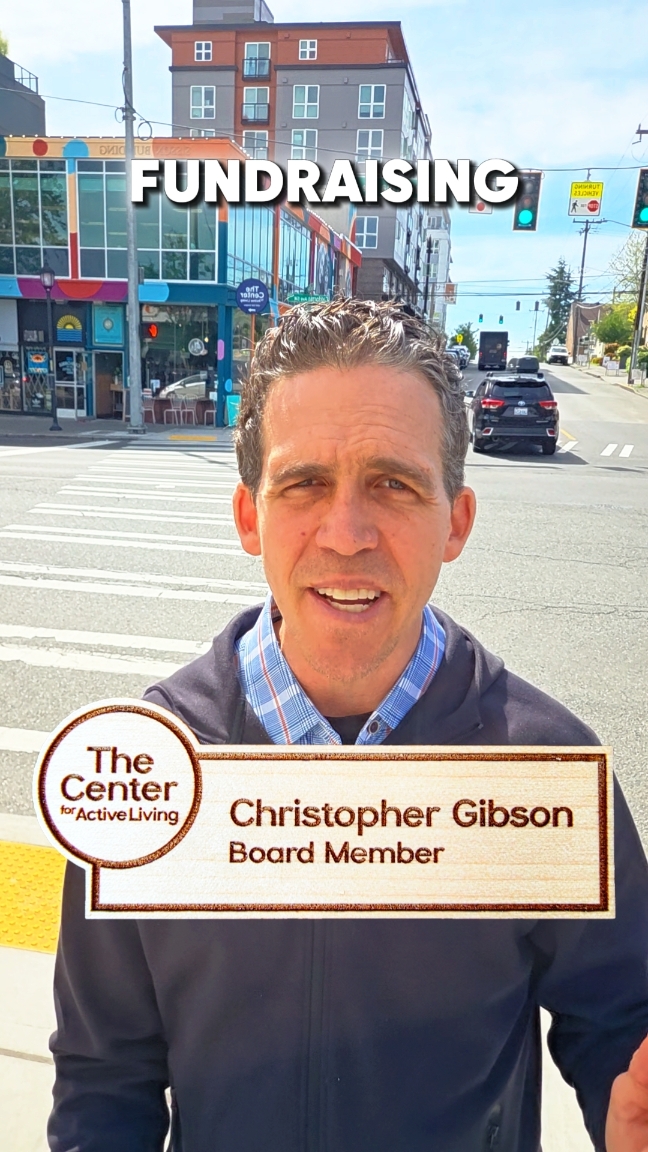
Chris Gibson, Board Treasurer for The Center for Active Living, supporting aging in place West Seattle through the nonprofit's annual fundraising campaign

Aging in place West Seattle is a community problem, not just a financial one

If you’re a real estate agent or financial advisor in West Seattle, you’ve had a version of this conversation: a client over 60, sitting in a paid-off home, asking some flavor of “should I stay or should I sell?” The financial side is usually the easier half. Equity is liquid if they need it. A reverse mortgage, a HELOC, a rental of part of the home — there are tools. The harder half is the part nobody talks about until it’s a crisis: can they actually live here, day to day, for the next 15 years?

That’s a community question, not a financial one. And in West Seattle, the answer for 1,600 of our neighbors is The Center for Active Living. As a result, it is the closest thing we have to community infrastructure that makes aging in place actually viable.

This is why I serve as Board Treasurer there. Furthermore, it’s why I’m asking 20 of my West Seattle connections to consider donating any amount during the annual fundraising campaign.

What clients actually need to stay home

Here’s what most aging in place plans miss. The financial structure is solved at the table — it’s the day after closing where things get hard. Three things consistently break:

  1. Isolation. Staying home alone is not the same as aging in place. Without regular contact with people, mental and physical decline accelerates. The U.S. Surgeon General’s 2023 advisory found that lacking social connection raises mortality risk on par with smoking up to 15 cigarettes a day.
  2. Daily nutrition. Cooking for one, every day, with declining energy is a setup for skipped meals and processed food. As a result, that snowballs into worse health outcomes that can force a move out.
  3. Falls and physical decline. The single biggest event that puts a senior into assisted living is a fall. Fortunately, most falls are preventable with regular balance and strength work.

None of that gets fixed by a refinance or a portfolio rebalance. It gets fixed by community.

What The Center for Active Living actually does

The Center for Active Living logo — a West Seattle community center serving 1,600+ neighbors aged 50 and older with aging in place support

If you haven’t been inside the building on SW Oregon Street, here is what’s happening every week:

  • 40+ weekly programs — yoga, tai chi, line dancing, balance and strength classes, art, language groups, history lectures, ukulele, mahjong, chess. Real instructors. Real consistency. The kind of “show up every Wednesday” rhythm that builds friendships.
  • Affordable daily meals — hot lunches Monday through Thursday plus Margie’s Cafe weekday lunch made from scratch. The food matters. The eating-with-other-people matters more.
  • Wellness and support services — social worker outreach, counseling, support groups for Parkinson’s, Low Vision, Caregivers, Diabetic, and Aging Well. Free elder-law legal consultations. Fall-prevention exercise classes.

That last category is the one most people don’t know about. For example, a free elder-law consultation can save a family thousands of dollars and weeks of confusion when a parent’s health changes. Similarly, a fall-prevention class is one of the most cost-effective interventions in geriatric medicine. As a result, these are small services with outsized consequences for whether someone gets to stay home.

If your client is sitting on equity in a West Seattle home and wants to stay, this is what actually makes it work. The Center recently hosted an aging in place resource fair covering some of the financial tools — including reverse mortgages as one piece of a longer plan — but the financial tools assume the community piece is already in place. The Center is that piece.

Why donations matter — the math behind aging in place West Seattle

Most people assume a community center for older adults runs on member dues. However, it doesn’t. The Center for Active Living’s annual budget is roughly $1.6 million. Of that total, membership dues only cover about 7%. In contrast, donations cover 22% — about 3 times what members pay. Meanwhile, government grants, program fees, the thrift store, and rental income cover the rest.

The donation share is what keeps programming affordable for every neighbor walking through the door, regardless of income. Without it, the Center either raises fees and prices people out, or cuts programs. Either way, neither outcome serves the goal of aging in place.

This is why I’m asking. Not for a big check. Not for a particular amount. Just for 20 people in my West Seattle network to give any amount this month. You can donate through my personal fundraising page here — and yes, that link tracks back to me, which helps with the board fundraising goals I’m responsible for.

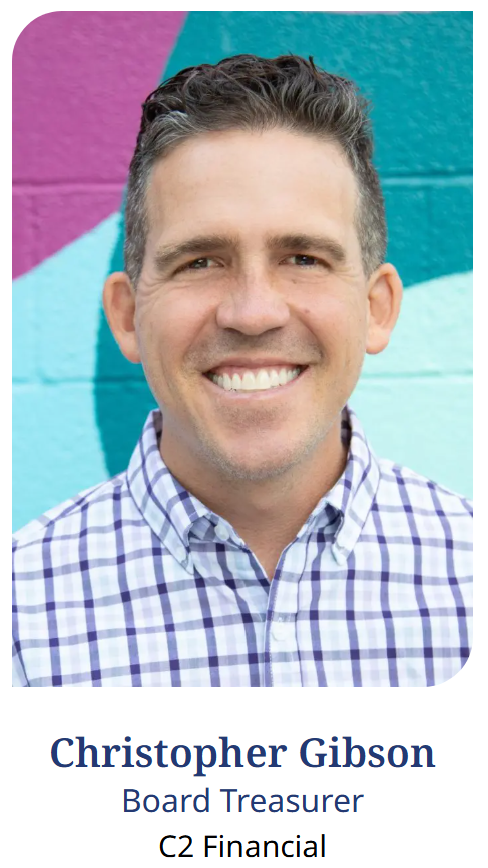
Chris Gibson serving as Board Treasurer on The Center for Active Living's staff and board page in West Seattle

Why I do this

Serving on the Board of Directors as Treasurer made sense for me because the financial side of nonprofit operations is what I know how to help with. Beyond that, I write the checks too. When clients move their parents into West Seattle, the Center is one of the first places I send them. On top of that, I attend events and show up for this organization in a real way — because this is one of the places I genuinely care about in this neighborhood.

If you work with West Seattle clients over 50, the Center should be in your toolkit too. Specifically, drop-ins are welcome, dues are modest with sliding-scale options, and many wellness services and support groups are free of charge. As a result, for a client weighing whether to stay or sell, a tour of the Center can change the conversation entirely.

One more thing — the raffle

Alaska Airlines flight voucher offered as a raffle prize in The Center for Active Living's annual aging in place fundraiser

If a flat donation isn’t your thing, the Center is also running a raffle: two roundtrip ticket vouchers on Alaska or Hawaiian Airlines, no blackout dates. Tickets are $50 each or three for $100, available at the Center’s front desk. Full raffle details are here. All proceeds go to the Center.

FAQ

What is The Center for Active Living?

The Center for Active Living is a nonprofit community center in West Seattle (formerly the Senior Center of West Seattle) that serves more than 1,600 adults aged 50 and older. It offers daily affordable meals, more than 40 weekly programs, wellness and support services, and free elder-law legal consultations.

How does The Center support aging in place in West Seattle?

The Center supports aging in place by addressing the three biggest non-financial barriers to staying home: isolation, nutrition, and physical decline. Daily community meals, ongoing balance and strength classes, and recurring social programs give older West Seattle residents the consistent contact and physical activity that keep them independent at home.

Where does The Center for Active Living’s funding come from?

The Center’s annual budget is roughly $1.6 million. Membership dues cover about 7%, donations cover about 22%, and the rest comes from government grants, program activity fees, thrift store sales, facility rentals, and event income. The donation share is what keeps programming accessible regardless of a member’s income.

How can I donate to The Center for Active Living?

You can give any amount through my personal fundraising page on GiveSmart, or buy raffle tickets at the Center’s front desk for a chance at Alaska or Hawaiian Airlines roundtrip vouchers. Both go to the same place — keeping programs affordable for every neighbor who walks through the door.

How can a real estate agent or advisor use The Center as a referral?

Send your West Seattle clients aged 50+ to the Center directly. Drop-in visits are welcome, dues are modest with sliding-scale options, and many wellness services and support groups are free. For a client weighing whether to stay or sell, a tour of the Center can change the conversation entirely.

If you have a client navigating an aging in place decision in West Seattle, send them my way. The financial side I can help with directly. The community side, the Center already has covered.

Want to see what other people say about working with me? You can read reviews at Mortgage Matchup and on Google.

You can also connect with me on LinkedIn, Facebook, and Instagram.