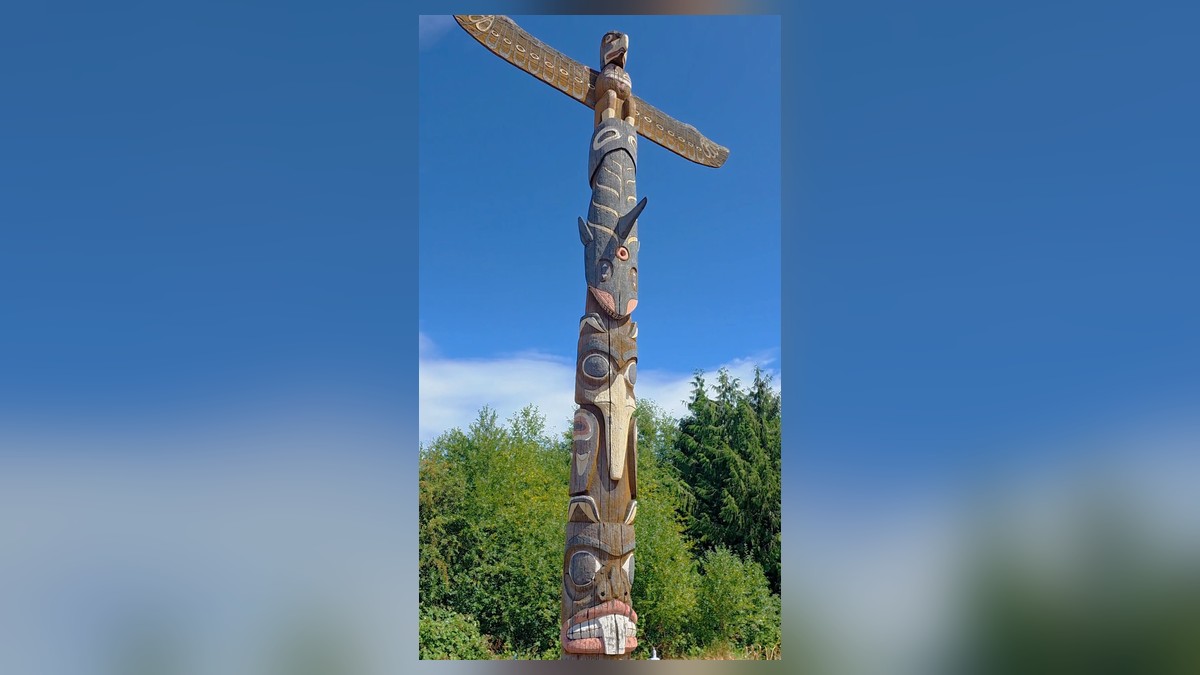
TL;DR: The Rotary Club of West Seattle built Rotary Viewpoint Park in 1976 and donated it to the city, and 50 years later club members are still the ones cleaning it. On Saturday, August 1, Tom Wise and I spent the day pulling graffiti and trash out of the park ahead of the 50th anniversary commemoration on August 11.
What the Rotary Club of West Seattle did on a Saturday
It was two of us out there on August 1: me and Tom Wise. No crew, no equipment. Scrub brushes, trash bags, and a Saturday.
Graffiti on the brick planter. Litter worked down into the planting beds. The kind of buildup a small park collects over a summer when nobody is paying attention to it. We went at it section by section and got the brickwork back to red.
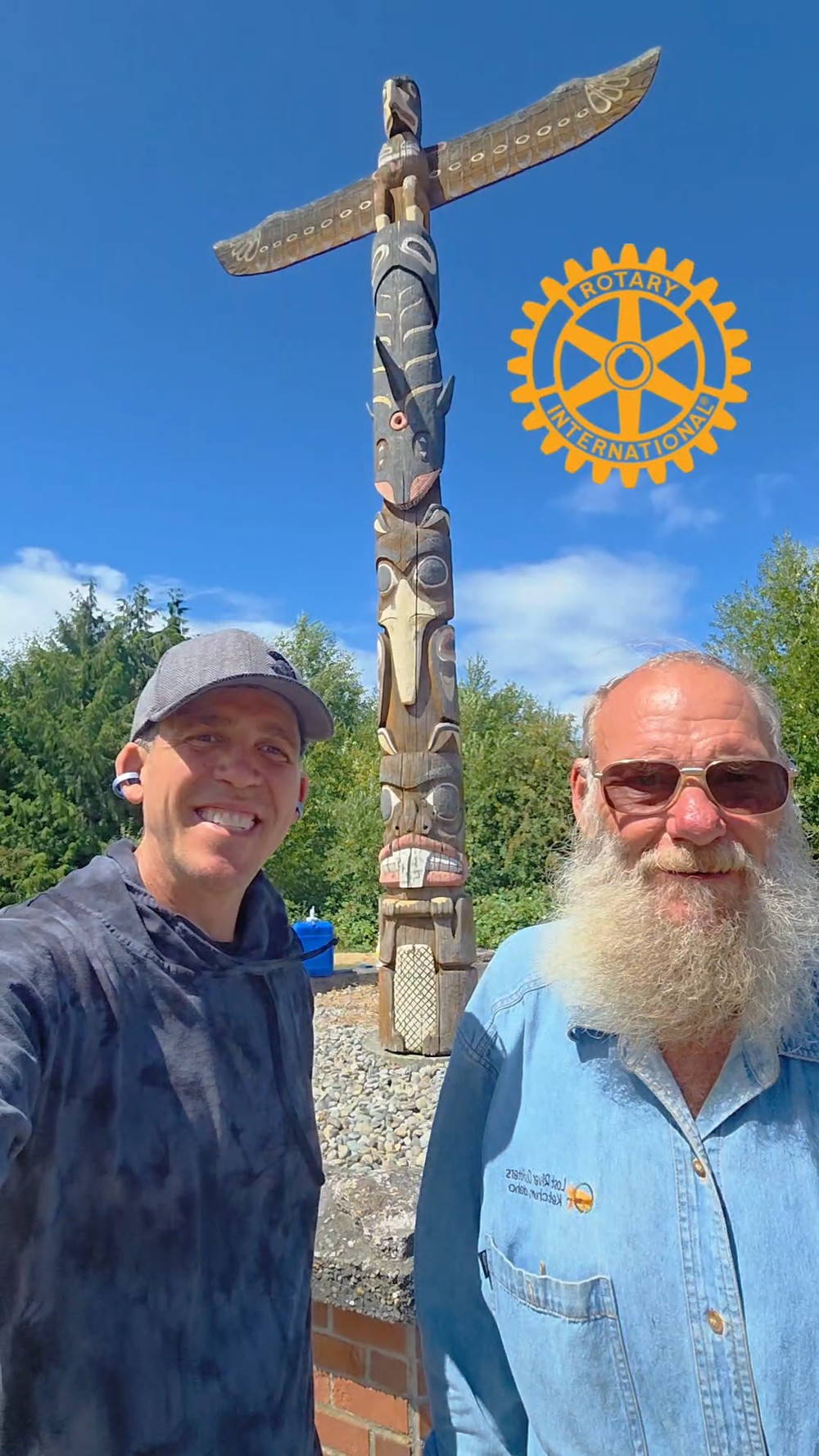
I shot before-and-after footage of the whole thing. The difference is bigger than I expected walking in. And this is the honest picture of what service clubs do: not many ribbon cuttings, a lot of Saturdays.
Where is Rotary Viewpoint Park in West Seattle?
Rotary Viewpoint Park sits at 35th Ave SW and SW Alaska Street in West Seattle, on the eastern slope above the West Seattle Golf Course. From the benches you look east across the Longfellow Creek valley with the downtown Seattle skyline behind it. If you drive 35th, you have passed it a hundred times. Most people know it as the totem pole park.
How the Rotary Club of West Seattle built the park
Before 1976 the site was city-owned land nobody wanted to look at: overgrown, weedy, and used as a place to dump cans and garbage.
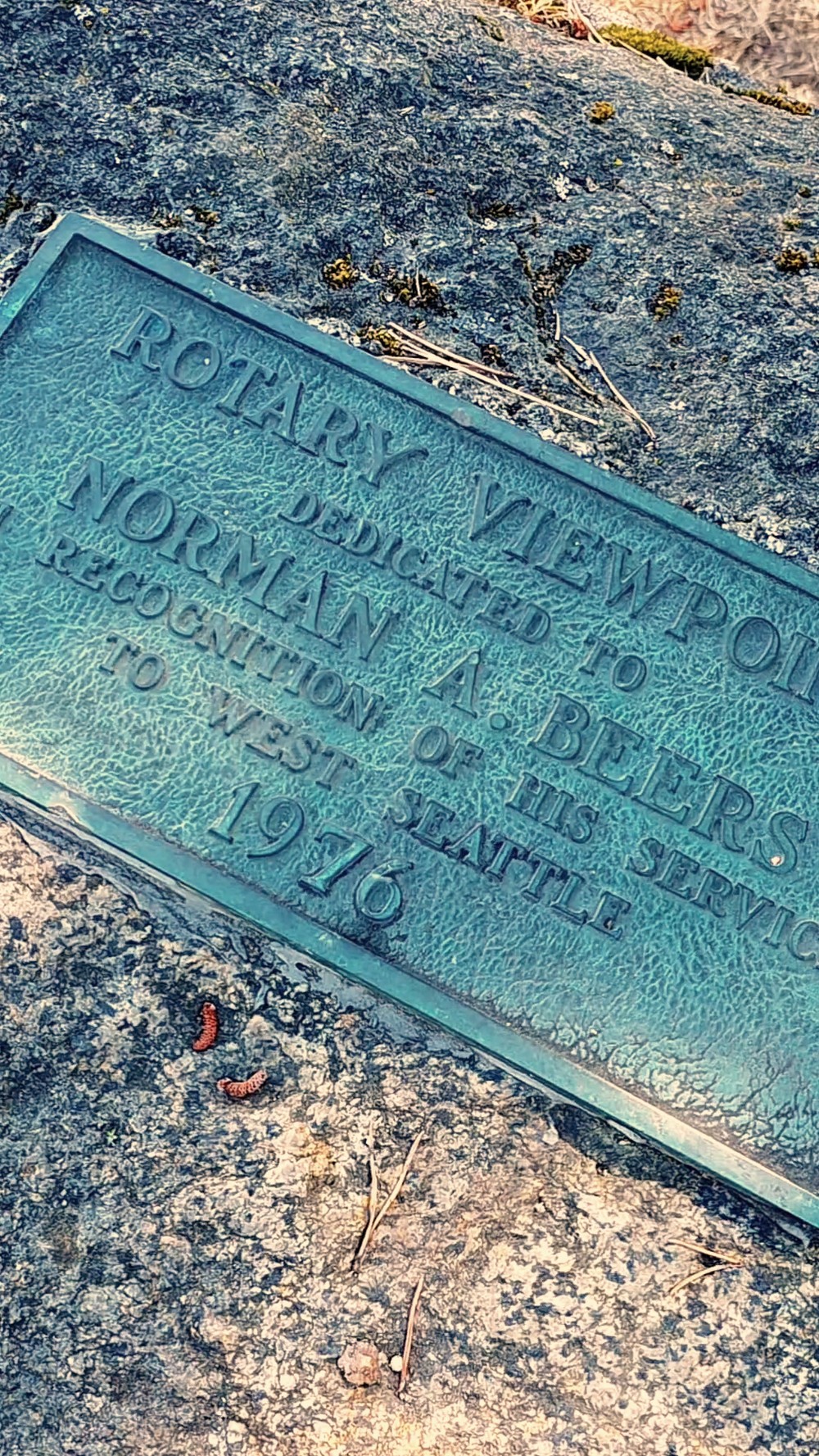
Neighbors complained. One of the people who heard them was Norman A. Beers, the executive of the West Seattle Chamber of Commerce and a longtime Rotarian. Instead of passing the complaints along, he challenged his own club to fix it. The Rotary Club of West Seattle took the hillside on as its U.S. Bicentennial project, funded the landscaping and the structural work, and formally presented the finished viewpoint to the City of Seattle in August 1976. There is a plaque at the park honoring Beers, and that is why it is there.
The club never walked away from it. Fifty years of partnership with Seattle Parks and Recreation, funding landscaping, benches, and structural repairs, and putting members on site with buckets when that is what the job requires.
The totem pole the club keeps standing
The pole is 18 feet of cedar, carved in 1976 by Robin Young, a Native artist from South Dakota who was teaching woodcarving at Highline Community College. The Rotary Club’s records list the figures as Thunderbird, Whale, Beaver, and Raven. The Thunderbird with its wings spread at the top is the silhouette everyone recognizes from the street.
Rotarians have kept it upright. A volunteer repainted it around 1982. In 1992, Rotarian Jack Henderson rebuilt the broken and missing pieces and repainted the pole with his wife Pat while Parks rebuilt the base.
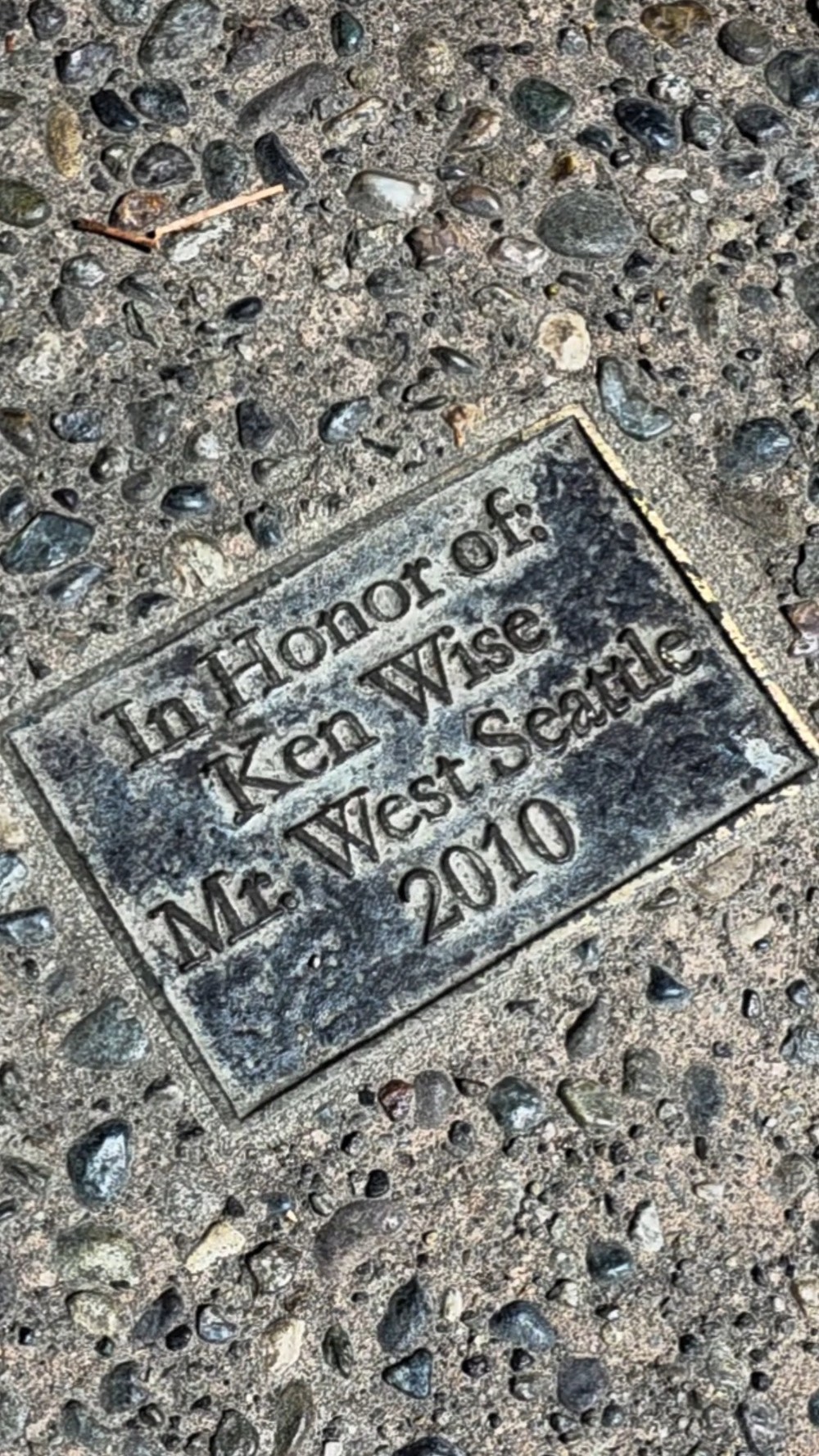
Then in November 2009 somebody stole it, in daylight, with a rented flatbed crane truck. Rotarians did the legwork that found it: Ken Wise, his son Tom, and Duane Ruud chased down witnesses, and the pole turned up on a trailer in Oregon. The club settled with the man responsible in a way that funded a full professional restoration, and the pole went back on its base on July 28, 2010. Ken Wise, who had terminal cancer and had asked to see it home, died four days later. More than 100 people came to the rededication on August 10, 2010, where Duwamish and Haida leaders took part with song, drumming, and stories, and Robin Young watched the pole he carved go back up. HistoryLink has the full account.
Sixteen years after that, Tom Wise was next to me on Saturday getting spray paint off the brick.
The 50th anniversary commemoration is August 11
The Rotary Club of West Seattle is marking 50 years of Rotary Viewpoint Park on August 11. If the totem pole is just something you pass on your commute, this is a good week to stop and look at it up close. Details are available through the club’s website.
Where does the Rotary Club of West Seattle meet?
The club meets Tuesdays for lunch at the West Seattle Golf Course, 4470 35th Ave SW, the same course the viewpoint looks down on. Doors open at 11:30 a.m., the meeting runs from noon to 1:30 p.m.
Visitors are welcome, and you do not have to know a member to come. Email ws_rotary@yahoo.com by noon the Sunday before the meeting you want to attend. Lunch is $30, or complimentary if you are coming to look at membership.
I chair the speaker program, so I am the one lining up who talks each week. If you run something interesting in West Seattle and want a room of engaged people to hear about it, get in touch.
FAQ
Where does the Rotary Club of West Seattle meet?
The Rotary Club of West Seattle meets Tuesdays at the West Seattle Golf Course, 4470 35th Ave SW, Seattle. Doors open at 11:30 a.m. and the lunch meeting runs noon to 1:30 p.m. To attend, email ws_rotary@yahoo.com by noon the preceding Sunday. Lunch is $30, or free for prospective members.
What projects does the Rotary Club of West Seattle do?
The club’s most visible local project is Rotary Viewpoint Park, which it built and donated to the City of Seattle in 1976 and has maintained ever since, including recovering and restoring the park’s stolen totem pole in 2009 and 2010. The club also runs youth programs, community fundraisers, and international service work through Rotary International.
Who built Rotary Viewpoint Park?
The Rotary Club of West Seattle developed the neglected hillside at 35th Ave SW and SW Alaska as its U.S. Bicentennial project and presented it to the City of Seattle in August 1976. Longtime Rotarian and West Seattle Chamber of Commerce executive Norm Beers challenged the club to take it on, and a plaque at the park honors his role.
Who carved the West Seattle totem pole?
Robin Young, a Native artist from South Dakota who taught woodcarving at Highline Community College, carved the 18-foot cedar pole in 1976. It depicts Thunderbird, Whale, Beaver, and Raven. Young attended the pole’s rededication in 2010.
Why a mortgage guy is out there with a scrub brush
Because I live here. Most of my lending work is with West Seattle, Burien, and Puget Sound homeowners, and a lot of it lately is with people in their 60s, 70s, and 80s trying to figure out how to stay in the neighborhood they helped build. Same instinct that got this park built in the first place.
If that is the season you are in, I write about it often: how a reverse mortgage can fund a living inheritance, and why I support The Center for Active Living. You can start with reverse mortgage basics or come to one of my West Seattle classes.
If you or someone you know is weighing whether they can afford to stay put in West Seattle, send them my way. And come by the park on August 11.
Reverse Mortgages & Home Loans with Christopher Gibson at C2 Financial
9030 35th Ave SW, Seattle, WA 98126
+1-206-890-6132
Serving West Seattle, Burien, Tukwila, Beacon Hill, Columbia City, Rainier Valley, Vashon Island, Bainbridge Island, Renton, Kent, Federal Way, and the greater Puget Sound.
Worked with me before? A review helps more than you’d think: Review on Mortgage Matchup | Review on Google