
Categories
For Real Estate Pros Industry News

What Is a Condotel? Why Fannie & Freddie Say No

TL;DR: A condotel is a condo that Fannie Mae and Freddie Mac treat as a hotel, which makes it ineligible for conventional financing. The frustrating part is that a building can get tagged as a condotel even when the HOA runs nothing like a hotel. I just closed an investor purchase on a condo in Silverthorne. It checked out clean on every operational test and still got called a condotel, simply because it shows up on Booking.com and Airbnb. Here’s how the classification actually works, and how we got the deal done anyway.

If you haven’t yet, it’s worth reading my companion post on the 2026 Fannie and Freddie condo rule changes first. This post zooms in on one specific way a condo lands in non-warrantable territory: the condotel label.

What is a condotel?

A condotel, short for condo-hotel, is a condominium project that operates like a hotel even though separate people own the individual units. Think of a resort building where owners drop their unit into a rental program, guests check in at a front desk, housekeeping cleans between stays, and the whole thing runs on nightly bookings. Legally it’s a condo. Functionally it’s a hotel.

Fannie Mae and Freddie Mac will not buy a loan on a condotel unit. They classify it as a commercial or transient property rather than a residential one. That puts it on the ineligible list right alongside timeshares and houseboats. There is no such thing as a “Fannie Mae condotel approval.” If the project is a condotel, conventional financing is off the table, and the buyer needs a different kind of loan.

What makes a condo a condotel in Fannie and Freddie’s eyes?

Fannie Mae spells out the disqualifying traits in its Selling Guide (section B4-2.1-03, Ineligible Projects), and Freddie Mac mirrors them. Fannie and Freddie treat a project as a hotel, motel, or similar commercial entity if it has one or more of these characteristics:

  • Hotel-type services. A rental or registration desk, daily cleaning service, central key systems, room service, or similar guest services.
  • Mandatory rental pooling. Legal documents that require owners to put units into a rental pool or share rental profits with the HOA or a management company. This also covers documents that limit an owner’s right to occupy their own unit through blackout dates or seasonal restrictions.
  • Hotel-style management. The HOA is licensed as a hotel, motel, resort, or hospitality entity, or the project is professionally managed by a hotel or resort company that also facilitates short-term rentals for owners.
  • Hotel naming or branding. A legal or common name that includes “hotel,” “motel,” or “resort,” unless that’s purely a historical reference and not how the building operates today.
  • Hotel conversion. The building started as a hotel and never got the full gut rehabilitation needed to strip out its transient-housing characteristics.
  • A project-level hotel rating. The complex has obtained a hotel or resort rating through travel or booking providers.

How a condo becomes a condotel: vacation-rental listings and a hotel star rating around a building
A condo’s online booking presence can trigger the condotel label on its own.

Here’s the trap most people miss: it only takes one. The agencies don’t add up points. A single qualifying characteristic can sink the entire project. One owner can lose conventional financing purely because of how the whole building presents to the outside world.

A real example: the Silverthorne deal

I just closed one of these, and it’s the perfect illustration of how slippery the condotel label can be. The property was a condo in Silverthorne, Colorado, a ski-resort area where short-term rentals are everywhere. Because resort markets are exactly where condotels tend to live, we did our homework before writing the offer. We ran the building through every operational test Fannie and Freddie use:

  • Does the HOA manage short-term rentals? No. The association stays out of the rental business entirely.
  • Is there a front desk or registration area? No. No check-in, no lobby desk, no guest services.
  • Are the units real residential units? Yes. Every unit was above 500 square feet with a full kitchen, not a hotel room.
  • Does the HOA handle unit cleaning or housekeeping? No. No daily cleaning, no turnover service run by the association.

On paper, this project passed. By the operational definition of a condotel, it simply wasn’t one. And yet Fannie and Freddie still flagged it as a condotel. Why? Because when you Google the complex, the first things that come up are Booking.com, Airbnb, and VRBO listings. The building presents to the world as a place you book a vacation stay, and that public-facing transient profile tripped the wire, even though the HOA does none of the things that classically define a condo-hotel.

That’s the lesson for agents and investors: a condo can be operationally clean and still get labeled a condotel based on how it’s marketed online. The owners renting their own units on travel sites can effectively brand the whole project as transient in the eyes of the agencies.

“Largely transient in nature”: the phrase that sinks these deals

When my underwriter flagged the Silverthorne project, the language was that the condo was “largely transient in nature.” That’s not an offhand phrase. It comes straight from how Fannie Mae and Freddie Mac think about condotels.

Alongside the hotel-style characteristics in the Selling Guide, Fannie Mae treats a project as a condotel when it is “primarily transient.” That means the majority of the units get rented out on a short-term basis rather than lived in. Transient occupancy is the hotel test in plain terms: are people staying here for nights and weekends, or living here? When most of a building turns over on nightly and weekly stays, the agencies see a hotel operating under a condo deed, regardless of what the HOA documents say.

Here’s the nuance that tripped up the Silverthorne deal. Fannie Mae has said that in rare cases a project might still be considered through its Project Eligibility Review Service. That window is narrow: owners individually rent units short-term, with no other condotel traits. But a project-level hotel rating from a travel or booking site counts as its own disqualifying characteristic. So once a complex reads as “largely transient” online and carries that booking-site footprint, the combination is usually enough for an underwriter to call it a condotel. The HOA does not even need to run a rental program. The transient character plus the public hotel-style presence is the one-two punch.

For agents, the practical signal is simple. If a project’s units mostly trade as vacation rentals rather than residences, assume an underwriter may read it as transient and plan financing accordingly.

Mortgage broker arranging a non-QM condotel loan with condo listing and paperwork
The right non-QM lender can finance a condotel as an investment-property purchase.

Can you still buy a condotel? Yes, with the right loan.

This is where being a broker mattered. When Fannie and Freddie say no, that’s the end of the road for a conventional loan, but it is not the end of the road for the deal. For the Silverthorne purchase, I had a non-QM lender that allows an investor purchase of a condotel, so we closed it as an investment-property loan through a product built for exactly this situation.

Non-QM and portfolio lenders underwrite condotels under their own rules instead of agency guidelines. Terms differ from a conventional loan, typically a larger down payment and different pricing. But for an investor buying in a resort market, the math often works fine. It’s the difference between getting the deal done and walking away. Because I work with many lenders rather than a single bank’s menu, I can match a flagged building to a lender that will actually finance it.

How to protect a condo deal before you write the offer

The Silverthorne deal worked because we checked the building in advance instead of finding out at underwriting. If you’re listing or buying a condo, especially in a resort or short-term-rental market, send me the project name, city, and state early. I’ll look into whether it’s warrantable, whether it carries any condotel characteristics, and what financing options actually fit. Catching it up front is the difference between a smooth close and a contract that falls apart a week before closing. It’s the same reason I tell agents to vet a pre-approval up front.

Want the broader picture on how condo eligibility is shifting this year? The companion post covers the changes that make some buildings easier to finance and others harder: the 2026 Fannie and Freddie condo rule changes.

FAQ

What is the difference between a condotel and a regular condo?

A regular condo is a residential property where owners live in or rent out their units under normal residential terms. A condotel operates like a hotel, with features such as a front desk, rental pooling, hotel-style management, or heavy short-term rental activity. Fannie Mae and Freddie Mac finance regular warrantable condos but treat condotels as ineligible commercial properties.

Can you get a conventional loan on a condotel?

No. Fannie Mae and Freddie Mac classify condotels as ineligible, so they won’t back a conventional loan on one. Buyers typically need a non-QM or portfolio loan, which underwrites the project under its own guidelines, usually with a larger down payment and different pricing.

Can a condo be called a condotel just because owners list on Airbnb?

Yes, it can happen. Even when the HOA runs no hotel operations, heavy short-term rental activity and a public booking presence on sites like Booking.com, Airbnb, or VRBO can lead Fannie Mae and Freddie Mac to treat the project as transient. A project-level hotel rating from travel providers is one of the listed condotel characteristics, and a single characteristic can make the project ineligible.

How do I find out if a condo is a condotel before making an offer?

Have your broker check the project early. Send the condo name, city, and state, and the building can be reviewed for condotel characteristics and overall warrantability before you’re under contract. Checking up front lets you line up the right loan instead of discovering the problem during underwriting.

Buying or listing a condo in a resort or short-term-rental market? Send the building my way and I’ll tell you where it stands before it costs anyone a contract.


Don’t just take my word on condotel financing

If you want a read on how I work with clients before sending one my way, here’s where past borrowers and partners have weighed in:

Reviews on Mortgage Matchup ↗ Reviews on Google ↗

Follow along:


Categories
For Real Estate Pros Industry News

Non-Warrantable Condo: Why Fannie & Freddie Say No

TL;DR: The March 2026 condo rule changes from Fannie Mae and Freddie Mac (Lender Letter LL-2026-03) make condos easier to finance in three ways and harder in two. A non-warrantable condo is a building the agencies won’t finance, and the two tightening changes will push more buildings into that bucket starting August 3, 2026. Before you list a condo or write an offer, send me the project name, city, and state and I’ll tell you exactly where it stands.

What is a non-warrantable condo?

We’re all used to checking whether a condo is FHA approved. That part hasn’t changed: FHA still keeps a public approved-condo list. If the project isn’t on it, an FHA loan is off the table unless you pursue a single-unit approval. (Worth knowing when you’re weighing FHA vs conventional for a buyer.) But more and more frequently the bigger problem isn’t FHA. It’s that Fannie Mae and Freddie Mac are disapproving condo buildings for conforming loans.

A non-warrantable condo is a project that doesn’t meet Fannie or Freddie eligibility, so the agencies won’t buy a loan secured by a unit in it. When that happens, conventional financing dries up for every unit owner in the building, not just one borrower. A condo can be non-warrantable for a long list of reasons. Too much commercial space, one entity owning too many units, litigation against the HOA, pending special assessments, underfunded reserves, low owner-occupancy on a prior-standard file, or insurance that misses the HOA master-policy requirements. Fail one criterion and the whole project is out.

Here’s the part that catches agents off guard: a building can look perfectly normal, sell fine last year, and still be non-warrantable today. The borrower’s credit and down payment don’t fix it. The project itself has to qualify.

3 ways condos are getting easier (and 2 ways they are getting harder)

On March 18, 2026, Fannie Mae issued Lender Letter LL-2026-03 and Freddie Mac issued a matching bulletin. These are the most significant changes to condo underwriting since the agencies started tightening after the Surfside collapse in 2021. The simplest way to hold it all in your head: condos get easier to finance in three ways, and harder in two. Three of the changes are already live. The two that tighten things arrive on set dates you can put on your calendar.

Easier: 3 changes that took effect immediately

All three of these are already in force, and each one puts buildings back in play that conventional financing had shut out:

  • 1. Investors can buy again. The old rule required 50% owner-occupancy for an investment-property loan under full review on an established project. That threshold is gone. It unblocks a lot of urban and rental-heavy buildings.
  • 2. Insurance requirements loosened. Lenders can now lean on Guaranteed Replacement Cost or Extended Replacement Cost to satisfy coverage sufficiency. Inflation guard is no longer required, and roofs and certain property qualify on an actual-cash-value basis. Buildings the agencies previously flagged “unavailable for lending” over insurance can return to eligible.
  • 3. More projects qualify with less red tape. Waiver of Project Review now reaches established condo projects with 10 or fewer units (no master association, no condotel activity). And Florida new construction no longer needs mandatory PERS submission, so lenders can review those projects under standard new-construction review types.

So if you’ve got a deal that died on a condo last year over insurance or investor mix, it’s worth a second look. It may be financeable now. The two changes below cut the other way.

Condo building with 2026 Fannie Mae and Freddie Mac rule-change deadline illustration
The 2026 condo rule changes arrive on set dates — August 3, 2026 and January 4, 2027.

Harder: 2 changes coming on set dates

Both of these tighten the screws, and both land on dates you can put on the calendar right now:

  • 1. Limited Review goes away — August 3, 2026. For loan applications dated on or after that day, Fannie and Freddie eliminate Limited and Streamlined Review for established projects with more than 10 units. Every one of those loans moves to Full Review.
  • 2. Reserves get stricter — August 3, 2026 and January 4, 2027. Starting August 3, lenders must use the highest recommended reserve allocation in the study, not a baseline number. Then on January 4, 2027, the minimum annual reserve contribution rises from 10% to 15% of budgeted assessment income.

The first one is the gut punch. Limited Review was the fast lane: if a buyer put enough down (often 10% on a primary), the lender could approve the loan by verifying basic property and insurance data without digging into the association’s full financials. Industry estimates put 40% to 65% of current condo loans in that lane. Closing it means more documentation, more HOA paperwork, and longer underwriting on a huge share of condo files. The borrower’s down payment no longer changes that.

It also costs more. Full Review leans on a full lender condo questionnaire completed by the HOA or its management company, and those carry a fee the buyer usually pays. A standard or limited questionnaire often runs around $75 to $150, but the full lender version typically lands in the $200 to $350 range, and sometimes higher, with rush fees of $50 to $100 on top if the file is on a clock. Many associations route these through third-party providers like CondoCerts or their management company, so the cost and the turnaround are out of your hands once the request goes in. With Limited Review gone, more files will trigger that full questionnaire, which means more upfront cost and more waiting on the association before a deal can close.

The reserve changes hit the building, not the borrower. For a lot of HOAs, getting to 15% means an owner vote and higher dues. Read all of this as a timeline, not a checklist. A condo that sails through in spring 2026 may need more documents by late summer and may stumble on reserves in early 2027. The same building, three different answers depending on the application date.

Mortgage broker comparing non-QM condo loan options at a desk
As a broker, non-QM and portfolio options can finance condos that conventional loans can’t.

How do you check if a condo is warrantable before you list it?

You don’t have to guess. Send me the condo name, city, and state of any project you’re about to list or that your buyer is eyeing. I’ll look up its status. We can catch a non-warrantable problem early instead of three days before closing. It’s the same reason I tell agents to vet a pre-approval up front.

And here’s why I’m a broker and not a single-bank loan officer: when Fannie and Freddie say no, I’m not done. I work with tens of lenders that have non-QM condo products with different rules, different options, and different pricing. A building that’s non-warrantable for conventional financing is often perfectly financeable elsewhere. A portfolio or non-QM lender underwrites the project differently. That’s the whole point of having options. One door closes, I’ve got a dozen more to try for your client.

FAQ

What is the difference between a warrantable and non-warrantable condo?

A warrantable condo meets Fannie Mae and Freddie Mac project eligibility, so it qualifies for conventional financing. A non-warrantable condo fails one or more of those criteria, so the agencies won’t back a loan on it. Non-warrantable units typically need a portfolio or non-QM loan instead, often with different down payment and pricing terms.

Does a bigger down payment fix a non-warrantable condo?

No. As of August 3, 2026, the end of Limited Review means a larger down payment no longer replaces a full project review. Approval depends on whether the condo project meets Fannie and Freddie standards, not just the borrower’s equity or credit strength.

Can you still get a loan on a non-warrantable condo?

Yes, often through a non-QM or portfolio lender. These lenders underwrite the project under their own guidelines instead of Fannie or Freddie rules. As a broker I work with many of them, so a building that’s off-limits for conventional financing can still have a path. Terms and pricing vary by lender and project.

Is a non-warrantable condo the same as a condo that isn’t FHA approved?

No. FHA approval is a separate HUD list for FHA loans. “Non-warrantable” refers to Fannie Mae and Freddie Mac conventional eligibility. A condo can be FHA approved but non-warrantable for conventional, or the reverse, so check both depending on the loan type.

If you have a client weighing a condo and you’re not sure where the building stands, send the project my way and I’ll check it before it costs anyone a contract.


Don’t just take my word on condo financing

If you want a read on how I work with clients before sending one my way, here’s where past borrowers and partners have weighed in:

Reviews on Mortgage Matchup ↗ Reviews on Google ↗

Follow along:


Categories
For Real Estate Pros Special Offers

UWM 1-0 Buydown: Real Year-One Savings, Honest Trade-Offs

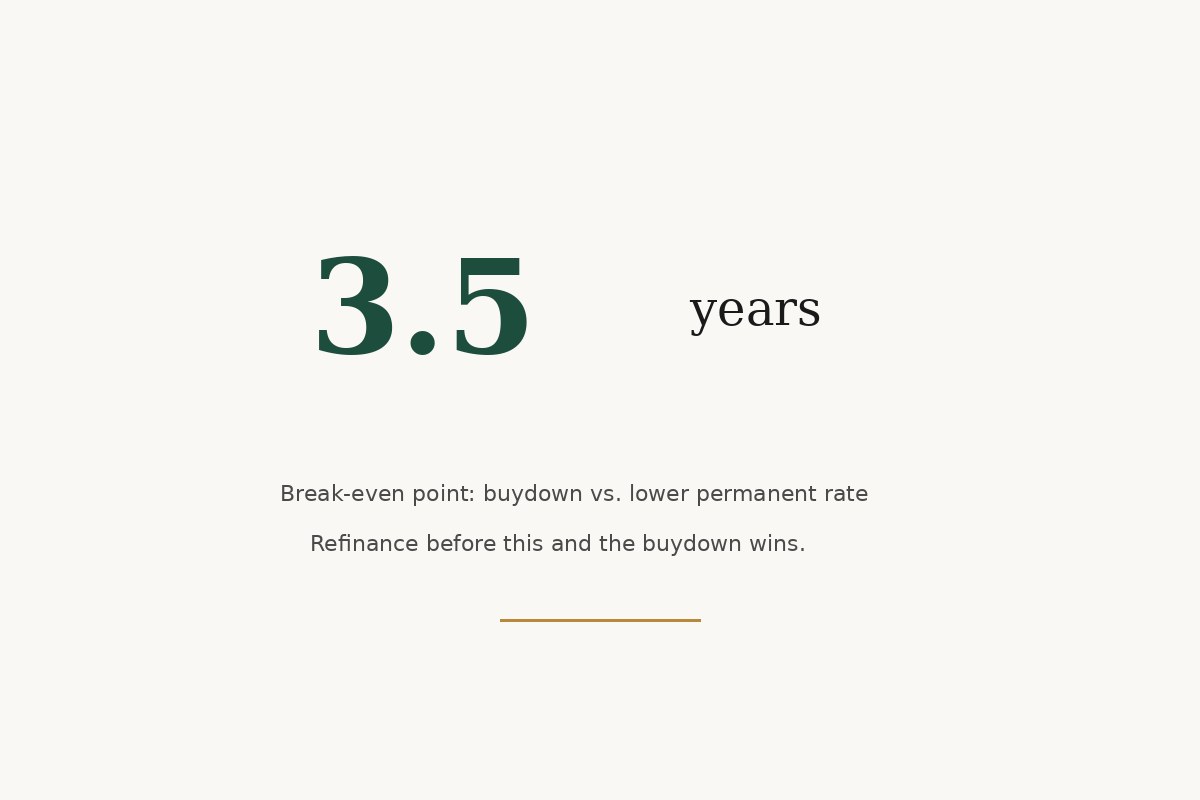
UWM is paying for a 1-0 temporary buydown right now. It drops a buyer’s first-year mortgage rate by a full percentage point. No out-of-pocket cost. On a $600,000 loan, that’s about $280 a month, or roughly $3,400 across the first 12 months. There’s a real trade-off: a slightly lower permanent rate exists without the buydown. The break-even between the two is around 3.5 years. The 10-year Treasury is back near where it was a year ago. The odds of a refinance window opening before then are good. For a West Seattle or Burien buyer stretching to make a $600,000 purchase work, that first-year breathing room can be the difference between buying now and waiting twelve months.

UWM Free 1-0 Buydown promotional graphic — bright neon arrow pointing at the words FREE 1-0 BUYDOWN on a dark background
UWM’s Free 1-0 Buydown promotion — currently funded by the lender at no out-of-pocket cost to the buyer.

What the UWM 1-0 Buydown Actually Does

UWM is running an aggressive promotion. It’s a “Free” 1-0 temporary buydown they fund out of their own pricing margin. The mechanics are simple. For the first 12 months, the buyer pays as if their rate is 1% lower than the note rate. In Year 2 through Year 30, the full note rate kicks in. The subsidy sits in an escrow account at closing and pays the difference each month during Year 1.

UWM is funding the buydown. It does not come out of the buyer’s pocket. It does not eat into a seller credit. It does not require any negotiation in the purchase contract. From a buyer’s cash-to-close perspective, it is genuinely free.

How Much Does It Save in Year One?

On a $600,000 loan, the 1-point rate reduction is worth roughly $280 a month in lower principal and interest. Over 12 months that totals around $3,400. Real affordability relief in the first year — when buyers are also absorbing moving costs, furniture, and repairs that nobody quotes them on the GFE.

For a buyer on the fence because the monthly payment was just outside their comfort zone, this changes the math. It reframes what’s actually affordable in the first year of ownership.

Where’s the Catch? The Real Trade-Off Against the Permanent Rate

Calling it Free is technically accurate from the buyer’s side. It is not free in the absolute sense. UWM is spending pricing margin on the Year 1 subsidy that could otherwise have gone toward a slightly lower permanent rate. On the same rate sheet, the same buyer can typically lock about a quarter-point lower rate for the full 30 years. No buydown, no Year 1 cushion. Just a permanently cheaper payment.

So the choice is a real trade-off. Year 1 cushion versus permanent monthly savings over the life of the loan. Anyone telling a buyer it is a no-brainer either way is oversimplifying.

3.5 years break-even point for UWM 1-0 buydown versus lower permanent mortgage rate
The break-even point: hold the loan past about 3.5 years and the lower permanent rate beats the buydown.

When Does the UWM 1-0 Buydown Win?

The break-even between the buydown and the lower permanent rate works out to roughly 3 years 7 months. If the buyer refinances or sells before then, the buydown wins. If they hold the loan past that point, the lower permanent rate pulls ahead. And stays ahead for the rest of the term.

The math is straightforward. The buyer banks about $3,400 in Year 1 with the buydown. Then they pay roughly $110 a month more than they would have on the lower permanent rate, every month after that. Those $110 chunks chew through the $3,400 head start over about 31 months in Year 2 onward. Total time to break even: 12 plus 31, or 43 months.

Why a Refi Window Inside 3.5 Years Is More Likely Than Not

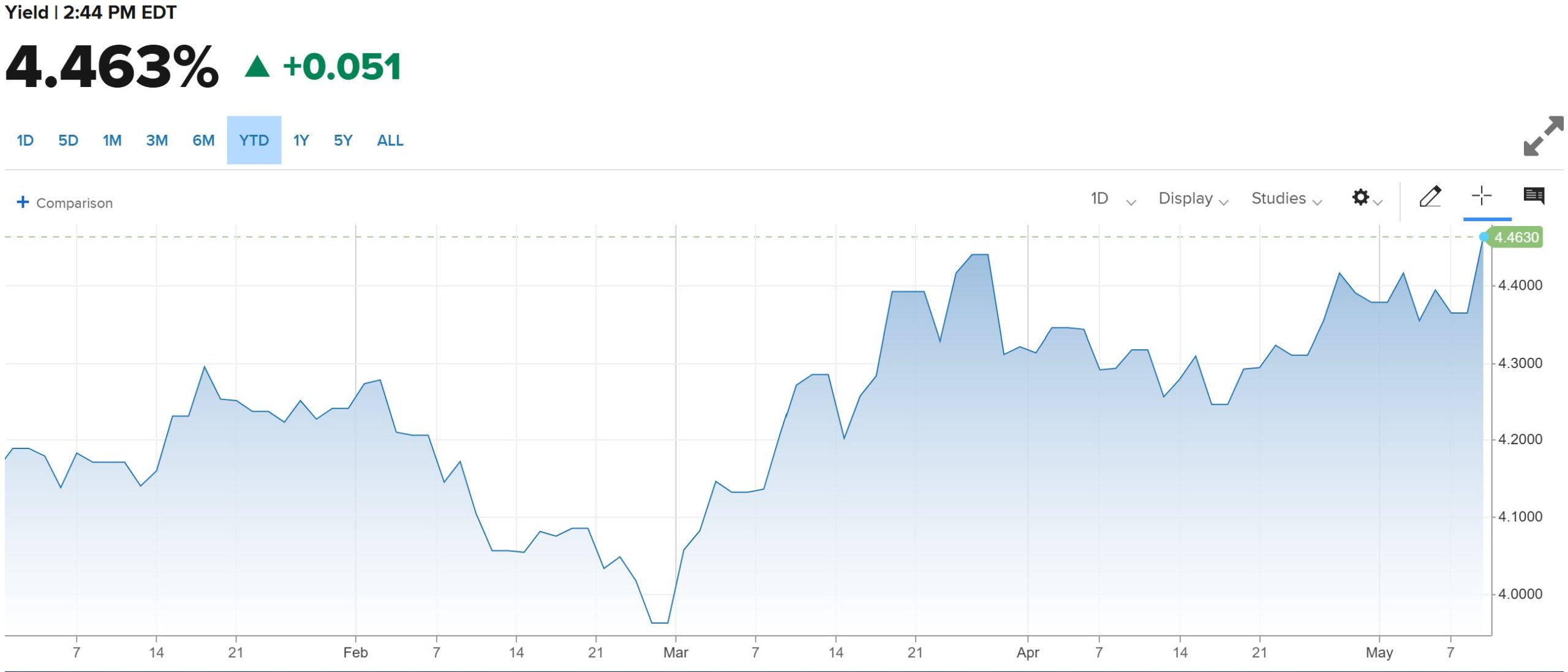
This is where the timing question matters. The 10-year Treasury drives mortgage rates more than any other single input. It closed at 4.46% as of mid-May. That’s up from a late-February low near 3.97%. That’s roughly half a percentage point of upward move in about ten weeks. It puts the 10-year right back near where it was a year ago.

10-year Treasury yield year-to-date chart showing rise from late-February low near 3.97 percent to 4.463 percent in May 2026
10-Year Treasury YTD 2026: up from a late-February low near 3.97% to 4.46% in mid-May — almost half a percentage point of upward move in about ten weeks.

The directional implication is simple. There’s real room for the 10-year to fall back toward that February low. That happens if economic data softens or the Fed signals more accommodation. Most major forecasters expect 30-year fixed rates to drift lower through late 2026 and into 2027. That includes the Mortgage Bankers Association and Fannie Mae. Whether the move is gradual or sharp depends on the data, but the directional consensus is clear.

For a buyer choosing between the buydown and the lower permanent rate, that backdrop tilts the decision. A refinance opportunity opening in the next 24 to 36 months is more likely than not. That’s well inside the 3.5-year break-even window where the buydown wins.

How to Frame the Math for a Client on the Fence

The buyer needs three pieces of information to make this decision. None of them are about the buydown itself:

  • How long they realistically plan to hold the loan. The median U.S. homeowner stays put for 11.8 years. But the average mortgage only lives 5 to 7 years — because refinances end loans too. If they refi inside 3.5 years, the buydown wins.
  • What their cash-flow priorities look like in Year 1 specifically. First-year homeownership tends to be the most cash-strained year for any new owner — especially for Puget Sound buyers absorbing property taxes that are higher than what their lender estimated. The $3,400 Year 1 cushion has different value to a buyer who’s stretched than to a buyer who isn’t.
  • Their rate forecast posture. If they believe rates are flat or rising for the next several years, the lower permanent rate looks better. If they think rates are likely to drop and they will refinance, the buydown looks better. The 10-year’s recent move suggests the latter is plausible.

The math is not the hard part. The judgment about which lever to pull is. That is the conversation worth having before lock day.

FAQ

Is the UWM 1-0 buydown actually free?

Free from the buyer’s perspective — they pay nothing out of pocket for the buydown. UWM funds it from their pricing margin. The trade-off is that the same buyer could lock a slightly lower permanent rate without the buydown. So while there is no upfront cost, there is an opportunity cost compared to the alternative permanent rate.

What is a 1-0 temporary buydown?

A 1-0 temporary buydown means the borrower’s effective interest rate is 1 percentage point lower than the note rate for the first 12 months. After that, it steps up to the full note rate for Year 2 through Year 30. The Year 1 subsidy is funded by a lump-sum credit at closing. That credit sits in an escrow account. It pays the lender the difference each month during the buydown period.

How much does the UWM 1-0 buydown save on a $600,000 loan?

On a $600,000 loan, the 1-point reduction is roughly $280 a month in lower principal and interest. That runs for 12 months, or about $3,400 in total first-year savings. The exact figure varies slightly based on the underlying note rate, but the order of magnitude holds across the typical conventional loan range.

What happens if the borrower refinances during Year 1?

If the loan is refinanced or paid off before the 12-month buydown period ends, any unused buydown funds in escrow are typically applied as a credit toward the new loan. Or returned to the borrower per the lender’s specific buydown agreement. The funds do not disappear, but the exact treatment depends on UWM’s program terms. Verify in writing before the loan closes.

When does the buydown beat the lower permanent rate?

The break-even sits around 3 years 7 months on a typical loan. Hold the loan less than that, and the buydown wins. Hold it longer, and the lower permanent rate wins. Many mortgages do not survive 3.5 years anyway. Between refinances and home sales, the average mortgage lifespan in the U.S. is 5 to 7 years. Many end sooner when rates drop.

The Bottom Line

UWM’s “Free” 1-0 buydown is a meaningfully good product right now. Not because it’s free in the absolute sense. Because the current rate environment makes the trade-off lean in its favor. The buyer gets real Year 1 relief. The cost is borne by the lender. The break-even falls well inside the window where most mortgages get refinanced anyway. For a buyer on the fence about whether the monthly payment works, this is the kind of product that moves the needle.

The trade-off against the slightly lower permanent rate is the conversation worth having before the buyer commits to either path. Run the numbers on their actual loan size. Ask the right questions about how long they plan to keep the loan. The right answer is almost always specific to the buyer, not the product.

Related reading: how UWM’s 0% down product is qualifying more buyers. Also: the questions to ask a lender about a pre-approval. And how a reverse 1031 lets clients buy before they sell. For broader options, the full loan menu is here.

If you have a client weighing affordability options, or deciding between a temporary buydown and a permanent rate, send them my way. Happy to walk through the math on their specific loan.


Don’t just take my word on the UWM 1-0 buydown

If you want a read on how I work with clients before sending one my way, here’s where past borrowers and partners have weighed in:

Reviews on Mortgage Matchup ↗ Reviews on Google ↗

Follow along:

If you have a client weighing the UWM 1-0 buydown against a buy-down of the permanent rate, send them my way. We’ll run the actual numbers on their loan size, target rate, and realistic hold horizon.


Categories
For Real Estate Pros Loan Strategy

Virtual Mortgage Closing: Convenience Most Lenders Can’t Match

A virtual mortgage closing lets everyone on the loan sign electronically from wherever they happen to be. The borrower, the co-buyer, the co-signer — each one joins a short video call with a remote notary, on their own schedule. Most lenders still won’t do this. Instead, they make every party show up in person at a title company on a specific day, at a specific time. However, United Wholesale Mortgage is one of the lenders that does offer virtual mortgage closing, in both Washington state and Colorado. I had a recent file with two co-buyers and two co-signers spread across multiple time zones, and what would have been a week of scheduling chaos turned into a non-event.

Woman signing a virtual mortgage closing on a laptop from a beach chair, dog at her feet
A virtual mortgage closing turns a beach chair into a closing table. Each signer logs in from wherever they are.

What a Virtual Mortgage Closing Actually Is

A virtual mortgage closing replaces the in-person signing room with a secure video call. Instead of driving to a title company, you log in from your laptop or phone. Specifically, the notarization happens through Remote Online Notarization, or RON. A licensed notary checks your ID over video and notarizes your signatures digitally. Subsequently, the closing team countersigns, the county records the deed, and the lender funds the loan. So legally, the transaction matches an in-person closing in every state that permits RON.

Overall, the difference is the friction. Nobody drives across town. Nobody rearranges the day. Consequently, the whole closing becomes a thirty-minute video session, and the bottleneck shifts from “get everyone in the same room” to “find a half-hour that works.”

Father attending a virtual mortgage closing on a laptop from the bleachers at his kid's soccer game
Sign from the sidelines. Every party on the loan can join from anywhere on their own schedule.

Why Most Lenders Still Make Everyone Show Up in Person

RON has been legal in most states for years. Both Washington state and Colorado permit RON for mortgage closings, but lender adoption stays uneven. Specifically, building the technology takes real engineering work: secure ID verification, audio and video recording, integration with title companies and county recorders. Therefore, plenty of mid-sized lenders just haven’t built it. And some retail banks and credit unions still default to in-person closings because their compliance teams prefer that posture, full stop.

So if your client lands at a lender that doesn’t offer it, every signer has to physically appear at a title company. The slot is fixed: a specific date, a specific time. In theory that’s tolerable. In practice it’s the part of the deal where things break.

What Most People Don’t Realize: A Co-Signer Is a Co-Buyer

Here’s a misconception that bites a lot of buyers. When someone co-signs on a mortgage, they’re not just lending a credit score. Maybe a parent helps a kid qualify. Or a sibling lends their income. Or a friend bridges a credit gap. Whatever the situation, the co-signer signs the note. They’re on the loan. So they have to show up to the closing the same way the primary borrower does.

For example, take a parent in Spokane helping their daughter close on a house in Denver. Traditionally that meant flying out for a thirty-minute appointment. A co-signer who travels for work had to reschedule the trip. Likewise, someone already feeling like they’re doing the buyer a favor saw the in-person requirement as punishment for being generous. The friction isn’t theoretical. It lands hardest on the people doing the most help.

Man completing a virtual mortgage closing on a laptop from a hospital bed
When a co-signer can’t physically travel, a virtual mortgage closing keeps the deal on schedule.

How a Virtual Mortgage Closing Solves the Logistics Problem

Once everyone on the loan can sign remotely, location stops mattering. First, each signer gets a link. Next, they join a short video session with the notary at a time that works. They walk through the documents on screen, then sign. The whole thing usually takes about an hour per signer, often less. Some sign from a kitchen table. Others sign on a lunch break. Three signers can do it in three different time zones on the same day, and nobody has to coordinate calendars beyond their own.

Finally, the deal closes on schedule. Nobody flies in. Nobody takes a half-day off work. The buyer gets the keys.

A Recent Example: Two Co-Buyers, Two Co-Signers, Four Schedules

A recent file of mine had two co-buyers and two co-signers, four signers total. Each one lived in a different city. Each one kept a different schedule. Under the old model, this kind of deal drags closing out by a week while everyone tries to find a mutual two-hour window. With UWM’s virtual mortgage closing, though, each of the four signed at their own convenience. The whole signing wrapped inside a single business day. All four sat in different time zones; the property was here in South King County.

Overall, the narrative for my client flipped completely. What used to feel like extreme inconvenience for the people doing them a favor became extreme convenience instead. That’s not a small thing. Treat co-signers and co-buyers well at closing, and they say yes the next time a family member asks for help.

On the other side: a remote notary runs the closing for two borrowers over video.

What This Means for Your Next Deal

If you’re a real estate agent and your buyer needs a co-signer to qualify, the lender choice matters more than people realize. By contrast, a lender without virtual mortgage closing can turn a clean qualification into a logistics scramble on day 28 of a 30-day close. So ask early, before the buyer commits, whether the lender supports it. The question is simple: “Do you offer Remote Online Notarization for every party on the loan, in this state, on this product?” The answer should come back yes, no, or a quick check. Never a long story. For West Seattle, Vashon Island, and Bainbridge Island agents in particular, ferry schedules and Friday traffic can turn a one-hour closing into a half-day operation. Virtual closing removes that variable entirely.

Want more on the questions worth asking a lender before recommending one to a client? Read What I Wish I Knew About Pre-Approvals. UWM’s products are summarized on the loan options page. The National Notary Association keeps a current state-by-state guide to RON law, and the Mortgage Bankers Association tracks adoption data on digital and remote closings.

FAQ

Is a virtual mortgage closing legally the same as an in-person one?

Yes. Indeed, RON produces a legally binding mortgage in every state that permits it, including Washington and Colorado. The county records the deed the same way. The lender funds the loan the same way. Signing and notarization just happen over secure video instead of across a table.

Is a co-signer the same as a co-buyer on a mortgage?

For mortgage purposes, yes. A co-signer signs the note and joins the loan, so they count as a co-buyer in everything that matters at closing. They sign the same documents the primary borrower signs. They attend the closing the same way, virtually or in person.

Why don’t more lenders offer virtual mortgage closing?

Two reasons. First, the technology stack takes real engineering that smaller lenders haven’t built: identity verification, secure video, integration with title companies and county recorders. Second, some lenders’ compliance teams still prefer in-person closings as their default, even where RON is fully legal. Notably, UWM ranks among the few wholesale lenders that have rolled out RON broadly.

Can a virtual mortgage closing work if signers are in different states?

Yes, in most cases. Specifically, RON laws apply to the notary’s location, not the signer’s. So as long as the notary holds a license in a state that permits RON for mortgage closings, signers can join from anywhere with a stable internet connection. For deals with co-buyers and co-signers spread across multiple states, that’s the whole point.

Don’t just take my word on virtual closings

If you want a read on how I work with clients before sending one my way, here’s where past borrowers and partners have weighed in:

Reviews on Mortgage Matchup ↗ Reviews on Google ↗

Follow along:

If you have a client who needs a co-signer or co-buyer to qualify and you want to know whether their lender will make closing day painless or painful, send them my way. We do virtual closings as a default, not an exception.