
VantageScore mortgage approvals are here. Fannie Mae, Freddie Mac, and lenders like UWM now accept VantageScore 4.0 on conventional loans. Brokers can pull both FICO and VantageScore on the same credit report and use the higher of the two. That means the Credit Karma score your client checks on their phone is finally relevant to their home loan — and for borrowers near a pricing tier breakpoint, with thin files, or with old medical collections, it can change qualifying and rate.
The “but Credit Karma says…” conversation just changed
If you’ve worked with buyers for any length of time, you know the conversation. I pull credit, I give them their score, and they say: “Wait — Credit Karma says I’m a 740.” Then I explain that FICO and VantageScore are two different scoring systems, and Fannie and Freddie don’t use VantageScore for mortgage lending.
That second part isn’t true anymore. This year, Fannie Mae and Freddie Mac validated VantageScore 4.0 for mortgage lending. UWM — along with a short list of other approved lenders — now pulls both FICO and VantageScore on every credit report. Brokers use whichever score gives the borrower a better outcome. No extra cost. No extra steps.
This is genuinely new. Only a handful of lenders have it right now, and the broker channel got it first. So when your client asks why their Credit Karma score doesn’t match the lender’s score, the answer is no longer “they’re different systems and we don’t use that one.” The answer is now “we can use that one — and there are real situations where it’ll help.”
What is a VantageScore, and why is it different from FICO?
VantageScore is a credit scoring model the three credit bureaus — Equifax, Experian, and TransUnion — built as a competitor to FICO. The current version is VantageScore 4.0. It uses the same 300-850 range as FICO, but it weighs the underlying credit factors differently and includes a few things FICO doesn’t.
Three differences that matter for your clients:
- Trended data. VantageScore 4.0 looks at up to 24 months of balance and payment patterns, not just a snapshot. A borrower paying balances down over time looks better than the same balance held flat.
- Thinner files score. FICO needs at least six months of credit history to generate a score. VantageScore can score someone with as little as one month of credit activity. That matters for younger buyers, recent immigrants, or anyone rebuilding.
- Medical collections don’t count. VantageScore 3.0 and 4.0 ignore medical collection accounts entirely, regardless of amount or whether the borrower paid them. The mortgage-specific FICO models we’ve used for decades — Equifax Beacon 5.0, Experian/Fair Isaac V2, TransUnion Classic 04 — treat a medical collection the same as a credit card charge-off.
That last point is worth pausing on. The CFPB tried to ban medical debt from credit reports entirely in early 2025. A federal court struck down the rule that July. So medical collections over $500 still hit credit reports, and the older mortgage FICO scores still hammer borrowers for them. VantageScore does what the regulation couldn’t.
Why Credit Karma matters for VantageScore mortgage approvals
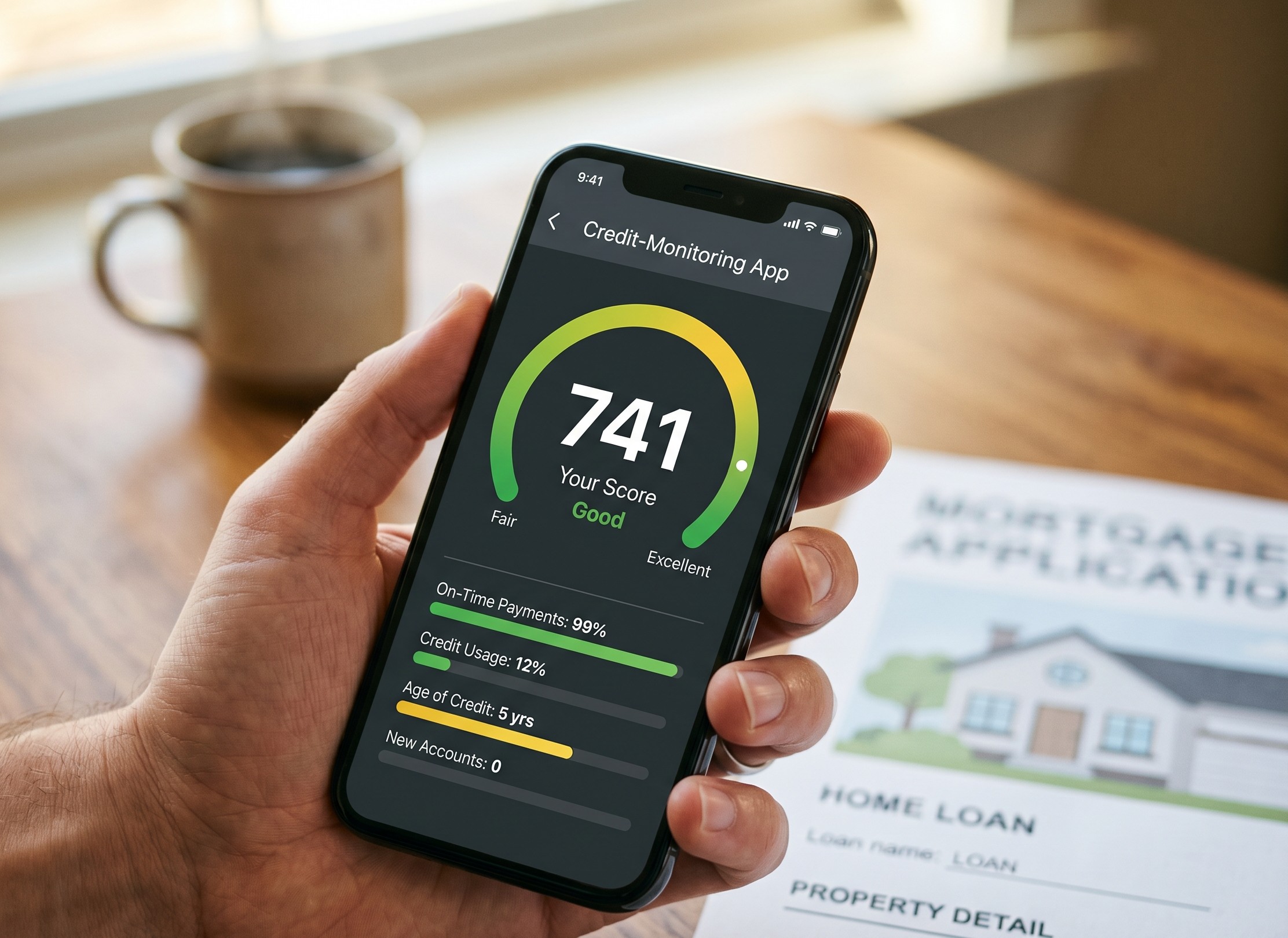
Credit Karma displays a VantageScore — specifically VantageScore 3.0, from TransUnion and Equifax. It’s not the exact same model the lender uses (mortgages pull VantageScore 4.0 across all three bureaus). But the philosophy and weighting sit far closer to each other than either does to FICO.
For years, that Credit Karma number was background noise in the mortgage conversation. We had to explain it didn’t count. Now it counts. The directional read — “my score is around here” — is now useful information for qualifying and pricing.
Where a higher VantageScore mortgage tier actually changes the deal
Three scenarios where pulling both scores and using the higher one moves the needle:
A borrower sitting just below a pricing tier breakpoint
The Fannie and Freddie loan-level price adjustment grid has hard breakpoints at 720, 740, 760, and 780. A buyer at 736 FICO sits in a worse pricing tier than a buyer at 742. If their VantageScore comes back at 745 or 750, we just jumped a tier. Same loan, same down payment, materially cheaper money — either lower rate at the same cost, or lower costs at the same rate. This is the same kind of structural pricing improvement we covered with the UWM 1.0 buydown. A small change in the inputs translates to real dollars at the closing table.

A borrower with old medical collections
Say your client has a $1,500 hospital bill in collections, dragging their mortgage FICO down 40 or 50 points. Their VantageScore will look very different — because VantageScore ignores it entirely. For a borrower who’s otherwise clean, that single change can flip them from “barely qualifies” to “qualifies at a normal rate.”
A thin-file borrower
Young buyers, recent immigrants, anyone whose credit history is short and sparse — these are the borrowers who often hear “come back in six months once you have more history.” VantageScore can score them today. Working out of West Seattle, I see this often: first-time buyers in their late twenties, one credit card, steady job, 5% down payment ready to go. The only thing holding them back is a FICO thin enough that they got told no last year. That’s exactly the borrower VantageScore was built to evaluate. Worth checking against the FHA vs. conventional decision too, since a higher VantageScore can shift which loan type prices best.
Why VantageScore mortgage adoption matters for your clients (and your business)
For real estate agents: when a buyer with marginal credit sits on the sidelines, this is a reason to send them back through pre-approval. The answer they got six months ago — even three months ago — may not match the answer they get today. I see this most often with West Seattle, Burien, and South King County buyers who got an early “no” before VantageScore was on the table. For a fuller list of what to ask a lender during that conversation, see questions to ask a lender about a pre-approval.
For financial advisors: clients who are reverse-mortgage-curious, refinance-curious, or buying a second home — and assuming their score won’t qualify them at a good rate — may now have a path they didn’t before. Worth a conversation, especially for clients whose medical history has quietly suppressed their FICO. If you’re not sure which loan type fits, that’s worth a 15-minute call.
The competitive piece: this is a broker-channel advantage right now. Retail banks tend to move slower on new models. Most are still building their internal approval workflow. A solo broker working with UWM has dual-score pricing today. That’s a real reason for your client to call a broker before walking into their bank.
The honest caveats of VantageScore mortgage adoption
A few things to keep front of mind so you can manage expectations:
- Credit Karma uses VantageScore 3.0. The mortgage version is 4.0. They’re related but not identical, so the Credit Karma number won’t match the mortgage VantageScore exactly.
- Credit Karma pulls TransUnion and Equifax. Mortgage credit pulls all three bureaus and uses the middle score. So a high Credit Karma reading is encouraging but not a guarantee.
- UWM and other approved lenders apply a conservative haircut to the VantageScore before pricing — a guardrail while the new model gets tested at scale. The borrower’s VantageScore typically needs to land meaningfully higher than their FICO to actually change the pricing tier.
- This is conventional-loan territory right now. FHA acceptance is announced but rolls out separately. Government-loan adoption sits on a slower timeline.
- Underwriting standards haven’t loosened. Documentation, debt ratios, reserves — all the same. This is a pricing and qualifying optimization, not a relaxation of standards.
FAQ
Is VantageScore accepted for mortgage loans now?
Yes — for conventional loans. The FHFA validated VantageScore 4.0 for use by Fannie Mae and Freddie Mac, and approved lenders like UWM now pull both FICO and VantageScore on every file. FHA acceptance has been announced and rolls out separately. VA and USDA timelines are still in progress.
Will my Credit Karma score match what the VantageScore mortgage lender sees?
Not exactly. Credit Karma shows VantageScore 3.0 from TransUnion and Equifax. Mortgage credit pulls VantageScore 4.0 from all three bureaus, uses the middle score, then applies a conservative haircut before pricing. The Credit Karma number is now a useful directional read. It isn’t the final mortgage number.
Does VantageScore ignore medical collections?
VantageScore 3.0 and 4.0 ignore medical collection accounts entirely, regardless of the amount or whether the borrower paid them. The mortgage-specific FICO models still count them. For a borrower with a medical collection on file, that single difference can swing their qualifying score meaningfully.
Who benefits most from VantageScore in mortgage lending?
Three groups: borrowers sitting just below a pricing tier breakpoint, borrowers with medical collections on their report, and thin-file borrowers like first-time buyers, younger borrowers, or recent immigrants who don’t yet have six months of credit history.
Does using VantageScore cost the borrower anything extra?
No. With UWM’s current rollout, both FICO and VantageScore come back on the same credit pull at no additional cost to the borrower or broker. We use whichever gives the better result.
Don’t just take my word on VantageScore mortgage approvals
If you want a read on how I work with clients before sending one my way, here’s where past borrowers and partners have weighed in:
Follow along:
If you have a client whose Credit Karma score has always run higher than what lenders quote them, send them my way. We can pull both scores at no cost and see if there’s a path that wasn’t there six months ago.