Behind the scenes at United Wholesale Mortgage, the biggest lender in America.
TL;DR: I’m taking five real estate agents to the UWM Success Track in Detroit on Tuesday, September 15, 2026, and the centerpiece is a hands-on AI business-building course you can put to work the Monday after you land. You’ll also mastermind with about 100 other agents actively closing deals, and see how one of my purchase loans went clear to close in four days. United Wholesale Mortgage covers your flight and hotel. Five seats, and they go to whoever registers first.
What is the UWM Success Track, and why I’m bringing agents
The UWM Success Track is a day inside United Wholesale Mortgage‘s headquarters outside Detroit, where the largest lender in the country actually runs its purchase business. I get to bring five agents with me, and I’d rather spend those seats on people I already work with than on strangers. This isn’t a tour with a gift bag. It’s a look at the machine that decides whether your buyers’ loans close on time.
Here’s the part that matters to you: your name is on the sign in the yard. When a lender drags, you’re the one explaining it to your seller and your buyer. When a lender moves, you look like the agent who gets deals done. Seeing how UWM operates is really about protecting your reputation on every file we share.
UWM’s Success Track is built for real estate agents, not just loan officers.
Why a four-day clear to close wins offers
On the trip you’ll see exactly how we got one of my purchase loans clear to close in four days. Not four weeks. Four days. Sit with that for a second, because it changes how you write offers.
When your buyer can close in days, your offer beats a higher number that needs 30 to 45. Sellers take certainty over a few thousand dollars all the time, and a fast, pre-underwritten buyer is certainty. It also means fewer files blow up in underwriting and your commission check shows up sooner. If you want the mechanics behind how a modern lender pulls this off, I’ve written about the UWM 1-0 buydown and first-year savings and how virtual closings shave days off the calendar.
What the two days at the UWM Success Track look like
We fly to Detroit on Monday, September 14 and aim to land in the afternoon, so we can ride to the hotel together and grab dinner that night. Tuesday, September 15 is the Success Track itself, roughly nine to five: the underwriting floor, the technology, a mastermind with about 100 other agents, and a hands-on AI course you can use the Monday after you land. Then we head back to the airport and fly home Tuesday evening.
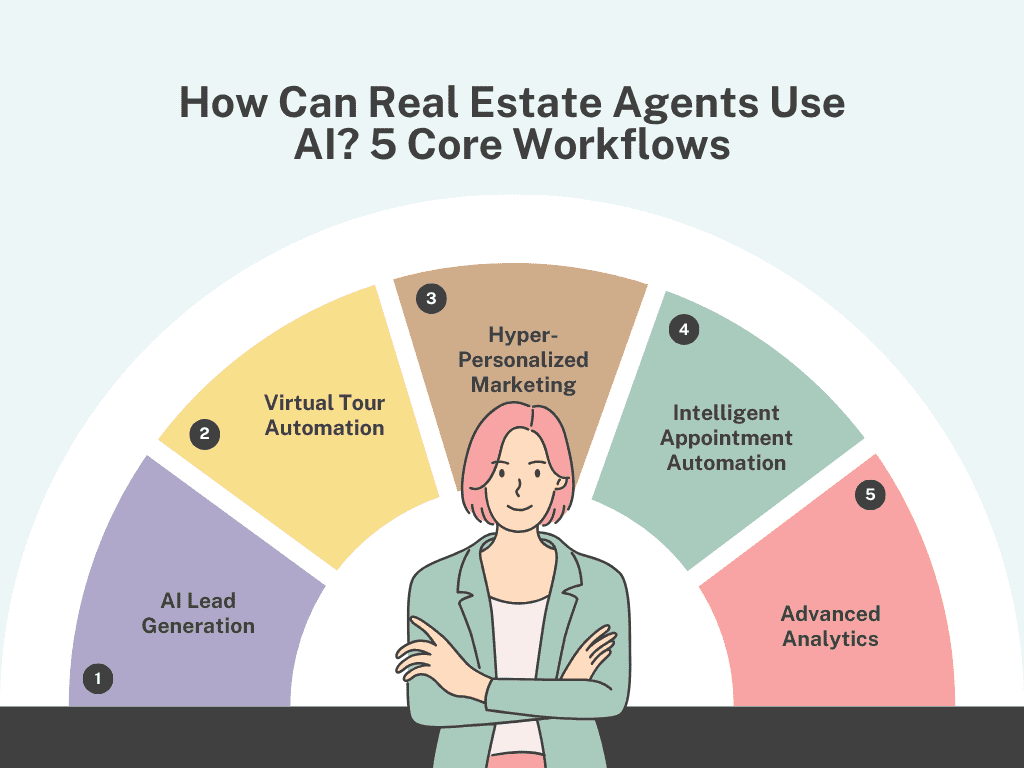
Five ways agents are already putting AI to work — the kind of thing we dig into on the trip.
Flights and hotel are on UWM. You can let them book your flights inside our arrival and departure windows, or pick your own Delta flights if you’d rather; Detroit is a Delta hub, so the options are easy. Your only real cost is getting yourself to your home airport.
Who the five seats are for
This is for agents who are actively writing offers and want an edge their competition doesn’t have. If you send buyers into bidding wars, if you’ve lost a clean deal to a slow lender, or if you just want to see what the biggest lender in America looks like from the inside, this is your trip. If you want a sense of the questions worth asking any lender before you send a client their way, my list of pre-approval questions every agent should ask is a good primer.
Nothing but getting to your home airport. UWM covers your flight and your hotel, and I handle the ground transportation to and from the airport in Detroit.
When and where is the UWM Success Track?
Tuesday, September 15, 2026, at United Wholesale Mortgage near Detroit, Michigan. We fly out Monday the 14th and fly home Tuesday evening.
Do I have to book my own flight?
No. You can let UWM book it inside our arrival and departure windows, or choose your own Delta flight in those windows if you prefer.
Who can come?
Five real estate agents I partner with. If you write purchase offers and want faster, more certain closings for your clients, you’re a fit.
How do I claim a seat?
Register at the trip page. Seats are first come, first served, and there are only five.
UWM's Free 1-0 Buydown promotion — currently funded by the lender at no out-of-pocket cost to the buyer.
UWM is paying for a 1-0 temporary buydown right now. It drops a buyer’s first-year mortgage rate by a full percentage point. No out-of-pocket cost. On a $600,000 loan, that’s about $280 a month, or roughly $3,400 across the first 12 months. There’s a real trade-off: a slightly lower permanent rate exists without the buydown. The break-even between the two is around 3.5 years. The 10-year Treasury is back near where it was a year ago. The odds of a refinance window opening before then are good. For a West Seattle or Burien buyer stretching to make a $600,000 purchase work, that first-year breathing room can be the difference between buying now and waiting twelve months.
UWM’s Free 1-0 Buydown promotion — currently funded by the lender at no out-of-pocket cost to the buyer.
What the UWM 1-0 Buydown Actually Does
UWM is running an aggressive promotion. It’s a “Free” 1-0 temporary buydown they fund out of their own pricing margin. The mechanics are simple. For the first 12 months, the buyer pays as if their rate is 1% lower than the note rate. In Year 2 through Year 30, the full note rate kicks in. The subsidy sits in an escrow account at closing and pays the difference each month during Year 1.
UWM is funding the buydown. It does not come out of the buyer’s pocket. It does not eat into a seller credit. It does not require any negotiation in the purchase contract. From a buyer’s cash-to-close perspective, it is genuinely free.
How Much Does It Save in Year One?
On a $600,000 loan, the 1-point rate reduction is worth roughly $280 a month in lower principal and interest. Over 12 months that totals around $3,400. Real affordability relief in the first year — when buyers are also absorbing moving costs, furniture, and repairs that nobody quotes them on the GFE.
For a buyer on the fence because the monthly payment was just outside their comfort zone, this changes the math. It reframes what’s actually affordable in the first year of ownership.
Where’s the Catch? The Real Trade-Off Against the Permanent Rate
Calling it Free is technically accurate from the buyer’s side. It is not free in the absolute sense. UWM is spending pricing margin on the Year 1 subsidy that could otherwise have gone toward a slightly lower permanent rate. On the same rate sheet, the same buyer can typically lock about a quarter-point lower rate for the full 30 years. No buydown, no Year 1 cushion. Just a permanently cheaper payment.
So the choice is a real trade-off. Year 1 cushion versus permanent monthly savings over the life of the loan. Anyone telling a buyer it is a no-brainer either way is oversimplifying.
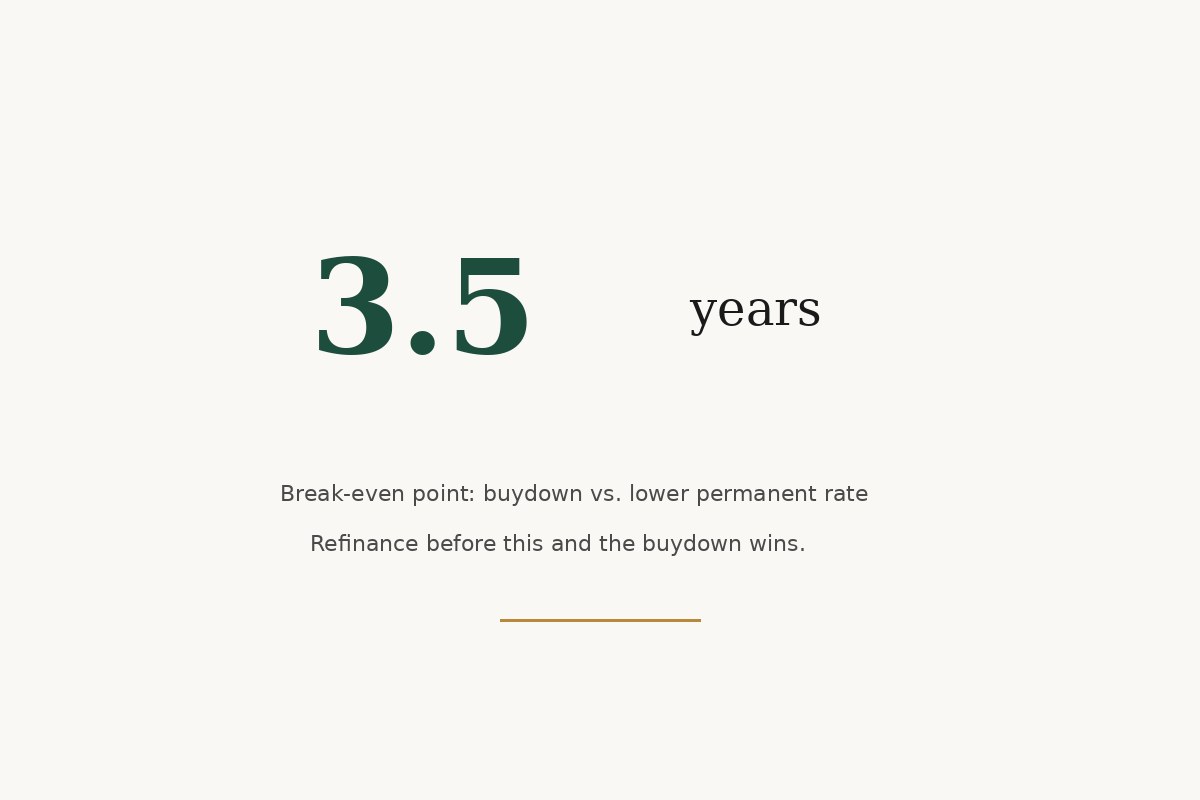
The break-even point: hold the loan past about 3.5 years and the lower permanent rate beats the buydown.
When Does the UWM 1-0 Buydown Win?
The break-even between the buydown and the lower permanent rate works out to roughly 3 years 7 months. If the buyer refinances or sells before then, the buydown wins. If they hold the loan past that point, the lower permanent rate pulls ahead. And stays ahead for the rest of the term.
The math is straightforward. The buyer banks about $3,400 in Year 1 with the buydown. Then they pay roughly $110 a month more than they would have on the lower permanent rate, every month after that. Those $110 chunks chew through the $3,400 head start over about 31 months in Year 2 onward. Total time to break even: 12 plus 31, or 43 months.
Why a Refi Window Inside 3.5 Years Is More Likely Than Not
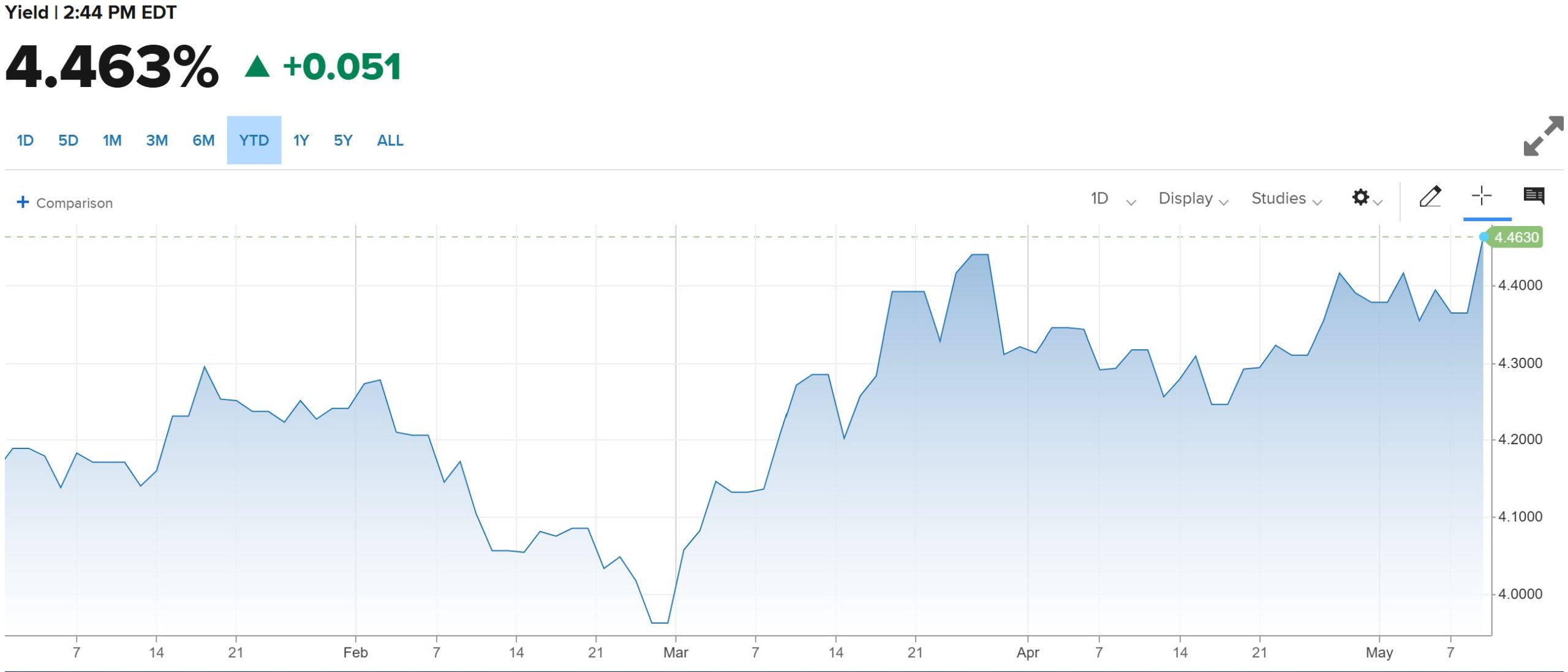
This is where the timing question matters. The 10-year Treasury drives mortgage rates more than any other single input. It closed at 4.46% as of mid-May. That’s up from a late-February low near 3.97%. That’s roughly half a percentage point of upward move in about ten weeks. It puts the 10-year right back near where it was a year ago.
10-Year Treasury YTD 2026: up from a late-February low near 3.97% to 4.46% in mid-May — almost half a percentage point of upward move in about ten weeks.
The directional implication is simple. There’s real room for the 10-year to fall back toward that February low. That happens if economic data softens or the Fed signals more accommodation. Most major forecasters expect 30-year fixed rates to drift lower through late 2026 and into 2027. That includes the Mortgage Bankers Association and Fannie Mae. Whether the move is gradual or sharp depends on the data, but the directional consensus is clear.
For a buyer choosing between the buydown and the lower permanent rate, that backdrop tilts the decision. A refinance opportunity opening in the next 24 to 36 months is more likely than not. That’s well inside the 3.5-year break-even window where the buydown wins.
How to Frame the Math for a Client on the Fence
The buyer needs three pieces of information to make this decision. None of them are about the buydown itself:
How long they realistically plan to hold the loan. The median U.S. homeowner stays put for 11.8 years. But the average mortgage only lives 5 to 7 years — because refinances end loans too. If they refi inside 3.5 years, the buydown wins.
What their cash-flow priorities look like in Year 1 specifically. First-year homeownership tends to be the most cash-strained year for any new owner — especially for Puget Sound buyers absorbing property taxes that are higher than what their lender estimated. The $3,400 Year 1 cushion has different value to a buyer who’s stretched than to a buyer who isn’t.
Their rate forecast posture. If they believe rates are flat or rising for the next several years, the lower permanent rate looks better. If they think rates are likely to drop and they will refinance, the buydown looks better. The 10-year’s recent move suggests the latter is plausible.
The math is not the hard part. The judgment about which lever to pull is. That is the conversation worth having before lock day.
FAQ
Is the UWM 1-0 buydown actually free?
Free from the buyer’s perspective — they pay nothing out of pocket for the buydown. UWM funds it from their pricing margin. The trade-off is that the same buyer could lock a slightly lower permanent rate without the buydown. So while there is no upfront cost, there is an opportunity cost compared to the alternative permanent rate.
What is a 1-0 temporary buydown?
A 1-0 temporary buydown means the borrower’s effective interest rate is 1 percentage point lower than the note rate for the first 12 months. After that, it steps up to the full note rate for Year 2 through Year 30. The Year 1 subsidy is funded by a lump-sum credit at closing. That credit sits in an escrow account. It pays the lender the difference each month during the buydown period.
How much does the UWM 1-0 buydown save on a $600,000 loan?
On a $600,000 loan, the 1-point reduction is roughly $280 a month in lower principal and interest. That runs for 12 months, or about $3,400 in total first-year savings. The exact figure varies slightly based on the underlying note rate, but the order of magnitude holds across the typical conventional loan range.
What happens if the borrower refinances during Year 1?
If the loan is refinanced or paid off before the 12-month buydown period ends, any unused buydown funds in escrow are typically applied as a credit toward the new loan. Or returned to the borrower per the lender’s specific buydown agreement. The funds do not disappear, but the exact treatment depends on UWM’s program terms. Verify in writing before the loan closes.
When does the buydown beat the lower permanent rate?
The break-even sits around 3 years 7 months on a typical loan. Hold the loan less than that, and the buydown wins. Hold it longer, and the lower permanent rate wins. Many mortgages do not survive 3.5 years anyway. Between refinances and home sales, the average mortgage lifespan in the U.S. is 5 to 7 years. Many end sooner when rates drop.
The Bottom Line
UWM’s “Free” 1-0 buydown is a meaningfully good product right now. Not because it’s free in the absolute sense. Because the current rate environment makes the trade-off lean in its favor. The buyer gets real Year 1 relief. The cost is borne by the lender. The break-even falls well inside the window where most mortgages get refinanced anyway. For a buyer on the fence about whether the monthly payment works, this is the kind of product that moves the needle.
The trade-off against the slightly lower permanent rate is the conversation worth having before the buyer commits to either path. Run the numbers on their actual loan size. Ask the right questions about how long they plan to keep the loan. The right answer is almost always specific to the buyer, not the product.
If you have a client weighing affordability options, or deciding between a temporary buydown and a permanent rate, send them my way. Happy to walk through the math on their specific loan.
Don’t just take my word on the UWM 1-0 buydown
If you want a read on how I work with clients before sending one my way, here’s where past borrowers and partners have weighed in:
If you have a client weighing the UWM 1-0 buydown against a buy-down of the permanent rate, send them my way. We’ll run the actual numbers on their loan size, target rate, and realistic hold horizon.
Why Buying Before You Sell Can Be a Huge Advantage in a 1031 Exchange
A buy before you sell 1031 exchange gives investors more control and less deadline pressure. It also gives them a better shot at securing the right replacement property before selling the one they already own.
One of the biggest problems with a standard 1031 exchange is the clock.
An investor sells a property, wants to defer capital gains taxes, and now has a narrow window to identify the next one. That pressure changes behavior fast. Instead of buying the right property, people start buying the available property. That is where mistakes happen.
It can lead to overpaying. It can lead to settling. It can lead to buying something you would have passed on if you had more room to think.
That is why buying before you sell can be such a major advantage.
The problem with a traditional 1031 exchange
In a standard deferred 1031 exchange, the investor sells first and buys second. Once the sale closes, the timeline starts. The exchanger has 45 days to identify potential replacement property and generally 180 days to complete the exchange. Those deadlines are a core part of the exchange rules.
On paper, that may sound manageable.
In the real world, it can be brutal.
Forty-five days is not much time to find a solid investment, negotiate terms, perform due diligence, and make a smart decision. When inventory is tight or competition is heavy, that deadline can push investors into corners they never wanted to be in.
And once that pressure sets in, price discipline often disappears.
What is a reverse 1031 exchange?
A reverse 1031 exchange flips the order.
Instead of selling the old property first, the investor acquires the replacement property first and sells the relinquished property afterward. The IRS does not generally allow that structure outside of a specific framework. It must go through a qualified exchange accommodation arrangement (QEAA), under Revenue Procedure 2000-37, as modified by Revenue Procedure 2004-51.
That structure is what makes it possible to buy before you sell.
Under the safe harbor framework, the parked property arrangement generally must be completed within 180 days. The relinquished property must generally be identified within 45 days after the exchange accommodation titleholder acquires the parked property.
So the key benefit is not that the deadlines disappear.
The key benefit is that the investor can secure the replacement property first.
That changes everything.
Why buying before you sell can be the smarter move
When you buy first, you gain leverage that most exchangers do not have.
You can lock up the property you actually want instead of hoping the right one appears after your sale closes. You can negotiate from a position of intention rather than urgency. You can avoid the panic that shows up when the 45-day identification window starts closing in. The 45-day and 180-day deadlines still matter in a reverse exchange safe harbor. But the transaction sequence gives the investor more control over the replacement side of the deal.
That matters because investment decisions made under pressure are often expensive.
A reverse 1031 exchange can help investors:
secure a desirable property before someone else does
avoid chasing limited inventory after a sale
reduce the risk of overpaying just to satisfy a deadline
make a more deliberate decision about what they are buying
create more flexibility around the sale of the relinquished property
That is the real advantage.
It is not just about convenience. It is about better decision-making.
Where a bridge loan fits in
This is where a lot of investors miss an important tool.
For local agents and advisors working with landlord clients in West Seattle, Burien, Tukwila, Renton, or the broader Puget Sound region: this is a real-money conversation. Investors holding appreciated rental property here can defer six-figure capital gains tax bills with the right reverse 1031 + bridge loan structure.
If you are buying before you sell, the obvious question is: how do you fund the acquisition before the old property is gone?
In some cases, the answer is a bridge loan.
A bridge loan provides short-term financing to acquire the replacement property first. The investor then pays off that short-term debt once the relinquished property sells. Reverse exchange structures often involve financing while the parked property is held. Industry guidance specifically addresses lender and exchanger funding during that period.
This is one of the most overlooked uses of bridge financing.
A lot of people think of bridge loans in the context of moving from one home to another. They do not immediately think of them as part of a reverse 1031 strategy. But for the right investor, that can be the exact tool that makes a buy-first exchange possible.
Traditional 1031 exchange vs. reverse 1031 exchange
Here is the cleanest way to look at it.
Traditional 1031 exchange You sell first. Then the clock starts. You have 45 days to identify replacement property and 180 days to close.
Reverse 1031 exchange You buy first. Then you work to sell the relinquished property afterward. A safe-harbor reverse exchange is generally structured through an exchange accommodation titleholder and still works inside a 45-day identification period and 180-day completion period.
So the difference is not that one has rules and the other does not.
The difference is the order of operations.
And that order can have a major effect on the quality of the investment decision.
The biggest mistake investors make
The biggest mistake is assuming the standard 1031 exchange is the only option.
I see this play out often with Puget Sound investors trading out of small West Seattle, Beacon Hill, or Columbia City rental properties. The owner finds the right replacement on Vashon Island or in South King County weeks before their current rental hits the market. Without a reverse 1031 structure, the options narrow. They lose the replacement, accept a fire-sale price on their current property, or take an avoidable tax hit.
It is the most common option. It is not the only one.
When investors do not know a reverse 1031 exchange is available, they often back themselves into rushed deals. They give up negotiating power. They compromise on the replacement property. Sometimes they buy something they never would have touched without the deadline pressure.
That is avoidable.
Buying before you sell is not the right fit for every investor. Reverse exchanges are more complex, require careful structuring, and usually involve higher transaction costs and more coordination than a standard deferred exchange. The IRS safe harbor requires specific handling through an accommodation arrangement rather than letting the taxpayer simply hold both sides informally.
But when timing matters and the right property is available now, it can be a powerful strategy.
Final thought
If the right replacement property shows up before your current investment sells, you have options. You don’t have to walk away or rush into a bad standard exchange.
A reverse 1031 exchange may give you a better path.
And a bridge loan may be the piece that makes it work.
The point is simple: investors should know they may have another option before they let the 45-day deadline force a bad decision.
Important note
1031 exchanges and reverse 1031 exchanges should be reviewed with a qualified intermediary and a CPA or tax attorney before moving forward. The exchange rules are technical, and the structure has to be done correctly. IRS guidance for reverse exchanges is tied to qualified exchange accommodation arrangements under Revenue Procedure 2000-37, as modified.
Don’t just take my word on reverse 1031 exchanges
If you want a read on how I work with clients before sending one my way, here’s where past borrowers and partners have weighed in:
If you have a client navigating a 1031 exchange in Puget Sound and the timing is going sideways, send them my way. A reverse 1031 + bridge loan combination is not theoretical — we structure these for real Puget Sound investors.
What the pros say about the Seattle real estate market in November
When I asked a group of Seattle-area real estate agents about the Seattle housing market November, the results were nearly unanimous — eight out of nine said it’s a better time to buy than sell.
Here’s what they’re seeing firsthand across West Seattle, Burien, and Renton.
Seattle Housing Market Inventory and Buyer Leverage
James Ngugi (Instagram) opened the conversation with what most agents agree on:
The market has completely shifted…
“The market has completely shifted — there’s a lot more inventory, and buyers have real negotiating power right now.”
That leverage theme came up repeatedly. Natalie Blake (Instagram) put it plainly:
“It’s a great time to be buying.”
And Michael Pearsall (Instagram) agreed that motivated sellers are creating smart opportunities for buyers before spring competition ramps up again.
Seattle Housing Market Prices and Flexibility
Maysaa Souki (Instagram) said buyers finally have options:
We’re seeing great inventory…
“We’re seeing great inventory and great prices. There’s just more room for buyers to get what they actually want.”
Sebastian Fessenden (Instagram) added a balanced take:
“It’s still a good time to sell if your home stands out — unique homes always move. But for most sellers, waiting until spring might make more sense.”
“Prices cool down when the temperature does. That’s when serious buyers can make their best deals.”
And Alican Bodur (Instagram) offered the long-term strategy:
You can negotiate…
“You can negotiate the price now, buy lower, and refinance later when rates drop. That’s how you win on both sides.”
Balancing Both Sides of the Market
Joni Moriarty (Instagram) pointed out that sellers who also plan to buy can come out ahead:
“If you’re buying and selling at the same time, you’ll probably have leverage on the buy side — and you’ll be facing motivated buyers on the sell side.”
Sonia Hernandez (Instagram) closed the conversation perfectly:
“It’s a better time to be buying than selling — there’s more to choose from, and sellers are incredibly negotiable.”
My Take on the Seattle Housing Market in November
After ten years as a real estate agent and five years in lending, I agree with them — this November market favors buyers who are ready to act.
When inventory is up, competition is low, and sellers are flexible, it’s the ideal time to secure the right home. Rates can change, but the right property doesn’t wait.
As the year winds down, the Seattle housing market in November offers a rare mix of lower competition and motivated sellers. For buyers who act now, the numbers — and the agents — are on your side.
Learn what to ask a lender before trusting a pre-approval — from verifying documents to understanding risk.
Real estate agents see pre-approval letters every day, but not all pre-approvals are created equal. Knowing the questions to ask a lender about a pre-approval can make or break your client’s deal.
Some letters collapse once underwriting begins, while others hold up because the lender did the hard work up front. Here are the seven questions (plus three bonus ones) that help you tell the difference between a strong buyer and a risky one.
Top Questions to Ask a Lender About a Pre-Approval
1. When were the most recent paystubs and bank statements collected?
If it’s been more than 30 days, things may have changed. Why it matters: You’re confirming that the buyer’s job and funds haven’t shifted. Red flag: “Our documents are over a month old.”
2. Has an underwriter reviewed income if the buyer is self-employed or has variable pay?
Commission, bonus, and self-employment income can change everything. Why it matters: An early underwriter review prevents surprises later. Red flag: “We just went off what they told us.”
3. Have funds for down payment and closing been verified and sourced—including large deposits?
If not, why not? Are there reserve requirements, and does the buyer meet them? Why it matters: Just because the money shows up on a statement doesn’t mean it’s usable. The lender must verify where it came from and ensure it’s seasoned. Red flag: “We’re relying on what the buyer said they have.”
4. Have you run AUS for this property, including taxes, insurance, and HOA dues? Did it generate an appraisal waiver?
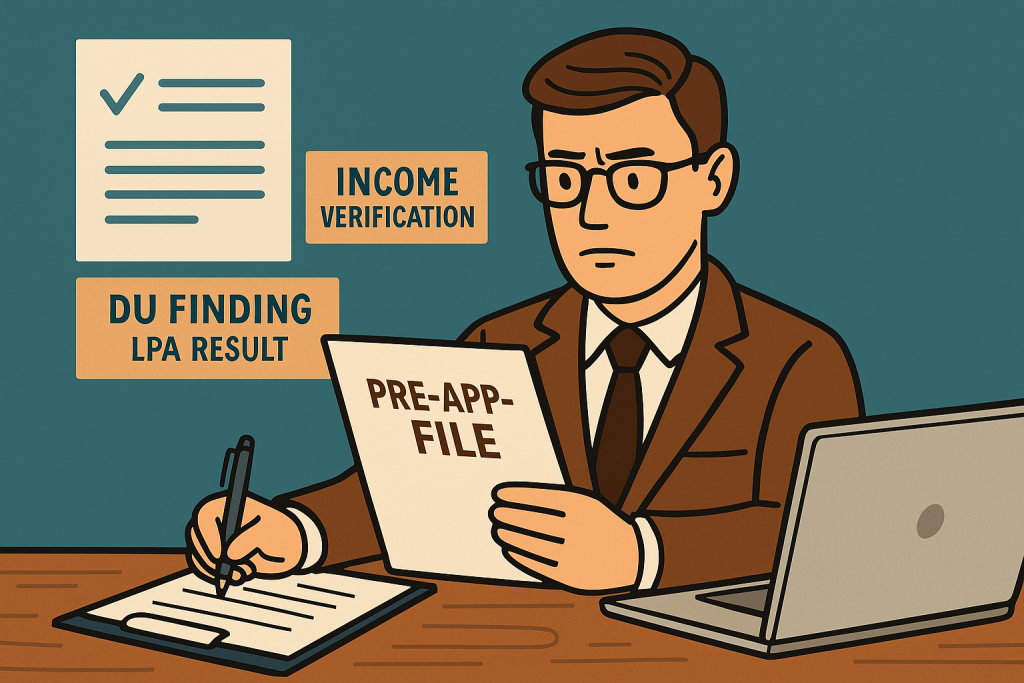
Automated Underwriting Systems (AUS) like Fannie Mae’s DU or Freddie Mac’s LP confirm whether a file truly qualifies. Why it matters: Running AUS with the actual property confirms the approval fits and whether an appraisal waiver applies. Red flag: The lender letter is dated or AUS hasn’t been rerun.
A loan officer carefully reviews DU and LPA findings to verify the strength of a borrower’s pre-approval before an offer is made.
5. Payment & Cash to Close — Have those numbers been reviewed with the buyer?
Why it matters: Buyers who haven’t seen their full payment breakdown may back out later. Red flag: “We haven’t discussed total payment or funds to close yet.”
6. What additional documentation is needed before the file can enter underwriting?
Why it matters: An incomplete pre-approval is just a pre-qualification. You want to know if it’s ready to move forward. Red flag: “We’re still waiting on income or asset documents.”
7. Are there any factors that could delay or stop this loan from closing?
Why it matters: Lenders often know where the weak points are—this question brings them to light. Red flag: Vague, hesitant answers.
A group of homebuyers meets with a real estate agent to discuss what to ask a lender about a pre-approval.
Bonus Questions to Ask a Lender About a Pre-Approval
8. How recent is the credit pull?
Why it matters: Credit reports expire. A new pull could reveal debt or score changes that affect the loan. Red flag: “It’s more than 60 days old.”
9. What dollar amounts for property taxes, insurance, and HOA dues were used?
Why it matters: Low estimates can disqualify a buyer if actual costs are higher. Red flag: “We just estimated” or “We didn’t include HOA.”
10. Is there anything unique about this loan or borrower I should know?
Why it matters: Gift funds, trust ownership, or condo rules can cause delays. Ask early. Red flag: Surprises that appear after the offer is accepted.
Why These Questions to Ask a Lender About a Pre-Approval Matter
Asking the right questions to ask a lender about a pre-approval protects both you and your clients. You don’t need to know every mortgage guideline—you just need to ask questions that uncover risk and confirm readiness.
These conversations help you identify serious buyers, avoid preventable delays, and close confidently with the right partners.
Next Steps for Agents
Agents who work with condos or HOAs should also review my post on evaluating HOA and condominium reverse mortgages. It explains how lenders assess insurance coverage, pending litigation, and reserve funds — details that can make or break a loan approval.
For a deeper understanding of automated underwriting systems (AUS), see Fannie Mae’s official DU guide. It explains how Desktop Underwriter (DU) and Loan Product Advisor (LPA) evaluate borrower data, assets, and property information to determine loan eligibility.
Watch: Questions to Ask a Lender About a Pre-Approval
Down payment assistance programs continue to be valuable resource for homebuyers across the country. To help our real estate partners grow their business and better serve borrowers, we offer an exclusive 0% Down Purchase program through UWM. Simply put, qualified borrowers receive a 3% down payment assistance loan, up to $15,000, from UWM. This allows our partners to help more buyers get into a home right now with no down payment.
Here’s how it works:
First lien mortgage meets LTV requirements
UWM provides a second lien mortgage for 3% of the purchase price, up to $15,000
Second lien has no monthly payment requirement and no interest
Second lien balance is due when the first lien loan is refinanced or paid off, whichever comes first
Payments on the second lien can be made throughout the loan term, but are not required
How borrowers can qualify:
Borrowers must be at or below 80% of the Area Median Income (AMI) for the address of the property they are buying and meet Home Possible® guideline requirements
For very-low income borrowers whose qualifying income is at or below 50% AMI (VLIP borrowers), they will receive a $2,500 credit as part of the 3% assistance
This credit does not need to be repaid by the borrower and lowers their debt obligation from the second lien
620+ FICO and LTV must be equal to or greater than 95% LTV, up to 97%
—OR—
At least one borrower must be a first-time homebuyer and meet HomeOne® and UWM’s guideline requirements
First-time homebuyer is defined as someone who has not had ownership interest in a home in the last 3 years
700 FICO and LTV must be greater than 95%, up to 97%
Information subject to change. Certain restrictions apply. Subject to approval of borrower and investor guideline requirements. Down payment is provided as a 2nd lien against the subject property. 2nd lien bears a 0% interest rate and cannot exceed a $15,000 loan amount. 2nd lien has no minimum monthly payment requirements, a term of 360 months and is fully due as a balloon payment upon the occurrence of either a refinance of the 1st lien, payoff of the 1st lien or the final payment of the amortization schedule of the 1st lien. Borrower must qualify based on Home Possible® or HomeOne® guidelines. Some exclusions may apply.
The principal, interest, and MI payment of a $350,000 30-year Fixed-Rate Loan at 6.75% and 97% loan-to-value (LTV) is $2270.09. The Annual Percentage Rate (APR) is 6.949% with estimated finance charges of $6,500. The principal and interest payments, which will continue for 360 months until paid in full, do not include taxes and home insurance premium, which will result in a higher actual monthly payment. Rates current as of 5/20/24. Subject to borrower approval. Some exclusions may apply.
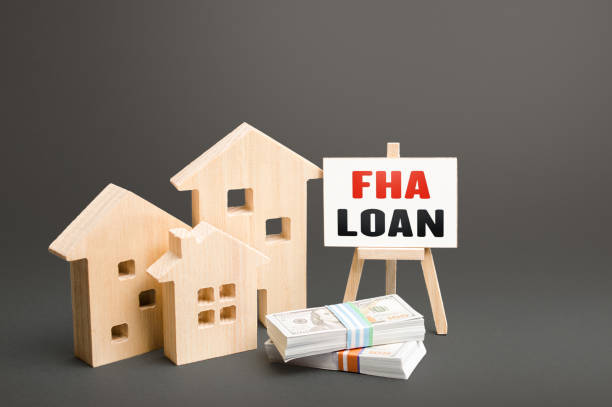
For those stepping into the realm of homeownership for the first time, weighing the options between FHA vs conventional loans is crucial. Let’s delve into the key distinctions and benefits of each loan category.
Federal Support for FHA Loans for Novice Homebuyers
FHA loans enjoy federal government support, unlike their conventional counterparts. This backing allows for more lenient criteria regarding down payments and credit scores for FHA loans. However, they come with higher associated fees and mortgage insurance costs.
Variations in Credit Scores for FHA and Conventional Loans for New Homebuyers
While FHA loans mandate a minimum credit score of 580 and a down payment as low as 3.5%, conventional loans generally ask for a credit score starting at 620 and a minimum down payment of 3%. Note that these requirements can vary with different lenders and are influenced by the borrower’s specific circumstances and prevailing market trends.
Differences in Mortgage Insurance for FHA and Conventional Loans for First-Time Buyers
FHA loans include both an upfront and a monthly mortgage insurance premium, typically 1.75%, potentially increasing the overall cost of the loan. In contrast, conventional loans require private mortgage insurance (PMI), payable either monthly or in a lump sum, and it may cease once the loan-to-value (LTV) ratio hits 78%.
Interest Rate Disparities Between Conventional and FHA Loans for New Homebuyers
FHA loans often feature lower interest rates compared to conventional loans, potentially making them more cost-effective over time. However, it’s worth noting that conventional loans have recently adjusted their rates for moderate-income, first-time buyers, thereby enhancing their competitiveness against FHA loans.
Loan Limit Variances Between FHA and Conventional Loans for First-Time Homebuyers
FHA loans are subject to lower borrowing limits, which might restrict purchasing higher-priced properties. On the other hand, conventional loans offer higher limits that vary regionally and adhere to Fannie Mae and Freddie Mac guidelines, the government-backed entities involved in mortgage trading.
Eligibility Criteria for Conventional and FHA Loans for Novice Homebuyers
FHA loans are generally more accessible, with less stringent requirements concerning debt-to-income ratios, income proof, and credit history. Conversely, conventional loans maintain more rigorous standards, potentially challenging for applicants with lower credit scores, higher debt ratios, or recent financial setbacks like bankruptcy or foreclosure.
Appraisal and Inspection Requirements for FHA vs. Conventional Loans for First-Time Buyers
FHA loans might be less appealing to sellers due to their stringent appraisal and inspection mandates, possibly hindering the closing process. In contrast, conventional loans often present fewer obstacles, potentially enhancing the buyer’s leverage in negotiations.
Additional Factors for FHA and Conventional Loans for New Homebuyers
It’s important to note that many condo developments might not qualify for FHA loans due to HOA certification requirements. Additionally, the minimum down payment for manufactured homes is 5%, which could make FHA loans a more attractive option for these property types.
In conclusion, the choice between an FHA and a conventional loan for first-time homebuyers hinges on individual financial situations, objectives, and preferences. It’s advisable to thoroughly assess the costs and advantages of each loan type before making a decision. Wishing you the best in your homebuying journey!
FHA vs Conventional: Detailed Loan Guide for Homebuyers
FHA vs Conventional Loans for First-Time Homebuyers
For first-time homebuyers, navigating between FHA and conventional loans can be complex. This guide delves into the specifics of each to inform your decision.
Property Condition Requirements: A Closer Look
FHA loans require properties to meet specific conditions related to safety and habitability, like addressing chipping paint, ensuring functioning kitchens and bathrooms, and fixing broken windows or water damage. Conventional loans, with less specific requirements, might require corrections for issues like peeling paint, roof damage, or deficiencies in mechanical systems if noted by an appraiser.
Non-Occupant Co-Borrowers: FHA vs Conventional Rules
FHA loans generally require non-occupant co-borrowers to be family members, with a maximum LTV of 96.5%. For conventional loans, the maximum LTV is 95% with co-borrowers on title, offering a slightly different approach in terms of flexibility and LTV limits.
Down Payment and Gift Funds: Understanding the Differences
The FHA requires a minimum 3.5% down payment, which must be from the borrower’s funds or a down payment assistance program. In contrast, conventional loans allow for the entire down payment to be gifted, providing more flexibility for first-time home buyers.
DTI and Housing Expense Ratios: FHA vs Conventional
FHA loans often allow higher DTI ratios, potentially as high as 57%, compared to a maximum of 49% for conventional loans. This difference can be crucial for borrowers balancing income and debt.
Cost Comparisons: FHA and Conventional Loans
FHA loans include a 1.75% upfront mortgage insurance fee, with ongoing insurance for loans with less than 10% down. Conventional loans, however, terminate mortgage insurance automatically when the LTV reaches 79%.
Interest Rates and Credit Scores: A Comparative Analysis
With FHA loans generally offering lower interest rates and being more accommodating of lower credit scores, they often present a more accessible option for first-time buyers, especially in high LTV scenarios.
Loan Limits: Understanding the Variations
FHA loan limits are set at 65% of conventional loan limits, affecting the maximum borrowing capacity. For example, if conventional loan limits are $766,550, the FHA limit would be around $498,257.