

Categories
Mortgage Education

VantageScore Mortgage: Why Credit Karma Scores Finally Matter

VantageScore mortgage approvals are here. Fannie Mae, Freddie Mac, and lenders like UWM now accept VantageScore 4.0 on conventional loans. Brokers can pull both FICO and VantageScore on the same credit report and use the higher of the two. That means the Credit Karma score your client checks on their phone is finally relevant to their home loan — and for borrowers near a pricing tier breakpoint, with thin files, or with old medical collections, it can change qualifying and rate.

The “but Credit Karma says…” conversation just changed

If you’ve worked with buyers for any length of time, you know the conversation. I pull credit, I give them their score, and they say: “Wait — Credit Karma says I’m a 740.” Then I explain that FICO and VantageScore are two different scoring systems, and Fannie and Freddie don’t use VantageScore for mortgage lending.

That second part isn’t true anymore. This year, Fannie Mae and Freddie Mac validated VantageScore 4.0 for mortgage lending. UWM — along with a short list of other approved lenders — now pulls both FICO and VantageScore on every credit report. Brokers use whichever score gives the borrower a better outcome. No extra cost. No extra steps.

This is genuinely new. Only a handful of lenders have it right now, and the broker channel got it first. So when your client asks why their Credit Karma score doesn’t match the lender’s score, the answer is no longer “they’re different systems and we don’t use that one.” The answer is now “we can use that one — and there are real situations where it’ll help.”

What is a VantageScore, and why is it different from FICO?

VantageScore is a credit scoring model the three credit bureaus — Equifax, Experian, and TransUnion — built as a competitor to FICO. The current version is VantageScore 4.0. It uses the same 300-850 range as FICO, but it weighs the underlying credit factors differently and includes a few things FICO doesn’t.

Three differences that matter for your clients:

  • Trended data. VantageScore 4.0 looks at up to 24 months of balance and payment patterns, not just a snapshot. A borrower paying balances down over time looks better than the same balance held flat.
  • Thinner files score. FICO needs at least six months of credit history to generate a score. VantageScore can score someone with as little as one month of credit activity. That matters for younger buyers, recent immigrants, or anyone rebuilding.
  • Medical collections don’t count. VantageScore 3.0 and 4.0 ignore medical collection accounts entirely, regardless of amount or whether the borrower paid them. The mortgage-specific FICO models we’ve used for decades — Equifax Beacon 5.0, Experian/Fair Isaac V2, TransUnion Classic 04 — treat a medical collection the same as a credit card charge-off.

That last point is worth pausing on. The CFPB tried to ban medical debt from credit reports entirely in early 2025. A federal court struck down the rule that July. So medical collections over $500 still hit credit reports, and the older mortgage FICO scores still hammer borrowers for them. VantageScore does what the regulation couldn’t.

Why Credit Karma matters for VantageScore mortgage approvals

Credit Karma displays a VantageScore — specifically VantageScore 3.0, from TransUnion and Equifax. It’s not the exact same model the lender uses (mortgages pull VantageScore 4.0 across all three bureaus). But the philosophy and weighting sit far closer to each other than either does to FICO.

For years, that Credit Karma number was background noise in the mortgage conversation. We had to explain it didn’t count. Now it counts. The directional read — “my score is around here” — is now useful information for qualifying and pricing.
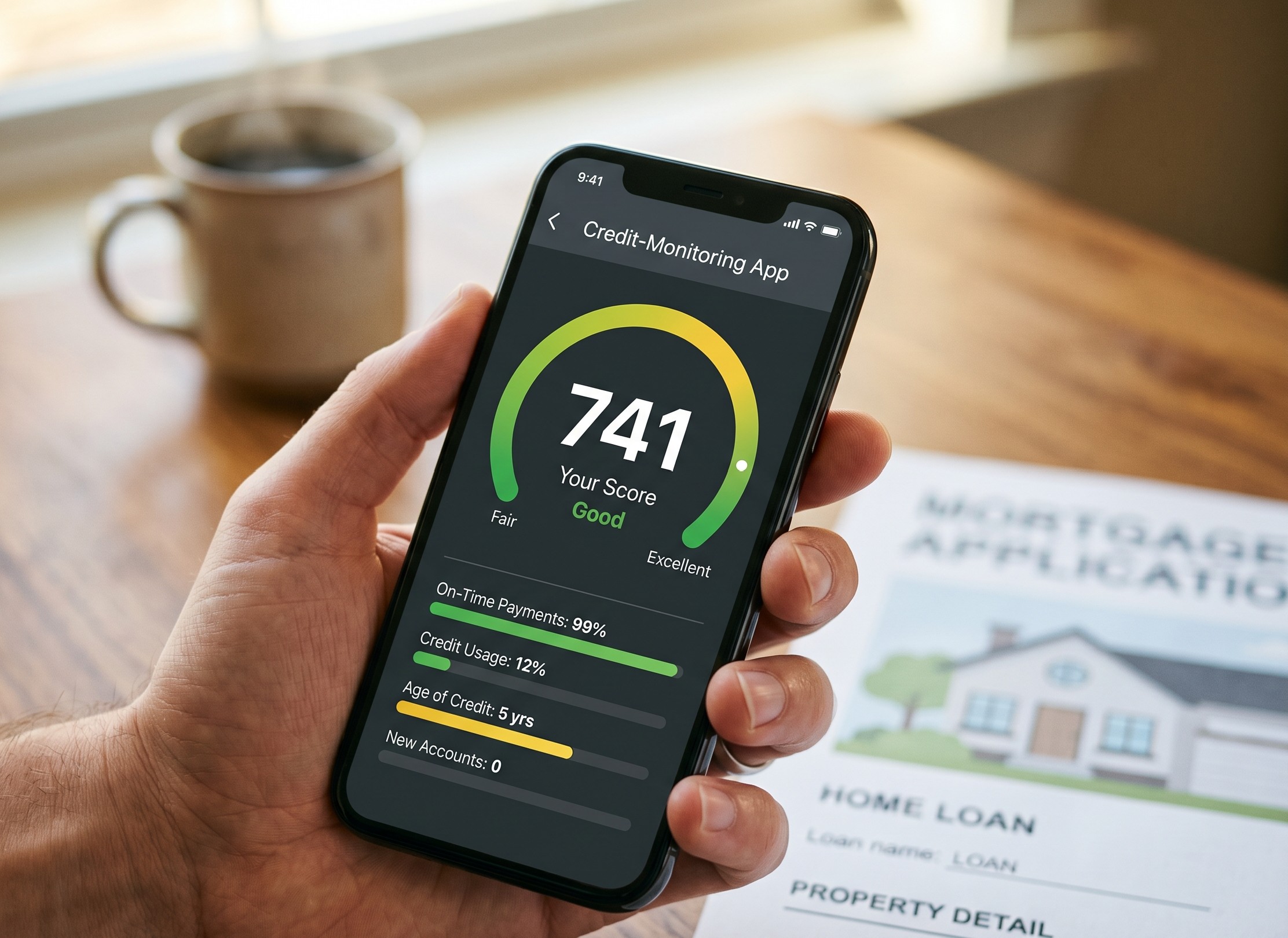
Smartphone displaying a 741 VantageScore credit score next to a mortgage application, illustrating why Credit Karma numbers now matter for home loans
A 741 on a credit-monitoring app used to be background noise. With VantageScore now accepted in mortgage pricing, that number finally has weight.

Where a higher VantageScore mortgage tier actually changes the deal

Three scenarios where pulling both scores and using the higher one moves the needle:

A borrower sitting just below a pricing tier breakpoint

The Fannie and Freddie loan-level price adjustment grid has hard breakpoints at 720, 740, 760, and 780. A buyer at 736 FICO sits in a worse pricing tier than a buyer at 742. If their VantageScore comes back at 745 or 750, we just jumped a tier. Same loan, same down payment, materially cheaper money — either lower rate at the same cost, or lower costs at the same rate. This is the same kind of structural pricing improvement we covered with the UWM 1.0 buydown. A small change in the inputs translates to real dollars at the closing table.

Illustration of mortgage credit score pricing tier breakpoints at 720, 740, 760, and 780 where a higher VantageScore can move a borrower into a better rate bucket
LLPA pricing tiers have hard breakpoints at 720, 740, 760, and 780. Crossing one changes the math on every dollar of the loan.

A borrower with old medical collections

Say your client has a $1,500 hospital bill in collections, dragging their mortgage FICO down 40 or 50 points. Their VantageScore will look very different — because VantageScore ignores it entirely. For a borrower who’s otherwise clean, that single change can flip them from “barely qualifies” to “qualifies at a normal rate.”

A thin-file borrower

Young buyers, recent immigrants, anyone whose credit history is short and sparse — these are the borrowers who often hear “come back in six months once you have more history.” VantageScore can score them today. Working out of West Seattle, I see this often: first-time buyers in their late twenties, one credit card, steady job, 5% down payment ready to go. The only thing holding them back is a FICO thin enough that they got told no last year. That’s exactly the borrower VantageScore was built to evaluate. Worth checking against the FHA vs. conventional decision too, since a higher VantageScore can shift which loan type prices best.

Why VantageScore mortgage adoption matters for your clients (and your business)

For real estate agents: when a buyer with marginal credit sits on the sidelines, this is a reason to send them back through pre-approval. The answer they got six months ago — even three months ago — may not match the answer they get today. I see this most often with West Seattle, Burien, and South King County buyers who got an early “no” before VantageScore was on the table. For a fuller list of what to ask a lender during that conversation, see questions to ask a lender about a pre-approval.

For financial advisors: clients who are reverse-mortgage-curious, refinance-curious, or buying a second home — and assuming their score won’t qualify them at a good rate — may now have a path they didn’t before. Worth a conversation, especially for clients whose medical history has quietly suppressed their FICO. If you’re not sure which loan type fits, that’s worth a 15-minute call.

The competitive piece: this is a broker-channel advantage right now. Retail banks tend to move slower on new models. Most are still building their internal approval workflow. A solo broker working with UWM has dual-score pricing today. That’s a real reason for your client to call a broker before walking into their bank.

The honest caveats of VantageScore mortgage adoption

A few things to keep front of mind so you can manage expectations:

  • Credit Karma uses VantageScore 3.0. The mortgage version is 4.0. They’re related but not identical, so the Credit Karma number won’t match the mortgage VantageScore exactly.
  • Credit Karma pulls TransUnion and Equifax. Mortgage credit pulls all three bureaus and uses the middle score. So a high Credit Karma reading is encouraging but not a guarantee.
  • UWM and other approved lenders apply a conservative haircut to the VantageScore before pricing — a guardrail while the new model gets tested at scale. The borrower’s VantageScore typically needs to land meaningfully higher than their FICO to actually change the pricing tier.
  • This is conventional-loan territory right now. FHA acceptance is announced but rolls out separately. Government-loan adoption sits on a slower timeline.
  • Underwriting standards haven’t loosened. Documentation, debt ratios, reserves — all the same. This is a pricing and qualifying optimization, not a relaxation of standards.

FAQ

Is VantageScore accepted for mortgage loans now?

Yes — for conventional loans. The FHFA validated VantageScore 4.0 for use by Fannie Mae and Freddie Mac, and approved lenders like UWM now pull both FICO and VantageScore on every file. FHA acceptance has been announced and rolls out separately. VA and USDA timelines are still in progress.

Will my Credit Karma score match what the VantageScore mortgage lender sees?

Not exactly. Credit Karma shows VantageScore 3.0 from TransUnion and Equifax. Mortgage credit pulls VantageScore 4.0 from all three bureaus, uses the middle score, then applies a conservative haircut before pricing. The Credit Karma number is now a useful directional read. It isn’t the final mortgage number.

Does VantageScore ignore medical collections?

VantageScore 3.0 and 4.0 ignore medical collection accounts entirely, regardless of the amount or whether the borrower paid them. The mortgage-specific FICO models still count them. For a borrower with a medical collection on file, that single difference can swing their qualifying score meaningfully.

Who benefits most from VantageScore in mortgage lending?

Three groups: borrowers sitting just below a pricing tier breakpoint, borrowers with medical collections on their report, and thin-file borrowers like first-time buyers, younger borrowers, or recent immigrants who don’t yet have six months of credit history.

Does using VantageScore cost the borrower anything extra?

No. With UWM’s current rollout, both FICO and VantageScore come back on the same credit pull at no additional cost to the borrower or broker. We use whichever gives the better result.

Don’t just take my word on VantageScore mortgage approvals

If you want a read on how I work with clients before sending one my way, here’s where past borrowers and partners have weighed in:

Reviews on Mortgage Matchup ↗ Reviews on Google ↗

Follow along:

If you have a client whose Credit Karma score has always run higher than what lenders quote them, send them my way. We can pull both scores at no cost and see if there’s a path that wasn’t there six months ago.

Categories
For Real Estate Pros Special Offers

UWM 1-0 Buydown: Real Year-One Savings, Honest Trade-Offs

UWM is paying for a 1-0 temporary buydown right now. It drops a buyer’s first-year mortgage rate by a full percentage point. No out-of-pocket cost. On a $600,000 loan, that’s about $280 a month, or roughly $3,400 across the first 12 months. There’s a real trade-off: a slightly lower permanent rate exists without the buydown. The break-even between the two is around 3.5 years. The 10-year Treasury is back near where it was a year ago. The odds of a refinance window opening before then are good. For a West Seattle or Burien buyer stretching to make a $600,000 purchase work, that first-year breathing room can be the difference between buying now and waiting twelve months.

UWM Free 1-0 Buydown promotional graphic — bright neon arrow pointing at the words FREE 1-0 BUYDOWN on a dark background
UWM’s Free 1-0 Buydown promotion — currently funded by the lender at no out-of-pocket cost to the buyer.

What the UWM 1-0 Buydown Actually Does

UWM is running an aggressive promotion. It’s a “Free” 1-0 temporary buydown they fund out of their own pricing margin. The mechanics are simple. For the first 12 months, the buyer pays as if their rate is 1% lower than the note rate. In Year 2 through Year 30, the full note rate kicks in. The subsidy sits in an escrow account at closing and pays the difference each month during Year 1.

UWM is funding the buydown. It does not come out of the buyer’s pocket. It does not eat into a seller credit. It does not require any negotiation in the purchase contract. From a buyer’s cash-to-close perspective, it is genuinely free.

How Much Does It Save in Year One?

On a $600,000 loan, the 1-point rate reduction is worth roughly $280 a month in lower principal and interest. Over 12 months that totals around $3,400. Real affordability relief in the first year — when buyers are also absorbing moving costs, furniture, and repairs that nobody quotes them on the GFE.

For a buyer on the fence because the monthly payment was just outside their comfort zone, this changes the math. It reframes what’s actually affordable in the first year of ownership.

Where’s the Catch? The Real Trade-Off Against the Permanent Rate

Calling it Free is technically accurate from the buyer’s side. It is not free in the absolute sense. UWM is spending pricing margin on the Year 1 subsidy that could otherwise have gone toward a slightly lower permanent rate. On the same rate sheet, the same buyer can typically lock about a quarter-point lower rate for the full 30 years. No buydown, no Year 1 cushion. Just a permanently cheaper payment.

So the choice is a real trade-off. Year 1 cushion versus permanent monthly savings over the life of the loan. Anyone telling a buyer it is a no-brainer either way is oversimplifying.

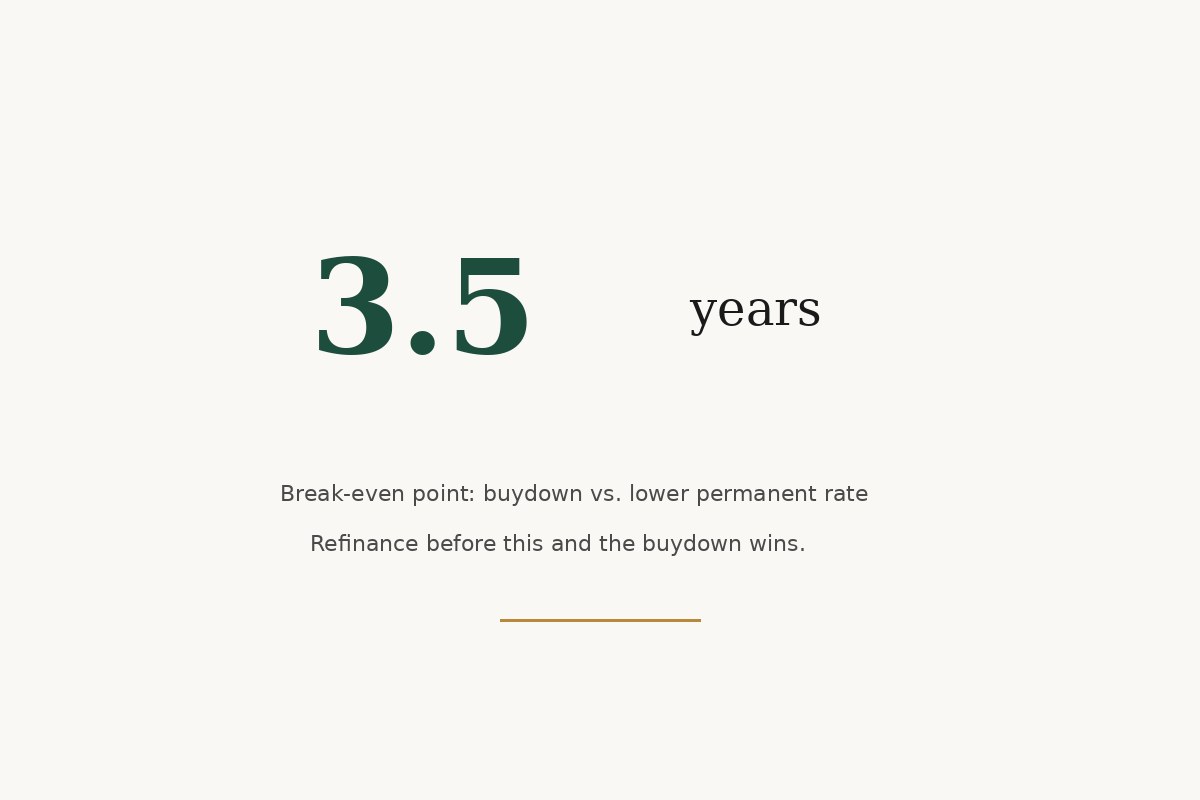
3.5 years break-even point for UWM 1-0 buydown versus lower permanent mortgage rate
The break-even point: hold the loan past about 3.5 years and the lower permanent rate beats the buydown.

When Does the UWM 1-0 Buydown Win?

The break-even between the buydown and the lower permanent rate works out to roughly 3 years 7 months. If the buyer refinances or sells before then, the buydown wins. If they hold the loan past that point, the lower permanent rate pulls ahead. And stays ahead for the rest of the term.

The math is straightforward. The buyer banks about $3,400 in Year 1 with the buydown. Then they pay roughly $110 a month more than they would have on the lower permanent rate, every month after that. Those $110 chunks chew through the $3,400 head start over about 31 months in Year 2 onward. Total time to break even: 12 plus 31, or 43 months.

Why a Refi Window Inside 3.5 Years Is More Likely Than Not

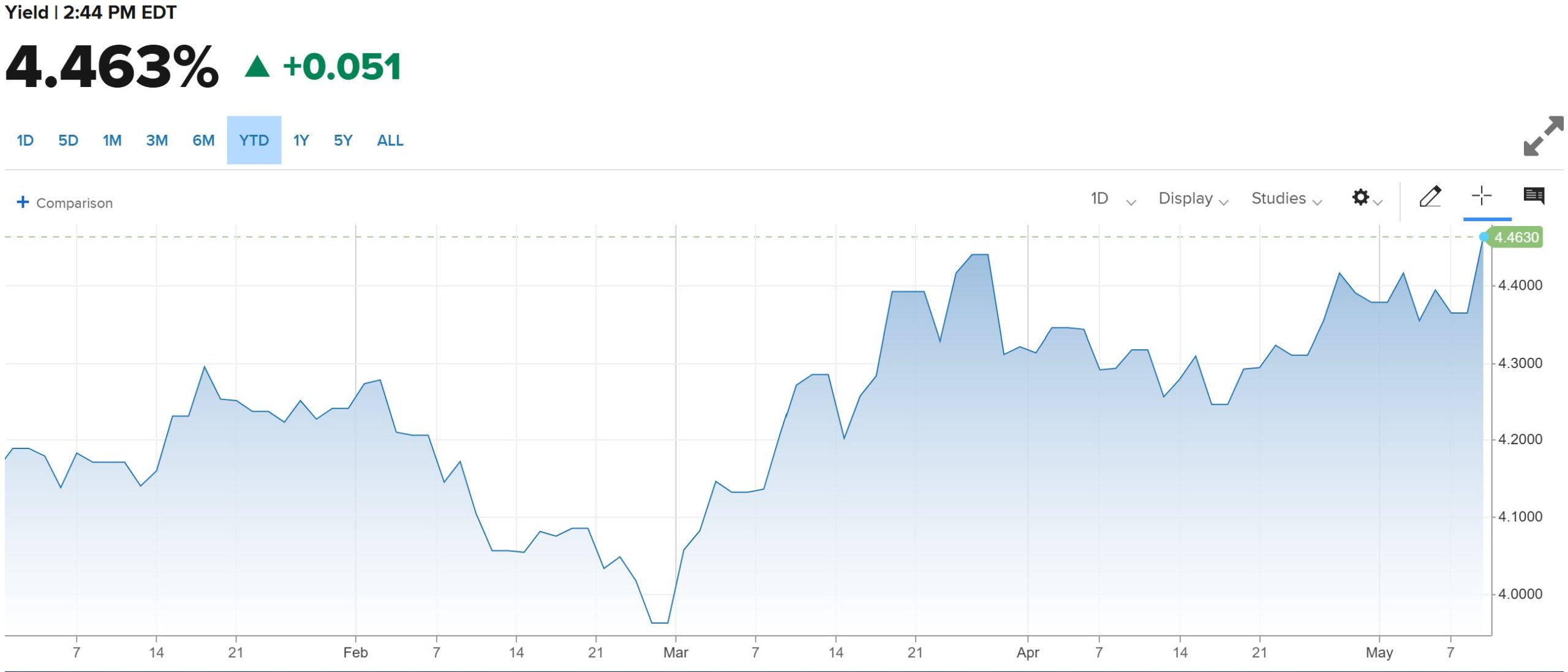
This is where the timing question matters. The 10-year Treasury drives mortgage rates more than any other single input. It closed at 4.46% as of mid-May. That’s up from a late-February low near 3.97%. That’s roughly half a percentage point of upward move in about ten weeks. It puts the 10-year right back near where it was a year ago.

10-year Treasury yield year-to-date chart showing rise from late-February low near 3.97 percent to 4.463 percent in May 2026
10-Year Treasury YTD 2026: up from a late-February low near 3.97% to 4.46% in mid-May — almost half a percentage point of upward move in about ten weeks.

The directional implication is simple. There’s real room for the 10-year to fall back toward that February low. That happens if economic data softens or the Fed signals more accommodation. Most major forecasters expect 30-year fixed rates to drift lower through late 2026 and into 2027. That includes the Mortgage Bankers Association and Fannie Mae. Whether the move is gradual or sharp depends on the data, but the directional consensus is clear.

For a buyer choosing between the buydown and the lower permanent rate, that backdrop tilts the decision. A refinance opportunity opening in the next 24 to 36 months is more likely than not. That’s well inside the 3.5-year break-even window where the buydown wins.

How to Frame the Math for a Client on the Fence

The buyer needs three pieces of information to make this decision. None of them are about the buydown itself:

  • How long they realistically plan to hold the loan. The median U.S. homeowner stays put for 11.8 years. But the average mortgage only lives 5 to 7 years — because refinances end loans too. If they refi inside 3.5 years, the buydown wins.
  • What their cash-flow priorities look like in Year 1 specifically. First-year homeownership tends to be the most cash-strained year for any new owner — especially for Puget Sound buyers absorbing property taxes that are higher than what their lender estimated. The $3,400 Year 1 cushion has different value to a buyer who’s stretched than to a buyer who isn’t.
  • Their rate forecast posture. If they believe rates are flat or rising for the next several years, the lower permanent rate looks better. If they think rates are likely to drop and they will refinance, the buydown looks better. The 10-year’s recent move suggests the latter is plausible.

The math is not the hard part. The judgment about which lever to pull is. That is the conversation worth having before lock day.

FAQ

Is the UWM 1-0 buydown actually free?

Free from the buyer’s perspective — they pay nothing out of pocket for the buydown. UWM funds it from their pricing margin. The trade-off is that the same buyer could lock a slightly lower permanent rate without the buydown. So while there is no upfront cost, there is an opportunity cost compared to the alternative permanent rate.

What is a 1-0 temporary buydown?

A 1-0 temporary buydown means the borrower’s effective interest rate is 1 percentage point lower than the note rate for the first 12 months. After that, it steps up to the full note rate for Year 2 through Year 30. The Year 1 subsidy is funded by a lump-sum credit at closing. That credit sits in an escrow account. It pays the lender the difference each month during the buydown period.

How much does the UWM 1-0 buydown save on a $600,000 loan?

On a $600,000 loan, the 1-point reduction is roughly $280 a month in lower principal and interest. That runs for 12 months, or about $3,400 in total first-year savings. The exact figure varies slightly based on the underlying note rate, but the order of magnitude holds across the typical conventional loan range.

What happens if the borrower refinances during Year 1?

If the loan is refinanced or paid off before the 12-month buydown period ends, any unused buydown funds in escrow are typically applied as a credit toward the new loan. Or returned to the borrower per the lender’s specific buydown agreement. The funds do not disappear, but the exact treatment depends on UWM’s program terms. Verify in writing before the loan closes.

When does the buydown beat the lower permanent rate?

The break-even sits around 3 years 7 months on a typical loan. Hold the loan less than that, and the buydown wins. Hold it longer, and the lower permanent rate wins. Many mortgages do not survive 3.5 years anyway. Between refinances and home sales, the average mortgage lifespan in the U.S. is 5 to 7 years. Many end sooner when rates drop.

The Bottom Line

UWM’s “Free” 1-0 buydown is a meaningfully good product right now. Not because it’s free in the absolute sense. Because the current rate environment makes the trade-off lean in its favor. The buyer gets real Year 1 relief. The cost is borne by the lender. The break-even falls well inside the window where most mortgages get refinanced anyway. For a buyer on the fence about whether the monthly payment works, this is the kind of product that moves the needle.

The trade-off against the slightly lower permanent rate is the conversation worth having before the buyer commits to either path. Run the numbers on their actual loan size. Ask the right questions about how long they plan to keep the loan. The right answer is almost always specific to the buyer, not the product.

Related reading: how UWM’s 0% down product is qualifying more buyers. Also: the questions to ask a lender about a pre-approval. And how a reverse 1031 lets clients buy before they sell. For broader options, the full loan menu is here.

If you have a client weighing affordability options, or deciding between a temporary buydown and a permanent rate, send them my way. Happy to walk through the math on their specific loan.


Don’t just take my word on the UWM 1-0 buydown

If you want a read on how I work with clients before sending one my way, here’s where past borrowers and partners have weighed in:

Reviews on Mortgage Matchup ↗ Reviews on Google ↗

Follow along:

If you have a client weighing the UWM 1-0 buydown against a buy-down of the permanent rate, send them my way. We’ll run the actual numbers on their loan size, target rate, and realistic hold horizon.


Categories
For Real Estate Pros Loan Strategy

Virtual Mortgage Closing: Convenience Most Lenders Can’t Match

A virtual mortgage closing lets everyone on the loan sign electronically from wherever they happen to be. The borrower, the co-buyer, the co-signer — each one joins a short video call with a remote notary, on their own schedule. Most lenders still won’t do this. Instead, they make every party show up in person at a title company on a specific day, at a specific time. However, United Wholesale Mortgage is one of the lenders that does offer virtual mortgage closing, in both Washington state and Colorado. I had a recent file with two co-buyers and two co-signers spread across multiple time zones, and what would have been a week of scheduling chaos turned into a non-event.

Woman signing a virtual mortgage closing on a laptop from a beach chair, dog at her feet
A virtual mortgage closing turns a beach chair into a closing table. Each signer logs in from wherever they are.

What a Virtual Mortgage Closing Actually Is

A virtual mortgage closing replaces the in-person signing room with a secure video call. Instead of driving to a title company, you log in from your laptop or phone. Specifically, the notarization happens through Remote Online Notarization, or RON. A licensed notary checks your ID over video and notarizes your signatures digitally. Subsequently, the closing team countersigns, the county records the deed, and the lender funds the loan. So legally, the transaction matches an in-person closing in every state that permits RON.

Overall, the difference is the friction. Nobody drives across town. Nobody rearranges the day. Consequently, the whole closing becomes a thirty-minute video session, and the bottleneck shifts from “get everyone in the same room” to “find a half-hour that works.”

Father attending a virtual mortgage closing on a laptop from the bleachers at his kid's soccer game
Sign from the sidelines. Every party on the loan can join from anywhere on their own schedule.

Why Most Lenders Still Make Everyone Show Up in Person

RON has been legal in most states for years. Both Washington state and Colorado permit RON for mortgage closings, but lender adoption stays uneven. Specifically, building the technology takes real engineering work: secure ID verification, audio and video recording, integration with title companies and county recorders. Therefore, plenty of mid-sized lenders just haven’t built it. And some retail banks and credit unions still default to in-person closings because their compliance teams prefer that posture, full stop.

So if your client lands at a lender that doesn’t offer it, every signer has to physically appear at a title company. The slot is fixed: a specific date, a specific time. In theory that’s tolerable. In practice it’s the part of the deal where things break.

What Most People Don’t Realize: A Co-Signer Is a Co-Buyer

Here’s a misconception that bites a lot of buyers. When someone co-signs on a mortgage, they’re not just lending a credit score. Maybe a parent helps a kid qualify. Or a sibling lends their income. Or a friend bridges a credit gap. Whatever the situation, the co-signer signs the note. They’re on the loan. So they have to show up to the closing the same way the primary borrower does.

For example, take a parent in Spokane helping their daughter close on a house in Denver. Traditionally that meant flying out for a thirty-minute appointment. A co-signer who travels for work had to reschedule the trip. Likewise, someone already feeling like they’re doing the buyer a favor saw the in-person requirement as punishment for being generous. The friction isn’t theoretical. It lands hardest on the people doing the most help.

Man completing a virtual mortgage closing on a laptop from a hospital bed
When a co-signer can’t physically travel, a virtual mortgage closing keeps the deal on schedule.

How a Virtual Mortgage Closing Solves the Logistics Problem

Once everyone on the loan can sign remotely, location stops mattering. First, each signer gets a link. Next, they join a short video session with the notary at a time that works. They walk through the documents on screen, then sign. The whole thing usually takes about an hour per signer, often less. Some sign from a kitchen table. Others sign on a lunch break. Three signers can do it in three different time zones on the same day, and nobody has to coordinate calendars beyond their own.

Finally, the deal closes on schedule. Nobody flies in. Nobody takes a half-day off work. The buyer gets the keys.

A Recent Example: Two Co-Buyers, Two Co-Signers, Four Schedules

A recent file of mine had two co-buyers and two co-signers, four signers total. Each one lived in a different city. Each one kept a different schedule. Under the old model, this kind of deal drags closing out by a week while everyone tries to find a mutual two-hour window. With UWM’s virtual mortgage closing, though, each of the four signed at their own convenience. The whole signing wrapped inside a single business day. All four sat in different time zones; the property was here in South King County.

Overall, the narrative for my client flipped completely. What used to feel like extreme inconvenience for the people doing them a favor became extreme convenience instead. That’s not a small thing. Treat co-signers and co-buyers well at closing, and they say yes the next time a family member asks for help.

On the other side: a remote notary runs the closing for two borrowers over video.

What This Means for Your Next Deal

If you’re a real estate agent and your buyer needs a co-signer to qualify, the lender choice matters more than people realize. By contrast, a lender without virtual mortgage closing can turn a clean qualification into a logistics scramble on day 28 of a 30-day close. So ask early, before the buyer commits, whether the lender supports it. The question is simple: “Do you offer Remote Online Notarization for every party on the loan, in this state, on this product?” The answer should come back yes, no, or a quick check. Never a long story. For West Seattle, Vashon Island, and Bainbridge Island agents in particular, ferry schedules and Friday traffic can turn a one-hour closing into a half-day operation. Virtual closing removes that variable entirely.

Want more on the questions worth asking a lender before recommending one to a client? Read What I Wish I Knew About Pre-Approvals. UWM’s products are summarized on the loan options page. The National Notary Association keeps a current state-by-state guide to RON law, and the Mortgage Bankers Association tracks adoption data on digital and remote closings.

FAQ

Is a virtual mortgage closing legally the same as an in-person one?

Yes. Indeed, RON produces a legally binding mortgage in every state that permits it, including Washington and Colorado. The county records the deed the same way. The lender funds the loan the same way. Signing and notarization just happen over secure video instead of across a table.

Is a co-signer the same as a co-buyer on a mortgage?

For mortgage purposes, yes. A co-signer signs the note and joins the loan, so they count as a co-buyer in everything that matters at closing. They sign the same documents the primary borrower signs. They attend the closing the same way, virtually or in person.

Why don’t more lenders offer virtual mortgage closing?

Two reasons. First, the technology stack takes real engineering that smaller lenders haven’t built: identity verification, secure video, integration with title companies and county recorders. Second, some lenders’ compliance teams still prefer in-person closings as their default, even where RON is fully legal. Notably, UWM ranks among the few wholesale lenders that have rolled out RON broadly.

Can a virtual mortgage closing work if signers are in different states?

Yes, in most cases. Specifically, RON laws apply to the notary’s location, not the signer’s. So as long as the notary holds a license in a state that permits RON for mortgage closings, signers can join from anywhere with a stable internet connection. For deals with co-buyers and co-signers spread across multiple states, that’s the whole point.

Don’t just take my word on virtual closings

If you want a read on how I work with clients before sending one my way, here’s where past borrowers and partners have weighed in:

Reviews on Mortgage Matchup ↗ Reviews on Google ↗

Follow along:

If you have a client who needs a co-signer or co-buyer to qualify and you want to know whether their lender will make closing day painless or painful, send them my way. We do virtual closings as a default, not an exception.


Categories
Blog Today's Interest Rate

Today's Interest Rate January 27

Here is today’s interest rate quote by Gibson Home Loans:Today's Interest Rate January 27

Today’s Interest Rate

3.275% APR
3.173% before costs through United Wholesale Mortgage. Conventional Elite 30 day lock. January 27, 2022 at 2:58 PM

Terms

30 YR REFINANCE OWNER OCCUPIED SINGLE FAMILY
Value: $534K
Loan (No Cash-Out): $400K
Credit Score: 740+
Approximate Loan Cost: $7,130

What Will Your Rate Be?

Find out what your rate will be: www.GibsonRateCheck.com

About Us

Home Loan Originators Christopher Gibson & Brandon Gibson at C2 Financial Corporation are your online resource for personalized mortgage solutions, fast customized quotes, great rates, & service with integrity.
Licensed to originate loans in all of Colorado. We primarily utilize United Wholesale Mortgage to offer the highest quality service and technology to make the mortgage process as easy on our clients as possible. We reduce our compensation to attempt to secure the lowest rates and costs possible for our clients, as well and we want to provide the best service AND the best rates.
Christopher & Brandon Gibson are brothers and Colorado natives. They began in the mortgage industry in 2019. Serving mostly friends and family, client satisfaction and referral business is their focus.

Disclosure

This licensee is performing acts for which a real estate license is required.  C2 Financial Corporation is licensed by the Colorado Department of  Real Estate,  NMLS # 135622 NMLS# 1910935.  Loan approval is not guaranteed and is subject to lender review of information.  All loan approvals are conditional and all conditions must be met by borrower.  Loan is only approved when lender has issued approval in writing and is subject to the Lender conditions.  Specified rates may not be available for all.  Rates subject to change with market conditions. C2 Financial Corporation is an Equal Opportunity Mortgage Broker/Lender. The services referred to herein are not available to persons located outside the state of  Colorado. www.GibsonHomeLoans.com | Chris Gibson | (720) 394-8861 | C@ChrisRayGibson.com | Brandon Gibson | (303) 332-5523 | B@BrandonPGibson.com

#Colorado #HomeLoans #Mortgages #RealEstate #Denver #ColoradoLove #WereAllInThisTogether

Categories
Mortgage Rate Trends Weekly Mortgage Rate Trends

Mortgage Rate Trend January 27-February 2

Mortgage Rate Trend January 27-February 2
Here is the latest mortgage rate trend.

This Week’s Mortgage Rate Trend

When looking into mortgage options, it is important to research the mortgage rate trend and review what mortgage experts predict. As home loan originators, we work hard to stay up to date on the mortgage rate trend for our clients. Here is the latest mortgage rate trend forecast for this week.

Mortgage Experts

Mortgage experts mostly think rates will rise in the coming week (Jan. 27 – Feb. 2). In response to Bankrate’s weekly poll,  80% said rates are headed higher. Meanwhile, 10% said they would remain the same and another 10% predicted they would fall.

Based on the mortgage rate trend, it might be a good time to consider refinancing your current mortgage. Refinancing is the process of paying off your existing mortgage with a new mortgage. Typically, you refinance your mortgage to reduce your interest rate and monthly payment or change the length (or term) of your mortgage. You may also refinance to take cash out from your home’s equity.

Your Rate Options

A great way to begin the process of refinancing is to look at your rate options. We would love to help you out. Click the link below to determine what rate options are available to you: https://gibsonratecheck.com

Refinance Process

Are you curious about how the refinance process works? Here’s how our home refinance process works:

  • Complete our simple home refinance analysis request.
  • Receive options based on your unique criteria and scenario
  • Compare mortgage interest rates and terms
  • Choose the offer that best fits your needs

We Want To Help

As licensed loan originators serving all of Colorado, we primarily utilize United Wholesale Mortgage to offer the highest quality service and technology to make the mortgage process as easy on our clients as possible. Our top priority is to provide the best service AND the best rates.
As brothers and Colorado natives, we serve mostly friends and family. Client satisfaction and referral business is our focus.

#Colorado #HomeLoans #Mortgages #RealEstate #Denver #ColoradoLove #WereAllInThisTogether

Categories
Blog Today's Interest Rate

Today's Interest Rate January 26

Here is today’s interest rate quote by Gibson Home Loans:Today's Interest Rate January 26

Today’s Interest Rate

3.148% APR
3.046% before costs through United Wholesale Mortgage. Conventional Elite 30 day lock. January 26, 2022 at 12:52 PM

Terms

30 YR REFINANCE OWNER OCCUPIED SINGLE FAMILY
Value: $534K
Loan (No Cash-Out): $400K
Credit Score: 740+
Approximate Loan Cost: $7,130

What Will Your Rate Be?

Find out what your rate will be: www.GibsonRateCheck.com

About Us

Home Loan Originators Christopher Gibson & Brandon Gibson at C2 Financial Corporation are your online resource for personalized mortgage solutions, fast customized quotes, great rates, & service with integrity.
Licensed to originate loans in all of Colorado. We primarily utilize United Wholesale Mortgage to offer the highest quality service and technology to make the mortgage process as easy on our clients as possible. We reduce our compensation to attempt to secure the lowest rates and costs possible for our clients, as well and we want to provide the best service AND the best rates.
Christopher & Brandon Gibson are brothers and Colorado natives. They began in the mortgage industry in 2019. Serving mostly friends and family, client satisfaction and referral business is their focus.

Disclosure

This licensee is performing acts for which a real estate license is required.  C2 Financial Corporation is licensed by the Colorado Department of  Real Estate,  NMLS # 135622 NMLS# 1910935.  Loan approval is not guaranteed and is subject to lender review of information.  All loan approvals are conditional and all conditions must be met by borrower.  Loan is only approved when lender has issued approval in writing and is subject to the Lender conditions.  Specified rates may not be available for all.  Rates subject to change with market conditions. C2 Financial Corporation is an Equal Opportunity Mortgage Broker/Lender. The services referred to herein are not available to persons located outside the state of  Colorado. www.GibsonHomeLoans.com | Chris Gibson | (720) 394-8861 | C@ChrisRayGibson.com | Brandon Gibson | (303) 332-5523 | B@BrandonPGibson.com

#Colorado #HomeLoans #Mortgages #RealEstate #Denver #ColoradoLove #WereAllInThisTogether

Categories
Blog Today's Interest Rate

Today's Interest Rate January 25

Here is today’s interest rate quote by Gibson Home Loans:

Today’s Interest Rate

3.140% APR
3.038% before costs through United Wholesale Mortgage. Conventional Elite 30 day lock. January 25, 2022 at 2:29 PM

Terms

30 YR REFINANCE OWNER OCCUPIED SINGLE FAMILY
Value: $534K
Loan (No Cash-Out): $400K
Credit Score: 740+
Approximate Loan Cost: $7,130

What Will Your Rate Be?

Find out what your rate will be: www.GibsonRateCheck.com

About Us

Home Loan Originators Christopher Gibson & Brandon Gibson at C2 Financial Corporation are your online resource for personalized mortgage solutions, fast customized quotes, great rates, & service with integrity.
Licensed to originate loans in all of Colorado. We primarily utilize United Wholesale Mortgage to offer the highest quality service and technology to make the mortgage process as easy on our clients as possible. We reduce our compensation to attempt to secure the lowest rates and costs possible for our clients, as well and we want to provide the best service AND the best rates.
Christopher & Brandon Gibson are brothers and Colorado natives. They began in the mortgage industry in 2019. Serving mostly friends and family, client satisfaction and referral business is their focus.

Disclosure

This licensee is performing acts for which a real estate license is required.  C2 Financial Corporation is licensed by the Colorado Department of  Real Estate,  NMLS # 135622 NMLS# 1910935.  Loan approval is not guaranteed and is subject to lender review of information.  All loan approvals are conditional and all conditions must be met by borrower.  Loan is only approved when lender has issued approval in writing and is subject to the Lender conditions.  Specified rates may not be available for all.  Rates subject to change with market conditions. C2 Financial Corporation is an Equal Opportunity Mortgage Broker/Lender. The services referred to herein are not available to persons located outside the state of  Colorado. www.GibsonHomeLoans.com | Chris Gibson | (720) 394-8861 | C@ChrisRayGibson.com | Brandon Gibson | (303) 332-5523 | B@BrandonPGibson.com

#Colorado #HomeLoans #Mortgages #RealEstate #Denver #ColoradoLove #WereAllInThisTogether

Categories
Blog Colorado Real Estate News

Colorado Real Estate News January 2022

Colorado Real Estate News
Colorado Home Loan Originators Brandon Gibson & Christopher Gibson – www.GibsonHomeLoans.com

Published by
Chris Gibson & Brandon Gibson

24 January 2022

Read paper →

Stories Homes & Trends Colorado Mortgages Super Local For Realtors Leisure
We know you expect us to be in the know when it comes to real estate news in and around Denver and Colorado, and now you can be too. We hope you find this latest version of our newsletter interesting and helpful. I cannot thank you enough for all the referrals. Have a great day!
Best regards,
Chris & Brandon Gibson


Mortgage Rates in U.S. Soar to the Highest Since March 2020

avatar Shared by
Chris Gibson & Brandon Gibson

thumbnail bloomberg­.com – Mortgage rates in the U.S. rose for a third straight week, reaching the highest point in almost two years.

It’s not just Denver, housing prices are also skyrocketing in Colorado Springs, and it may be a while before they slow down

avatar Shared by
Chris Gibson & Brandon Gibson

thumbnail cpr­.org – They're still setting new records, and one expert says it might be a decade before housing prices cool off along the Front Range.

Buyers Want To Know: Why Is Housing Supply Still So Low?

avatar Shared by
Chris Gibson & Brandon Gibson

thumbnail keepingcurrentmatters­.com – One key question that’s top of mind for homebuyers this year is: why is it so hard to find a house to buy?

Supply and labor shortages double the time it’ll take to rebuild homes lost in the Marshall fire

avatar Shared by
Chris Gibson & Brandon Gibson

thumbnail coloradosun­.com – Rebuilding homes lost to the Marshall fire will be a long haul effort as labor and supply shortages get in the way.

Rising Rates Pressure Buyers

avatar Shared by
Chris Gibson & Brandon Gibson

thumbnail magazine­.realtor – House hunters are watching mortgage rates closely. After all, every increase could have an impact on affordability, particularly given escalating home prices.

What’s Going To Happen with Home Prices This Year?

avatar Shared by
Chris Gibson & Brandon Gibson

thumbnail keepingcurrentmatters­.com – After almost two years of double-digit increases, many experts thought home price appreciation would decelerate or happen at a slower pace in the last quarter of 2021.

Can you use your ADU as a short-term rental? Yes, and that’s sort of the point.

avatar Shared by
Chris Gibson & Brandon Gibson

thumbnail denverite­.com – But only about 16% of ADUs are being used as short-term rentals.

Cities with the fastest-growing home prices in Denver metro area

avatar Shared by
Chris Gibson & Brandon Gibson

thumbnail kdvr­.com – Supply and demand drive the real estate market, affecting everything from building and lot values to availability for buyers and sellers.

A Sneak Peek at MAD Architects’ Adventurous One River North Project

avatar Shared by
Chris Gibson & Brandon Gibson

thumbnail 5280­.com – Biophilic design inspired by Colorado’s great outdoors is at the heart of this RiNo building that is certain to become a new Mile High City landmark. Biophilic design inspired by Colorado’s great out…

Why Inflation Shouldn’t Stop You from Buying a Home in 2022

avatar Shared by
Chris Gibson & Brandon Gibson

thumbnail keepingcurrentmatters­.com – If you’re following along with the news today, you’re probably hearing a lot about record-breaking home prices, rising consumer costs, supply chain constraints, and more.

What the Pandemic’s ‘Open Streets’ Really Revealed

avatar Shared by
Chris Gibson & Brandon Gibson

thumbnail bloomberg­.com – Covid-inspired traffic restrictions and street changes have swept scores of U.S. cities since the start of the pandemic. But not all communities have welcomed them.

Lumber Prices Add More Than $18,600 to Price of New Home

avatar Shared by
Chris Gibson & Brandon Gibson

thumbnail magazine­.realtor – Lumber prices are soaring once again: Following a dip last spring and summer, they have nearly tripled over the past four months.

Homeownership Still More Affordable Than Renting

avatar Shared by
Chris Gibson & Brandon Gibson

thumbnail magazine­.realtor – Home prices may be growing faster than rents in most places across the country, but homeownership still beats renting financially, shows a new study from ATTOM Data Solutions, a real estate data firm.

Colorado’s taxable home values could skyrocket in 2023

avatar Shared by
Chris Gibson & Brandon Gibson

thumbnail coloradosun­.com – A state economic forecast predicts a statewide increase of up to 20%, but what that means for homeowners is complicated

Getting insurance in Colorado expected to cost more after costly wildfire damage

avatar Shared by
Chris Gibson & Brandon Gibson

thumbnail koaa­.com – As costly damage estimates continue to add up for those impacted by the Marshall Fire insurance experts say we should be paying attention because these costs will impact consumers across the state. E…

The Marshall fire burned whole subdivisions and shopping centers. Are the ashes an air quality threat?

avatar Shared by
Chris Gibson & Brandon Gibson

thumbnail cpr­.org – Residents have noticed strange smells in the burn area. Scientists are rushing to find out if they’re dangerous.

December 2021 Metro Denver Market Stats – 30 Day Snapshot

avatar Shared by
Chris Gibson & Brandon Gibson

thumbnail gibsonhomeloans­.com – December 2021 Metro Denver Market Stats 30 Day Snapshot – Check out the latest real estate market statistics and market reports for metro Denver.

Denver housing market: New year, more inventory?

avatar Shared by
Chris Gibson & Brandon Gibson

thumbnail denvergazette­.com – Metro Denver homebuyers who thought it was tough to find for-sale homes in December will be sorely disappointed if they thought a new year would bring more inventory.

Metro Denver housing market ended 2021 with almost nothing to give buyers

avatar Shared by
Chris Gibson & Brandon Gibson

thumbnail denverpost­.com – As the clock ticked away on low mortgage rates, desperate homebuyers in metro Denver just couldn’t find enough properties to purchase as 2021 came to a close — and the extreme seller’s market could …

New Year’s Resolutions for Home – Realty Times

avatar Shared by
Chris Gibson & Brandon Gibson

thumbnail realtytimes­.com – Making a New Year’s resolution is nothing new. Most of us have done it at one time or another. Making good on that resolution is another thing. “The s…

Homeowners Experience Sticker Shock on Insurance Premiums

avatar Shared by
Chris Gibson & Brandon Gibson

thumbnail magazine­.realtor – Homeowners who are renewing their home insurance policies are finding their rates are drastically climbing. Insurance companies point to rising material costs and climate change

Zillow predicts metro Denver could see another year of home price gains above 15%

avatar Shared by
Chris Gibson & Brandon Gibson

thumbnail denverpost­.com – Colorado housing markets defied the odds in 2021, with price increases breaking all kinds of records. As to what happens in 2022, forecasts are all over the place, from the good times rolling into an…

Denver metro realtors predict strong housing market to continue in 2022

avatar Shared by
Chris Gibson & Brandon Gibson

thumbnail denverpost­.com – Real estate experts predict Metro Denver’s real estate will stay hot in 2022, with record demand for homes pushing double-digit appreciation.

Sales Up as Buyers Rush to Lock in Mortgage Rates

avatar Shared by
Chris Gibson & Brandon Gibson

thumbnail magazine­.realtor – Home buyers may have felt more determined in November to purchase before 2021 comes to an end and mortgage rates and borrowing costs increase, as largely is forecasted to happen.

StoriesHomes & TrendsColorado MortgagesSuper LocalFor RealtorsLeisure
Read paper →

Categories
Blog Today's Interest Rate

Today's Interest Rate January 18

Here is today’s interest rate quote by Gibson Home Loans:

Today’s Interest Rate

3.375% APR
3.272% before costs through United Wholesale Mortgage. Conventional Elite 30 day lock. January 18, 2022 at 5:03 PM

Terms

30 YR REFINANCE OWNER OCCUPIED SINGLE FAMILY
Value: $534K
Loan (No Cash-Out): $400K
Credit Score: 740+
Approximate Loan Cost: $7,130

What Will Your Rate Be?

Find out what your rate will be: www.GibsonRateCheck.com

About Us

Home Loan Originators Christopher Gibson & Brandon Gibson at C2 Financial Corporation are your online resource for personalized mortgage solutions, fast customized quotes, great rates, & service with integrity.
Licensed to originate loans in all of Colorado. We primarily utilize United Wholesale Mortgage to offer the highest quality service and technology to make the mortgage process as easy on our clients as possible. We reduce our compensation to attempt to secure the lowest rates and costs possible for our clients, as well and we want to provide the best service AND the best rates.
Christopher & Brandon Gibson are brothers and Colorado natives. They began in the mortgage industry in 2019. Serving mostly friends and family, client satisfaction and referral business is their focus.

Disclosure

This licensee is performing acts for which a real estate license is required.  C2 Financial Corporation is licensed by the Colorado Department of  Real Estate,  NMLS # 135622 NMLS# 1910935.  Loan approval is not guaranteed and is subject to lender review of information.  All loan approvals are conditional and all conditions must be met by borrower.  Loan is only approved when lender has issued approval in writing and is subject to the Lender conditions.  Specified rates may not be available for all.  Rates subject to change with market conditions. C2 Financial Corporation is an Equal Opportunity Mortgage Broker/Lender. The services referred to herein are not available to persons located outside the state of  Colorado. www.GibsonHomeLoans.com | Chris Gibson | (720) 394-8861 | C@ChrisRayGibson.com | Brandon Gibson | (303) 332-5523 | B@BrandonPGibson.com

#Colorado #HomeLoans #Mortgages #RealEstate #Denver #ColoradoLove #WereAllInThisTogether

Categories
Blog Today's Interest Rate

Today's Interest Rate January 17

Here is today’s interest rate quote by Gibson Home Loans:

Today’s Interest Rate

3.205% APR
3.103% before costs through United Wholesale Mortgage. Conventional Elite 30 day lock. January 17, 2022 at 4:31 PM

Terms

30 YR REFINANCE OWNER OCCUPIED SINGLE FAMILY
Value: $534K
Loan (No Cash-Out): $400K
Credit Score: 740+
Approximate Loan Cost: $7,130

What Will Your Rate Be?

Find out what your rate will be: www.GibsonRateCheck.com

About Us

Home Loan Originators Christopher Gibson & Brandon Gibson at C2 Financial Corporation are your online resource for personalized mortgage solutions, fast customized quotes, great rates, & service with integrity.
Licensed to originate loans in all of Colorado. We primarily utilize United Wholesale Mortgage to offer the highest quality service and technology to make the mortgage process as easy on our clients as possible. We reduce our compensation to attempt to secure the lowest rates and costs possible for our clients, as well and we want to provide the best service AND the best rates.
Christopher & Brandon Gibson are brothers and Colorado natives. They began in the mortgage industry in 2019. Serving mostly friends and family, client satisfaction and referral business is their focus.

Disclosure

This licensee is performing acts for which a real estate license is required.  C2 Financial Corporation is licensed by the Colorado Department of  Real Estate,  NMLS # 135622 NMLS# 1910935.  Loan approval is not guaranteed and is subject to lender review of information.  All loan approvals are conditional and all conditions must be met by borrower.  Loan is only approved when lender has issued approval in writing and is subject to the Lender conditions.  Specified rates may not be available for all.  Rates subject to change with market conditions. C2 Financial Corporation is an Equal Opportunity Mortgage Broker/Lender. The services referred to herein are not available to persons located outside the state of  Colorado. www.GibsonHomeLoans.com | Chris Gibson | (720) 394-8861 | C@ChrisRayGibson.com | Brandon Gibson | (303) 332-5523 | B@BrandonPGibson.com

#Colorado #HomeLoans #Mortgages #RealEstate #Denver #ColoradoLove #WereAllInThisTogether