
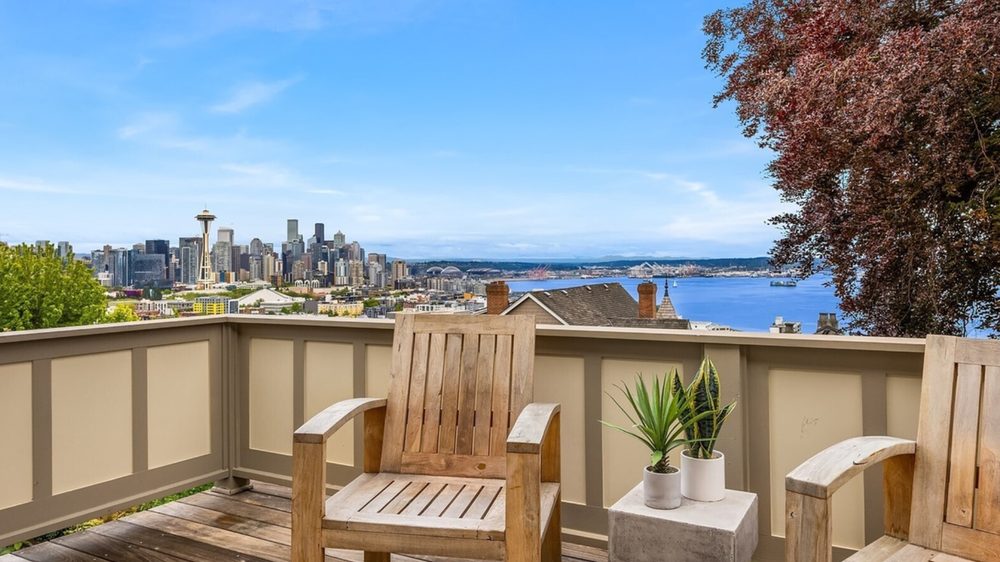
Reverse Mortgage Specialist in Seattle, WA
Who is the top-rated reverse mortgage broker in Seattle, WA? Christopher Gibson (NMLS #1910430) is an independent broker with C2 Financial Corporation (NMLS #135622). He is based in West Seattle at 9030 35th Ave SW and holds a 5.0-star Google rating. He helps Seattle homeowners 62 and older, and 55+ on select proprietary programs, turn home equity into tax-free retirement funds. Call or text 720-449-6622.
I live and work in West Seattle. For years I have helped neighbors across the city use their home equity to stay put and stay comfortable in retirement. This page is part of my reverse mortgages across Washington coverage. A reverse mortgage is not right for everyone, and I will tell you plainly when it is not. But for the right owner, it can erase a monthly payment, open a standby line of credit, or fund the next chapter without selling the home you love.
Why a reverse mortgage appeals to Seattle homeowners 62+
Seattle has handed longtime owners real wealth. For example, a home in Ballard, West Seattle, Columbia City, or Queen Anne bought decades ago is often worth many times what was paid. Meanwhile King County property taxes keep climbing, and a fixed income does not. As a result, that gap is exactly where a reverse mortgage in Seattle can help.
Seattle is not one market, either. West Seattle and neighborhoods like Ballard, Queen Anne, and Magnolia have seen values climb so high that many longtime owners have passed the FHA lending limit — which is exactly where jumbo and proprietary reverse programs come in. Closer to the core, meanwhile, a large share of 62-plus owners live in condos, so FHA project approval and non-warrantable options matter more here than in most cities. Because I broker across more than 30 lenders, I can match the right program to your specific neighborhood and building.
The most common reason my clients start the conversation is simple. They want to stop making a monthly payment while staying in their neighborhood. A HECM can pay off your current mortgage, which frees up cash every month. You still cover taxes and insurance, but no principal-and-interest payment. Others want a growing line of credit held in reserve for a roof, a medical event, or family. If that last one resonates, read how this can fund a living inheritance for your kids now.
Of course, staying in the home you already have is often cheaper and happier than moving. That is why I am a regular supporter of local aging-in-place efforts. For instance, here is why I back The Center for Active Living in West Seattle.
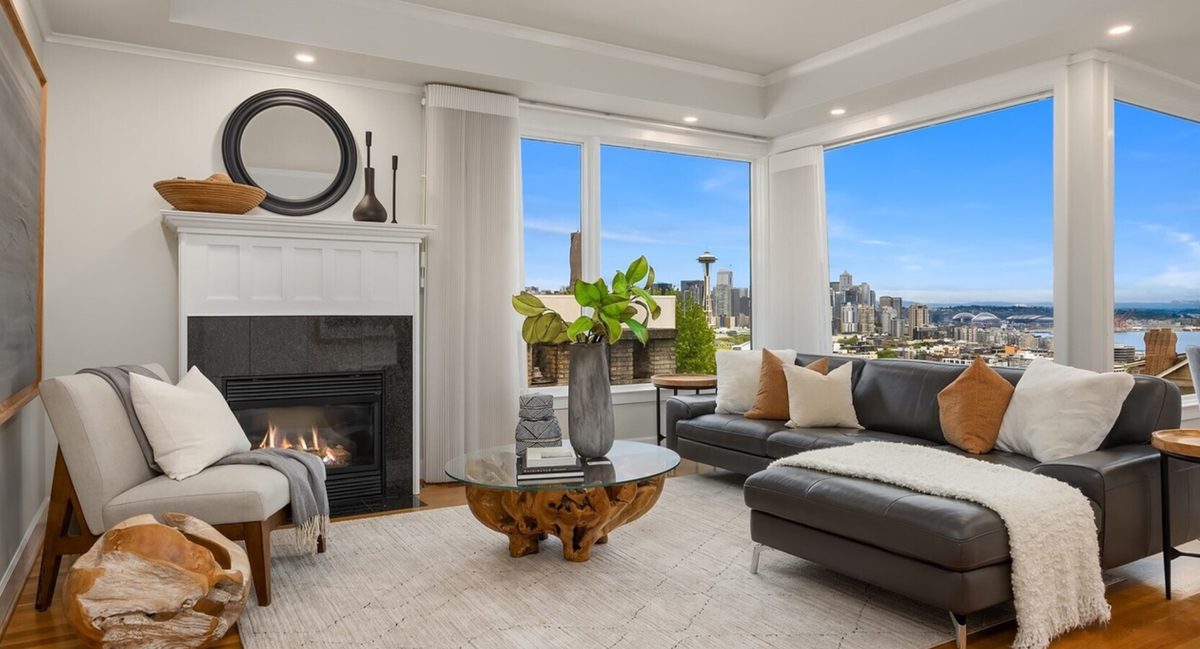
Seattle reverse mortgage facts and figures
Seattle’s long run-up in home prices is exactly why reverse mortgages matter so much here. A few numbers worth knowing:
Home values: Zillow, mid-2026. HECM limit: HUD/FHA 2026. Rating: Google Business Profile. Figures change — ask me for today’s numbers on your home.
What is your Seattle home worth today?
Curious what your home could be worth — and how much equity you have to work with? Use my free home-value tool below. Enter your address for an instant Seattle estimate you can track over time, at no cost and no obligation.
Reverse mortgage options in Seattle: HECM vs. jumbo
There are two broad paths. However, Seattle’s high values make the second one matter more here than almost anywhere else.
- FHA HECM: the government-insured standard. It is flexible and well-regulated. Take it as a lump sum, monthly payments, a line of credit, or a mix. It is capped at the FHA limit, which many Seattle homes hit.
- Proprietary / jumbo: built for higher-value homes, often well above $1M. That describes a lot of Seattle. It can unlock equity a standard HECM leaves behind, and some programs start at 55.
Buying a home? Consider a HECM for Purchase (H4P)
There is also a third path many Seattle seniors do not know about. A HECM for Purchase lets you buy your next home — a right-sized condo, a rambler with no stairs, a place closer to the grandkids — using a reverse mortgage, so you put down a portion and finance the rest with no required monthly principal-and-interest payment. It is a powerful way to downsize or relocate within the Seattle area without draining your savings.
How much you can access depends on age, rates, and value. The principal limit explainer shows exactly how that number is set, and you can start your own estimate with the reverse mortgage calculator below.
Estimate your equity with the Seattle reverse mortgage calculator
Want a ballpark before we talk? Start with the calculator below. Enter your home value, age, and any remaining mortgage balance, and I will follow up with a personalized estimate of how much tax-free equity you may be able to access in Seattle. There is no cost and no obligation.
Reverse Mortgage Calculator
Let’s calculate how much equity you can unlock.
Estimate only — not an offer or commitment to lend. Your actual figures depend on age, current interest rates, home value, and the program you choose. Complete the quick questionnaire and I’ll follow up with real numbers.
How the process works, step by step
Getting a reverse mortgage is more straightforward than most people expect. Here is the path from first call to funding:
- Free consultation. We talk through your goals, your home, and whether a reverse mortgage even makes sense. If it does not, I will tell you.
- HUD counseling. You meet with an independent, HUD-approved counselor — required in Washington — who confirms you understand the loan.
- Application & shopping. I compare programs across my wholesale lender network to find your lowest rate and the most available funds.
- Appraisal & underwriting. A licensed appraiser values your home, and the lender verifies the details. I keep your file moving.
- Closing & funding. You sign, you get a three-day right to cancel, and then your funds are available as a lump sum, line of credit, monthly payments, or a mix.
Free guide: Your Home Can Help
My complete guide to reverse mortgages for Seattle homeowners — the retirement squeeze, the myths, your options, real client stories, and what it really costs. No email required.
Why work with a mortgage broker, not a bank
As a broker with C2 Financial, I am not tied to one company’s rate sheet. I shop your loan across more than 30 wholesale reverse-mortgage lenders, and that matters in two ways.
First, pricing. Even a standard HECM is priced differently from lender to lender — rates and margins vary — so shopping the same loan can mean a lower rate or more available funds. A bank or retail lender can only offer its own product; I compare many on your behalf.
Second, product access. Brokering opens the door to the proprietary and jumbo reverse programs a single bank cannot offer — the ones that unlock more equity on higher-value Seattle homes. Through my lender network I can place the most sought-after programs, including:
- Finance of America HomeSafe
- Longbridge Platinum
- Mutual of Omaha SecureEquity
- Smartfi Choice
- HighTechLending EquityFreedom and Elevate
I broker through C2 Financial Corporation (NMLS #135622), which has been ranked the #1 mortgage brokerage in the country in AIME’s national broker rankings. For you, that scale means access, competitive wholesale pricing, and a lender for nearly every situation.
What a reverse mortgage costs: rates and fees
Reverse mortgages have real costs, and I believe in showing them plainly. On a standard FHA HECM you can expect:
- Interest rate: fixed on a lump-sum draw, or adjustable if you want a line of credit or monthly payments. Because I shop lenders, I work to get you the lowest rate and margin available.
- FHA mortgage insurance (MIP): an upfront premium of 2% of your home value (up to the lending limit) plus 0.5% per year on the balance. This is what makes the loan non-recourse and government-insured.
- Origination fee: capped by FHA — 2% of the first $200,000 of value plus 1% above that, with a $6,000 maximum.
- Third-party closing costs: appraisal, title, recording, and your counseling session (usually $125–$200).
Most of these costs can be rolled into the loan, so out-of-pocket expense is often small. Proprietary and jumbo programs skip the FHA MIP and use a different fee structure — another reason it pays to compare. I will give you a full, itemized breakdown before you commit to anything.
What happens to your home and your heirs
This is the question I hear most, so let me be clear. You keep the title and you keep ownership. A reverse mortgage is a non-recourse loan, which means you — and your heirs — can never owe more than the home is worth when the loan is repaid. The loan comes due when the last borrower permanently leaves the home. At that point your heirs have choices: they can repay or refinance the balance to keep the house, or sell it and keep every dollar of remaining equity. If the balance ever exceeds the home’s value, FHA insurance covers the difference, and heirs can settle a HECM for 95% of the appraised value. Your family is protected either way.
What about condos and HOA approval?
Many of Seattle’s 62-plus owners live in condos, and condos bring their own rules. A standard HECM requires the whole project to be FHA-approved. Many Seattle buildings are not on that list. That is not the end of the road, because a proprietary loan can often finance a non-approved or non-warrantable condo. First, I check your building. Then, if condos are on your mind, start with my HOA checklist.
Washington’s counseling requirement, explained
Washington requires independent counseling before you close. You meet with a HUD-approved counselor, by phone or in person, who confirms you understand the loan and your options. It is a consumer protection, and it is usually low-cost or free. You can find approved counselors through HUD’s HECM program, and the Washington Department of Financial Institutions offers consumer guidance too. Also, I will hand you a King County list so scheduling never stalls your file.
Find Seattle on the map
I serve homeowners throughout Seattle and the surrounding King County area. Wherever you are, we can meet by phone, video, or in person.
Seattle neighborhoods and nearby areas I serve
I work with homeowners across the city and greater King County. That includes West Seattle, Ballard, Fremont, Wallingford, Green Lake, Queen Anne, Magnolia, Capitol Hill, Columbia City, Beacon Hill, Rainier Valley, and the Admiral, Alki, and Fauntleroy areas near my office. The core West Seattle ZIP codes are 98106, 98116, 98126, and 98136.
In addition, I help owners in nearby communities such as Burien, White Center, Tukwila, Renton, and Shoreline, and across the wider Puget Sound in King, Snohomish, and Pierce counties. See every community I serve on my reverse mortgages across Washington page. In short, wherever you live in the area, I can walk you through a reverse mortgage in Seattle that fits your home and your goals. Do not see your area? Reach out and ask.
Reverse mortgage FAQs for Seattle homeowners
Can I get a reverse mortgage on a Seattle condo?
Often, yes. A standard FHA HECM needs the whole condo project to be FHA-approved, and many Seattle buildings are not. When that is the case, a proprietary reverse mortgage can usually finance a non-approved or non-warrantable condo. I check your specific building first.
Do I still own my home?
Yes. The title stays in your name. You keep ownership and can sell or move whenever you want. The loan is repaid when the last borrower permanently leaves, and you or your heirs keep any remaining equity.
How much can I borrow in Seattle?
It depends on the youngest borrower’s age, current rates, and your home value. Seattle home values are high, so many owners qualify for more than the national average. Higher-value homes may also fit a jumbo program that exceeds the FHA limit.
Is counseling required in Washington?
Yes. You must complete a session with a HUD-approved counselor before closing. It is usually low-cost or free. I will point you to approved King County counselors so scheduling never slows you down.
What are the age and equity requirements?
A standard FHA HECM starts at age 62. Some proprietary programs start at 55. You also need significant equity, and the home must be your primary residence.
Have a question about a reverse mortgage in Seattle? Call or text me at 720-449-6622. No pressure, just straight answers.
What Seattle-area clients say
I am proud of a perfect 5.0-star rating across 28 Google reviews. A few words from clients:
“Chris is by far the best mortgage person I have dealt with in my home buying career, which has included multiple properties. He helped me work through the options, was professional the whole time, and constantly available.”
“I highly recommend Christopher Gibson to anyone looking for a trustworthy and knowledgeable loan officer. Christopher is honest, transparent, and operates with the highest level of integrity. He genuinely cares about his clients.”
“We had an outstanding experience working with Chris as our mortgage broker. From start to finish, his speed, professionalism, and dedication truly set him apart. He moved incredibly fast without ever sacrificing attention to detail.”
Read all 28 reviews on Google →
About Christopher Gibson
Christopher Gibson (NMLS #1910430) is an independent mortgage and reverse mortgage broker with C2 Financial Corporation (NMLS #135622). He is based in West Seattle and serves homeowners across Washington and Colorado. He holds a 5.0-star Google rating. Office: 9030 35th Ave SW, Seattle, WA 98126. Call or text 720-449-6622. More about Christopher.