
← Reverse mortgages in Michigan
When do you pay back a reverse mortgage in Traverse City? Not in monthly installments. The loan comes due only when the last borrower sells, moves out of the home for good, or passes away, and it is usually settled by selling the home, with any leftover equity going to you or your heirs. On a typical $450K Traverse City home in Grand Traverse County, a longtime owner can tap equity now and leave the payoff for later, as long as the taxes, insurance, and upkeep stay current.
A typical Traverse City home is worth around $450K, and near the water a place bought decades ago has quietly built real equity. A reverse mortgage only fits some situations, and I will say so when it does not. See how Traverse City compares on my Michigan aging-in-place overview.
Updated
On this page
- Local reverse mortgage broker in Traverse City
- Aging in place in Traverse City
- What is my Traverse City home worth?
- How does a reverse mortgage work in Traverse City?
- Who qualifies for a reverse mortgage in Traverse City?
- Reverse mortgage calculator
- Cost of aging in place
- Is a reverse mortgage right for me?
- Learn how reverse mortgages work
- Jumbo reverse mortgages in Traverse City
- Why work with a broker, not a bank
- How much a reverse mortgage costs in Traverse City
- Reverse mortgage rates in Traverse City
- Condos and HOA
- Reverse mortgage FAQs
Reverse Mortgage Specialist in Traverse City, MI
Who is a local reverse mortgage broker in Traverse City, MI? Christopher Gibson (NMLS #1910430) is an independent broker with C2 Financial Corporation (NMLS #135622). He helps Traverse City homeowners age 55 and older (age 62+ for the government-insured HECM) turn home equity into funds for retirement. Because the funds are loan proceeds rather than income, they are generally not subject to federal income tax.* Call or text 720-449-6622.
Aging in place in Traverse City, at a glance
The pros and cons, every measure I track, sorted by which way it cuts. Full detail below.
| Works in your favor | Neutral or mixed | Plan around it |
|---|---|---|
|
|
|
Figures: U.S. Census ACS 2020-2024 5-Year; County Health Rankings 2025 (life expectancy, county level); NOAA 1991-2020 Climate Normals; FEMA National Risk Index (per hazard, not the composite). This product uses the Census Bureau Data API but is not endorsed or certified by the Census Bureau.
Why a reverse mortgage appeals to Traverse City homeowners 55+ attempting to age in place
Traverse City is the hub of northern Michigan wine and cherry country on Grand Traverse Bay. The typical home now runs around $450K, and for a longtime owner most of that is equity they have never spent. A reverse mortgage turns part of it into cash flow while they stay near the water.
Traverse City draws a steady stream of retirees who move north for the bay, the wineries, and a walkable downtown, and many bought or built homes decades ago that have appreciated sharply with the region’s second-home boom. A large share of owners age 62 and up hold substantial equity yet live on fixed incomes, so a HECM can convert that value into cash flow or eliminate a monthly mortgage payment while they stay in place. With typical values around $450K, most local seniors fall squarely within standard FHA limits rather than jumbo territory.
Traverse City reverse mortgage facts and figures
Traverse City values run above the surrounding Michigan norm thanks to its waterfront draw, and that equity is what a reverse mortgage puts to work. Here are a few numbers worth knowing:
Home values: Zillow, mid-2026. HECM limit: HUD/FHA 2026. Property tax: U.S. Census. Figures change, so ask me for today’s numbers on your home.
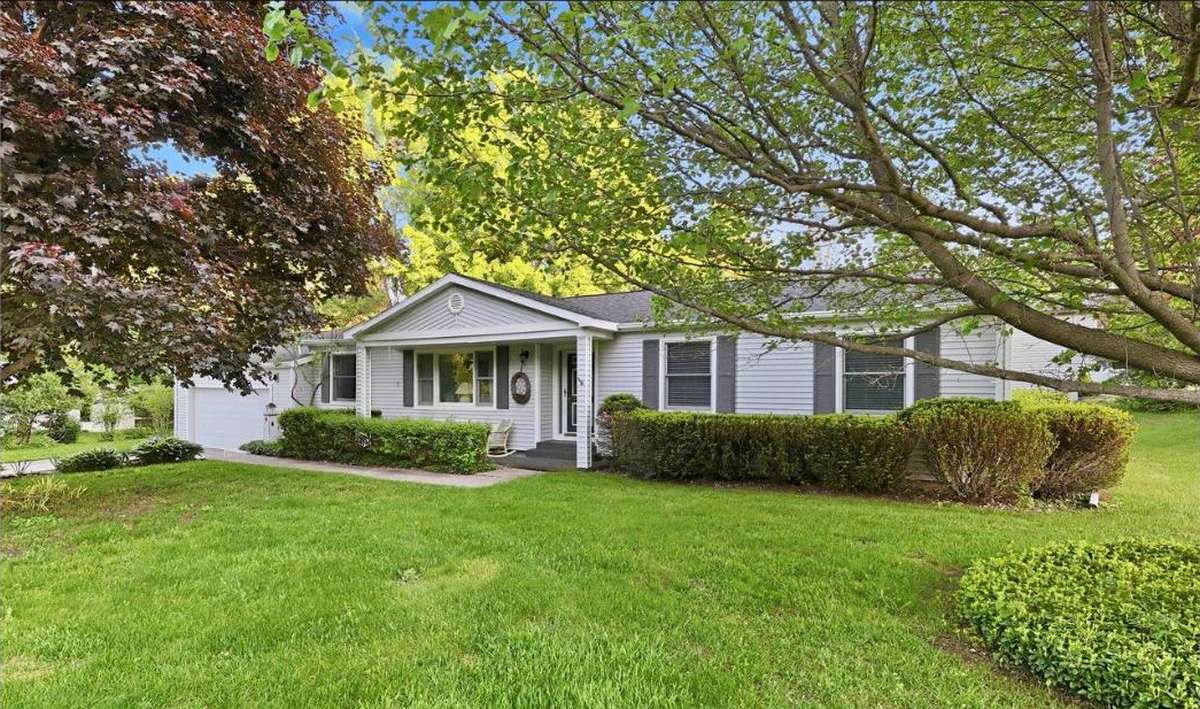
What is your Traverse City home worth today?
Curious what your home could be worth, and how much equity you have to work with? Use my free home-value tool below. Enter your address for an instant Traverse City estimate you can track over time, at no cost and no obligation.
Jumbo reverse mortgages in Traverse City (HECM vs. jumbo)
Most homes here are covered by the government-insured HECM, while higher-value homes and many condos fit a proprietary jumbo. For the full side-by-side of HECM, jumbo, HELOC, and HEI, see the reverse mortgage comparison table, or the types of reverse mortgages for a plain-English rundown.
For a full side-by-side of every program and how to choose, see the types of reverse mortgages.
Buying a home? Consider a HECM for Purchase (H4P)
A HECM for Purchase lets you buy your next home using a reverse mortgage, so you put down a portion and finance the rest with no required monthly principal-and-interest payment. For a Traverse City owner leaving a multi-level water-view house for a single-level place near town, it is a clean way to move without taking on a new monthly payment.
How much you can access depends on age, rates, and value. Start your own estimate with the reverse mortgage calculator below.
Reverse Mortgage Calculator
Let’s calculate how much equity you can unlock.
A reverse mortgage is a loan. The balance grows over time and is repaid when the last borrower leaves the home. You keep the title, and you remain responsible for property taxes, homeowners insurance, and upkeep.
Aging in place in Traverse City with a reverse mortgage: what it really costs
Local facts first, product second. Here is Traverse City. All public record, and clear about what is not in it.
The one number that changes how a HECM is structured here
The Census puts the median Traverse City house at 1964, right at the Michigan median of 1972. About 67% of the housing here went up before 1980, which is the line that matters for lead paint. Every HECM appraisal is an FHA appraisal, so condition is on the table alongside value. Older housing tends to surface a roof, a furnace or a paint issue. None of that ends the file; it goes into a repair set-aside capped at 15% of the maximum claim amount.
The obligation a reverse mortgage does not erase
A mortgage-free Traverse City house still costs a median $648 a month to hold. Property taxes, hazard insurance, utilities and fuel, plus any HOA. Measured against local 65+ income of $66,380, the house accounts for 12%. One in every few older owners here is already stretched: 23% spend at least 30% of income on the house. A HECM is not a way out of property charges. It is a way to have the money to pay them, which is a different and more useful thing.
What the city code says about your sidewalk
The normals give Traverse City 32 shoveling days a year. Clearing it is a legal duty here, not a neighborly one: no hour deadline: the duty is to remove snow and ice from the abutting walk, with no clock attached. The teeth in it: a civil infraction, plus the city’s removal cost and a 10% administrative charge. That is Traverse City Codified Ordinances 668.11. Falls on ice are the single most common way an independent household stops being independent. Budget for someone else to do this.
One phone number worth writing down
the Bay Area Transportation Authority, BATA is the local provider, open to riders 60 and older get half fare. The fare is 75 cents on the City Loop, $1.50 on the Village Loop, and the Bayline is free to everyone. It is worth calling now just to find out what the actual lead time is.
Michigan tax rules, the short version
For a household that has owned since the nineties, uncapping would be the single most expensive thing that could happen. It does not happen here. MCL 211.27a(7)(j), and the Michigan page for the rest.
The local funding picture for aging in place
The local funding comes from a senior services millage levied by The Grand Traverse County Commission on Aging, 0.4739 mill through 2032, plus a separate 0.0945 mill senior center levy. Two millages, not one. It pays for in-home personal care, caregiver relief, transportation, and outdoor services that include snow and leaf removal and lawn care. It is the cheapest option on the table, and it is usually the one people have never heard of.
What the trauma designations actually mean here
Munson Medical Center, a Level II trauma center and the flagship of its system is in town, part of Munson Healthcare. What matters in an emergency is not the nearest building but the nearest designation. That is Munson Medical Center at Level II, 2.5 miles, with a Level I 140 miles away in Grand Rapids. Worth knowing whether your cardiologist or oncologist is at that hospital or somewhere further out, because the trauma number is not the whole story.
The quantitative version of the argument
People in this county reach a median 78.7 years, where the US figure is 77.1. The longer you stay, the more an unused credit line is worth. Regional price parity comes out at 93 with the US at 100, at the Traverse City, MI metro level, which is as fine as the BEA publishes. Count 32 shoveling days in a normal year, 101 inches of snowfall, and 155 days that never get above freezing. Underneath all of it: keeping a paid-off home here runs a median $648 a month, or 12% of what a typical 65+ household brings in.
Sources: U.S. Census Bureau, American Community Survey 2020-2024 5-Year Estimates; U.S. Bureau of Economic Analysis Regional Price Parities; the MDHHS designated trauma facility list, with road distances from OSRM; the municipal code cited above; county and city millage records; County Health Rankings & Roadmaps 2025, at county level; NOAA 1991-2020 Climate Normals. This product uses the Census Bureau Data API but is not endorsed or certified by the Census Bureau.
Who qualifies for a reverse mortgage in Traverse City?
Qualifying for a reverse mortgage in Traverse City comes down to a few clear tests. For an FHA HECM you generally need to be at least 62, and the home has to be your primary residence. You also need enough equity, and most longtime owners are well past that threshold. A HECM has no income or credit-score cutoff the way a traditional loan does, though there is a financial assessment to confirm you can keep up with property taxes, insurance, and upkeep. If you are 55 to 61, a proprietary program may still fit. The quickest way to see where you stand is to run your own numbers with the Traverse City reverse mortgage calculator below, or read the full reverse mortgage requirements. Not sure? Call or text me at 720-449-6622 and I will tell you plainly.
How does a reverse mortgage work in Traverse City?
Here is the path from first call to funding:
Want the full walkthrough? See how a reverse mortgage works, step by step.
Why work with a mortgage broker, not a bank
As a broker with C2 Financial, I am not tied to one company’s rate sheet. I shop your loan across more than 30 wholesale reverse-mortgage lenders. First, pricing: even a standard HECM is priced differently from lender to lender, so shopping the same loan can mean a lower rate or more available funds. Second, product access: brokering opens the door to the proprietary and jumbo programs a single bank cannot offer.
I broker through C2 Financial Corporation (NMLS #135622), a national mortgage brokerage.
How much a reverse mortgage costs in Traverse City
On a standard FHA HECM you can expect a fixed or adjustable interest rate; FHA mortgage insurance (an upfront premium of 2% of value plus 0.5% per year), which funds the FHA guarantee behind the non-recourse protection; an FHA-capped origination fee ($6,000 max); and third-party closing costs. Most costs can be rolled into the loan, and I will give you a full, itemized breakdown before you commit to anything.
For an itemized breakdown of every fee, and what is financed versus paid up front, see what a reverse mortgage costs.
Reverse mortgage rates in Traverse City and how they affect how much you can borrow
On a reverse mortgage, your interest rate does more than set what accrues, it helps decide how much you can access in the first place. The amount available to you (your principal limit) comes down to three things: the age of the youngest borrower, the expected interest rate, and your home value up to the FHA lending limit. All else equal, an older borrower and a lower rate both mean a larger available draw. Most Traverse City homes fall within the standard FHA HECM limit, while higher-value homes may also fit a jumbo program that exceeds it. For the mechanics, see how the principal limit is calculated, then put real numbers to it with the Traverse City reverse mortgage calculator.
What happens to your home and your heirs
You keep the title and you keep ownership. A reverse mortgage is a non-recourse loan, so you and your heirs can never owe more than the home is worth when the loan is repaid. It comes due when the last borrower permanently leaves; your heirs can repay or refinance to keep the home, or sell and keep every dollar of remaining equity. If the balance ever exceeds the value, FHA insurance covers the difference and heirs can settle a HECM for 95% of appraised value.
The full heirs and estate walkthrough, including timelines and the 95% rule, is on how it works.
What about condos and HOA approval?
Some of Traverse City’s 62-plus owners live in condos or HOA communities, and those bring their own rules. A standard HECM requires the whole condo project to be FHA-approved, and many buildings are not on that list. A proprietary loan can often finance a non-approved or non-warrantable condo. First, I check your building. If condos are on your mind, start with my HOA checklist.
See the full property and eligibility rules on the requirements page.
The HUD counseling requirement, explained
Federal HUD rules require independent counseling before you close, on every HECM, in every state. You meet with a HUD-approved counselor who confirms you understand the loan. It is a consumer protection, usually low-cost or free. Find approved counselors through HUD’s HECM program, and the Michigan Department of Insurance and Financial Services offers consumer guidance. HUD publishes the approved counselors serving Grand Traverse County, so scheduling never has to stall your file.
For what the counseling session actually covers, see the counseling page.
Traverse City neighborhoods and nearby areas I serve
I work with homeowners across the city and greater Grand Traverse County. That includes Old Towne, Central Neighborhood, Boardman, Slabtown, Oak Park, and Traverse Heights. Core ZIP codes include 49684, 49685, 49686.
In addition, I also help owners in nearby communities such as Acme, Kingsley, Suttons Bay, Interlochen, Williamsburg, Leelanau County, Benzie County, and Elk Rapids, and across Grand Traverse, Leelanau, and Benzie counties. See every area I cover on my reverse mortgages across Michigan page. Do not see your area? Reach out and ask.
If aging in place is your goal, local resources like Grand Traverse County Senior Center Network can help you plan, and my free Aging-in-Place Home Scorecard lets you score any Traverse City home in about 15 minutes to see how ready it is to grow old in.
Wondering whether a home is one you could grow old in? Score any home in about 15 minutes, and see how a reverse mortgage can fund the upgrades.
Use the Aging-in-Place Scorecard →Reverse mortgage FAQs for Traverse City homeowners
Can I get a reverse mortgage on a Traverse City condo?
A standard FHA HECM needs the whole condo project to be FHA-approved, and many buildings are not. When that is the case, a proprietary reverse mortgage can usually finance a non-approved or non-warrantable condo. I check your specific building first.
Do I still own my home?
Yes. The title stays in your name. You keep ownership and can sell or move whenever you want. The loan is repaid when the last borrower permanently leaves, and you or your heirs keep any remaining equity.
Is HUD counseling required in Traverse City?
Yes. You must complete a session with a HUD-approved counselor before closing. It is usually low-cost or free. HUD publishes the approved counselors serving Grand Traverse County, so scheduling never has to slow you down.
What are the age and equity requirements?
A standard FHA HECM starts at age 62. Some proprietary programs start at 55. You also need significant equity, and the home must be your primary residence.
Do I still pay property tax with a reverse mortgage in Traverse City?
Yes. With a reverse mortgage you keep title and remain responsible for property taxes, homeowners insurance, and upkeep. Depending on your age and income you may qualify for senior property-tax relief in Michigan (the programs vary by state and by county), and you can use reverse-mortgage funds to help cover those ongoing costs.
Can I use a reverse mortgage to buy a smaller home in Traverse City?
Yes, that’s a HECM for Purchase. It lets buyers 62+ put down a portion of the price and finance the rest with a reverse mortgage, so you can right-size into a single-level or lower-maintenance Traverse City home without taking on a monthly mortgage payment.
Have a question about a reverse mortgage in Traverse City? Call or text me at 720-449-6622.
Quick guide: is a reverse mortgage right for me?
First, answer four short questions, and the guide will point you toward the resource that fits your situation. Of course, it is general guidance for learning, not an approval or a quote, and nothing you tap is stored.
Free guide: Your Home Can Help
My complete guide to reverse mortgages for Michigan homeowners, the retirement squeeze, the myths, your options, real client stories, and what it really costs. No email required.
Learn how reverse mortgages work
Want the full details before we talk?
Reverse mortgages in nearby communities
About Christopher Gibson
Christopher Gibson (NMLS #1910430) is an independent mortgage and reverse mortgage broker with C2 Financial Corporation (NMLS #135622), serving homeowners across the states he is licensed in. Serving Traverse City and nearby communities. Call or text 720-449-6622. More about Christopher.
Read reviews of Reverse Mortgages & Home Loans with Christopher Gibson at C2 Financial
Google Business Profile → · Mortgage Matchup →
*This is general information, not tax advice. Reverse mortgage proceeds are loan advances rather than income and are generally not subject to federal income tax. Consult a CPA or tax advisor about your specific situation. Receiving loan proceeds may also affect eligibility for need-based government benefits such as Medicaid or Supplemental Security Income (SSI).