
I’m Christopher Gibson. I’ve spent years walking homeowners through this exact decision, across all five states I’m licensed in: Washington, Colorado, Texas, Florida, and Michigan. And I’ll tell you up front: a reverse mortgage is not the right move for everyone. I’ll say so when it isn’t. This is the honest version: what it is, how the money works, what you still owe, who owns the house, and how to tell if it’s worth a real conversation.
Updated
On this page
- What a reverse mortgage actually is
- Who a reverse mortgage is for
- How you actually get the money
- How much could you get? Estimate it
- What you still owe
- Who owns the home? You do
- How and when it gets repaid
- What a reverse mortgage costs
- Is a reverse mortgage right for you?
- Authoritative resources
- Reverse mortgage calculator
- Frequently asked questions
- Explore all guides
- Areas I serve
What a reverse mortgage actually is
A regular (“forward”) mortgage works one way: you borrow a big number up front, then pay it down every month until the balance reaches zero. A reverse mortgage runs the other direction. Instead of you writing a check to the lender each month, the loan lets you pull money out of your equity. The balance grows over time instead of shrinking. You settle up later, usually when the home is eventually sold. And unlike a home equity loan or HELOC, there’s no required monthly payment.
The version almost everyone ends up in is the HECM, or Home Equity Conversion Mortgage. Say it “heck-um.” The federal government insures it through the FHA. That matters more than it sounds. I’ll come back to why. There are also proprietary or “jumbo” reverse mortgages for higher-value homes above the federal limit. But for most homeowners, the HECM is the product on the table.
Here’s the part that surprises people most. To get a ballpark of what you could access, only two things really drive the math: the age of the youngest borrower, and your home’s value. Older borrower, more available. Higher home value, more available. No credit pull and no tax returns just to run the napkin math. If the numbers don’t pencil, you know in about five minutes and nobody’s wasted an afternoon.
Who it’s actually for
The baseline is straightforward: you’re age 55 or older, the home is your primary residence, and you have enough equity, which usually means your current mortgage balance is under about half of what the home is worth. The government-insured HECM starts at age 62; a few proprietary programs (privately insured, not FHA) start as early as age 55 (60+ in Washington, 62+ in Texas), usually for higher-value homes. (Full eligibility, including the financial assessment, lives on the requirements page.)
The why, though, is where I see real people land. A few of the common ones:
You want the monthly mortgage payment gone. If a reverse mortgage pays off your existing loan, that required payment disappears. For a lot of retirees, that’s the single biggest cash-flow change they can make.
You want a standby line of credit that grows. This is the one financial planners get quietest and most interested about. The unused portion of a HECM line of credit grows over time. So a line you open at 68 and don’t touch can be meaningfully larger at 78. More on that on the line-of-credit page.
You want to help your kids now instead of later. I had a client recently who wanted to pull equity to help her daughter buy a house. Her words, roughly: “the money will mean more to her now than when I’m gone.” No monthly payment out of her pocket, and she got to watch it matter.
You want to stay in your home. Most people over 60 tell me the goal is to age in place. A reverse mortgage can fund the part of that plan the equity is good for. Though staying home is as much a community question as a financial one. That’s a longer conversation than this page.
How you actually get the money
You’re not stuck with one lump. A HECM can pay out four ways, and you can combine them:
- A lump sum at closing, useful when there’s an existing mortgage to pay off, or a one-time need.
- A line of credit you draw from when you want. It’s my most common recommendation, because of that growth feature.
- Monthly advances for a set number of years, or for as long as you live in the home: a steady “paycheck” style.
- A mix: pay off the old loan and keep a line open for later.
Those four options are a HECM feature. Proprietary (jumbo) reverse mortgages are usually a lump sum, and sometimes a line of credit, but they typically don’t offer the tenure monthly advances or the growing line of credit that the HECM does.
How much of your equity is available isn’t the whole home value. It’s a percentage, set by your age and current rates (HUD calls it the principal limit factor), applied to your home’s value up to the federal limit. For example, a 75-year-old with a $600,000 home will have a different available amount than a 70-year-old with the identical home, purely because of age. Your real number comes from a quote on your actual situation. This is the illustration, not a promise.
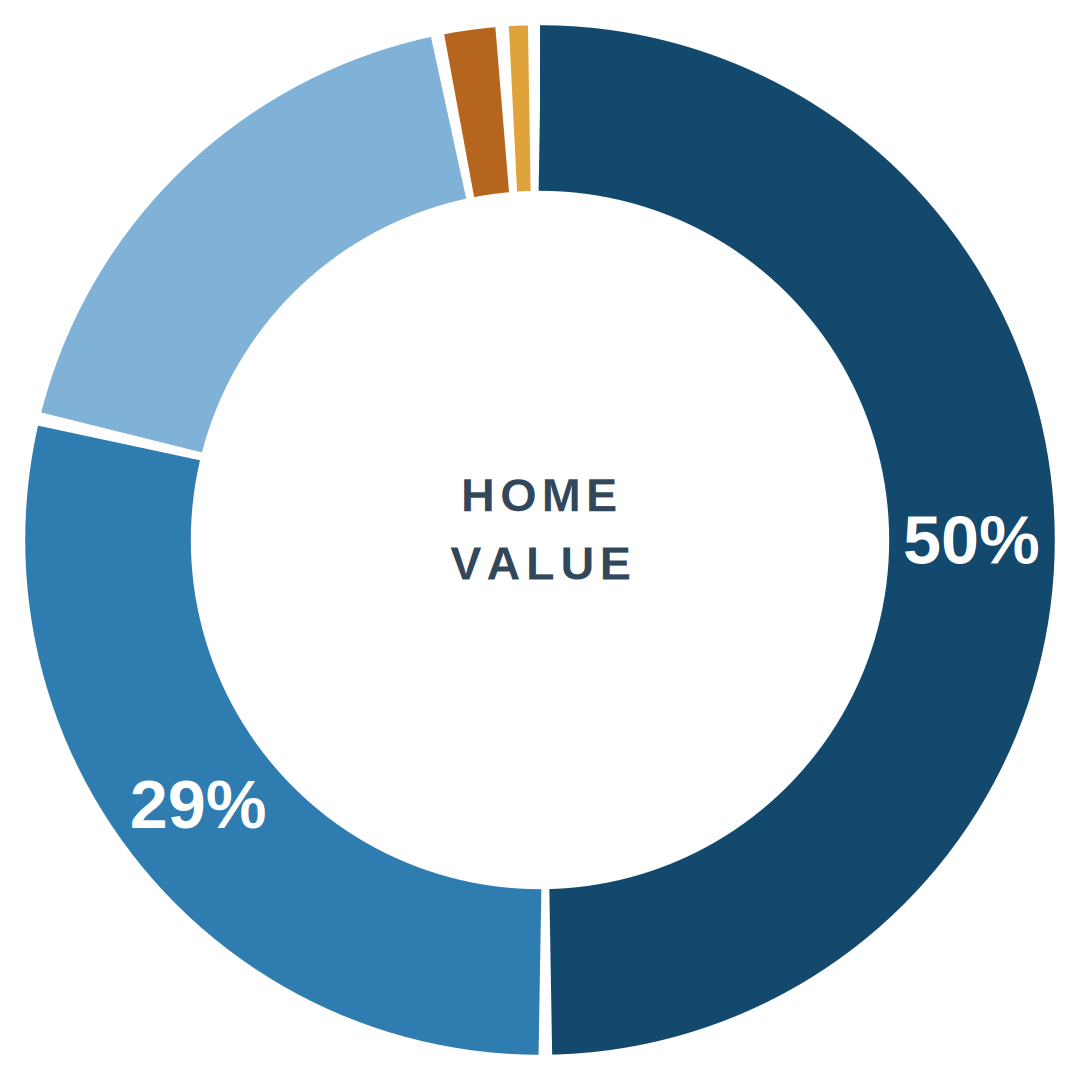
- Remaining equity (stays yours): ~50%
- Line of credit (available to draw): ~29%
- Cash at closing: ~18%
- Mortgage insurance (MIP): ~2%
- Costs (origination + fees): ~1%
Illustrative example at the 2026 HECM lending limit ($1,249,125), where fixed fees are a small share. Your actual split depends on your age, home value, and current rates.
How much could you get? Estimate it
Want to see what this could look like for you? Start with an estimate of your home’s value, then run the numbers. Both are starting points; your real figures come from a quote on your situation.
First, an estimate of your home’s value:
Reverse Mortgage Calculator
Let’s calculate how much equity you can access.
A reverse mortgage is a loan. The balance grows over time and is repaid when the last borrower leaves the home. You keep the title, and you remain responsible for property taxes, homeowners insurance, and upkeep.
What you still owe (the honest part)
A reverse mortgage doesn’t make the house free. You are still responsible for your property taxes, your homeowner’s insurance, and keeping the place maintained. That obligation doesn’t go away. Falling behind on it is one of the few ways a reverse mortgage can actually go wrong. So I make sure every borrower understands it before we ever get to an application.
And the balance grows. Because you’re not making payments, interest and fees add to what you owe over time instead of subtracting from it. That’s the trade you’re making: cash and cash-flow now, in exchange for less equity left in the home later. For the right person that’s a smart trade. For the wrong person it isn’t. Both are true, and which one you are is the actual question.
Who owns the home? You do
This is the myth I spend the most time knocking down, so let me be blunt: the bank does not own your home, and a reverse mortgage does not sign it over to anyone. You hold the title, exactly like with a normal mortgage. You can sell whenever you want, or leave it to your kids. The lender has a lien, a claim for repayment, not ownership. (The rest of the common myths get their own myths & facts page.)
How and when it gets repaid
The loan becomes due when the last borrower permanently leaves the home. Typically that’s when it’s sold, or after the borrower passes and the estate settles. At that point you or your heirs usually sell the home, the sale pays off the loan balance, and anything left over goes to you or your heirs.
Now the part where FHA insurance earns its keep. A HECM is non-recourse. That means neither you nor your heirs can ever owe more than the home is worth when it’s sold. Even if the balance has grown past the home’s value. If the market dropped and the loan is higher than the sale price, FHA insurance covers the gap, not your family. That protection is a big reason I steer most people to the HECM over the proprietary products.
What a reverse mortgage costs
Reverse mortgages have real closing costs: an origination fee, an upfront FHA mortgage-insurance premium, plus the usual appraisal, title, and recording charges. You can roll most of them into the loan instead of paying out of pocket. Beyond the upfront costs, two costs continue over the life of the loan: interest accrues on your balance, and an annual mortgage insurance premium (about 0.5% of the loan balance) keeps the FHA guarantee in place.
The honest framing on cost is this: measured as an annual rate, a reverse mortgage looks expensive if you only keep it a couple of years, and competitive the longer you hold it. It’s built to be a long-horizon tool, not a short-term bridge. Full cost breakdown is on the costs page.
Is it right for you?
Here’s my actual test, and it’s not “will you qualify.” It’s “do the numbers solve something real.” Does it erase a mortgage payment you’d rather not make? Open a growing line of credit for later? Fund staying in a home you love? Then it’s worth a look. If you’re planning to move in a couple of years, or the costs outweigh a small benefit, it usually isn’t. And I’ll tell you that directly.
Two things every borrower does before this is real: independent HUD-approved counseling (required, and genuinely useful: it’s a neutral third party whose only job is to make sure you understand what you’re signing), and a look at your own numbers. You can start with the decision tool to see roughly where you land. Or just send me your age, home value, and any existing mortgage balance, and I’ll run a real number. Same-day turnaround, no credit pull to get it.
It’s worth a conversation. That’s all a first step ever is.
Authoritative resources
Prefer to read it straight from the source? Start with HUD’s HECM program, the CFPB reverse mortgage guide, and NCOA’s “Use Your Home to Stay at Home” booklet. For a fuller list, browse our reverse mortgage resource library. This guide anchors our full reverse mortgage resource center.
Frequently asked questions
What is a reverse mortgage in simple terms?
It’s a loan for homeowners age 55 and older that turns part of your home equity into cash with no required monthly mortgage payment. The most common version, the government-insured HECM, starts at age 62. You keep the title and keep living in the home; you repay the balance later, usually when you sell the home.
Do you still own your home with a reverse mortgage?
Yes. You hold the title exactly as you would with a normal mortgage. The lender has a lien for repayment, not ownership. You can sell or leave the home to your heirs at any time.
Do you have to make monthly payments on a reverse mortgage?
You don’t owe a monthly mortgage payment. You do have to keep paying property taxes and homeowner’s insurance and maintain the home. Those obligations remain.
Can you owe more than your home is worth?
Not on a HECM. It’s a non-recourse loan, so you and your heirs can never owe more than the home’s value when it’s sold. FHA insurance covers any shortfall.
How much money can you get from a reverse mortgage?
It depends mainly on the age of the youngest borrower, your home’s value (up to the federal limit), and current interest rates. Older borrowers and higher-value homes generally access more. The only way to know your number is a quote on your actual situation. Try the reverse mortgage calculator to get started.
How is the loan repaid?
When the last borrower permanently leaves the home, usually by selling it or through the estate. The sale proceeds pay off the balance, and any remaining equity goes to you or your heirs.
Have more questions? See our full reverse mortgage FAQ.
Learn how reverse mortgages work
Want the full picture? These guides cover everything, no local sales pitch, just the facts.
Areas I serve
I am licensed in five states and work with homeowners in each. Choose yours for local retirement detail.
About Christopher Gibson
I’m Christopher Gibson, a mortgage broker and reverse mortgage specialist with C2 Financial (NMLS #1910430), licensed across Washington, Colorado, Texas, Florida, and Michigan. I’ve spent years helping homeowners age 55+ figure out whether a reverse mortgage fits, and telling them plainly when it doesn’t. Call or text 720-449-6622 and we’ll run your actual numbers, same day, with no credit pull to get a ballpark.