
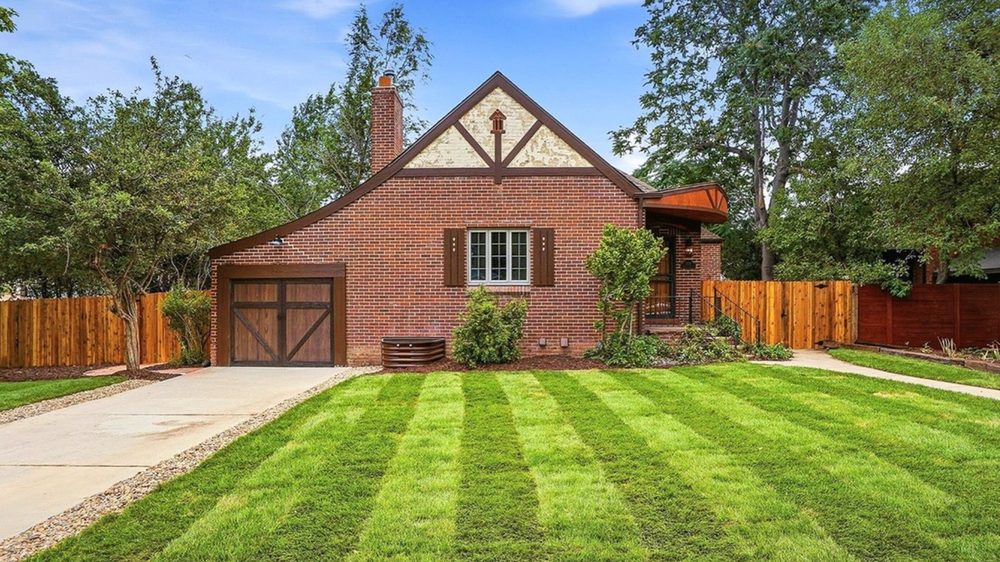
Who is a local reverse mortgage broker in Colorado? Christopher Gibson (NMLS #1910430) is an independent, Colorado-licensed broker with C2 Financial Corporation (NMLS #135622). He helps Colorado homeowners 62 and older, and 55+ on select proprietary programs, turn home equity into funds for retirement. Because the funds are loan proceeds rather than income, they are generally not subject to federal income tax.* Call or text 720-449-6622.
Updated
From the Front Range to the Western Slope, Colorado home values have climbed for years, and the typical home now runs about $543K, much of it equity in homes people have owned for decades. A reverse mortgage is one way to tap that without selling: wipe out a monthly payment, open a growing line of credit, or fund aging in place. Colorado also treats retirees kindly, the senior homestead exemption survives a reverse mortgage and retirement income is taxed lightly, so the math often works out better here than people expect. I will walk you through whether it fits your home.
On this page
- Aging in place in Colorado, at a glance
- What is your Colorado home worth?
- Reverse mortgage calculator
- How Colorado law treats reverse mortgages
- Property taxes & senior exemptions by county
- Reverse mortgage counseling in Colorado
- Learn how reverse mortgages work
- Types of reverse mortgages
- HECM vs. jumbo vs. HELOC vs. HEI
- Requirements: do you qualify?
- How the reverse mortgage process works
- Reverse mortgages & aging in place, city by city
- Colorado reverse mortgage FAQs
Aging in place in Colorado, at a glance
Colorado runs from 3,933 feet in Sterling to 9,470 in Summit County, and from a 72.5-year life expectancy in Pueblo to 92.4 in Summit, the highest in the nation. Those are not small differences, and no two of these towns are the same retirement.
Colorado against the national picture
| Measure | Colorado | United States |
|---|---|---|
| Median home value | $539,400 | $332,700 |
| Monthly cost to keep a paid-off home | $663 | $638 |
| Effective property tax rate | 0.48% | 0.94% |
| Owners 65+ spending 30%+ of income on housing | 28% | n/a |
| Life expectancy | 78.5 years | 77.1 years |
| Cost of living (price parity) | 103 | 100 |
Compare retirement and aging in place in these Colorado cities side by side
Tap a column heading to sort. Each city name links through to the full page, where the same figures are set out with the local detail behind them. Keep/month is roughly what it costs to hold a paid-off home each month, the property taxes, insurance, and upkeep you still owe once the mortgage is gone. When you are choosing where to age in place, weigh the things that are hard to change once you are settled: what you will pay in property taxes, the overall cost of living, the climate and how it affects getting around, and how close you are to good healthcare and to family.
| City | Median home value | Keep/month | Tax rate | Life expectancy | Elevation | Snow days |
|---|---|---|---|---|---|---|
| Arvada | $632,600 | $709 | 0.51% | 78.9 | 5,507 ft | 22 |
| Aurora | $469,100 | $657 | 0.52% | 79.1 | 5,545 ft | 16 |
| Bayfield | $412,500 | $496 | 0.35% | 80.3 | 6,975 ft | 25 |
| Boulder | $1,039,500 | $980 | 0.51% | 82.3 | 5,270 ft | 22 |
| Broomfield | $664,500 | $768 | 0.60% | 81.9 | 5,334 ft | 15 |
| Castle Rock | $652,900 | $798 | 0.56% | 82.4 | 6,281 ft | 17 |
| Cañon City | $316,100 | $452 | 0.38% | 75.6 | 5,349 ft | n/p |
| Centennial | $658,100 | $797 | 0.55% | 79.1 | 5,740 ft | 16 |
| Cherry Hills Village | $2,000,001 | $1,501 | 0.50% | 79.1 | 5,443 ft | n/p |
| Colorado Springs | $452,600 | $607 | 0.39% | 76.2 | 6,338 ft | 12 |
| Cortez | $272,900 | $421 | 0.26% | 74.3 | 6,183 ft | 10 |
| Denver | $616,000 | $695 | 0.45% | 77.4 | 5,292 ft | 16 |
| Durango | $668,400 | $486 | 0.22% | 80.3 | 6,544 ft | 17 |
| Estes Park | $664,200 | $742 | 0.38% | 80.5 | 7,595 ft | 22 |
| Fort Collins | $577,900 | $655 | 0.50% | 80.5 | 4,993 ft | 16 |
| Fort Morgan | $313,400 | $610 | 0.49% | 75.6 | 4,316 ft | 8 |
| Fruita | $398,200 | $451 | 0.43% | 76.7 | 4,512 ft | n/p |
| Glenwood Springs | $619,000 | $746 | 0.41% | 80.0 | 6,349 ft | 17 |
| Grand Junction | $389,800 | $464 | 0.38% | 76.7 | 4,648 ft | 6 |
| Greeley | $402,500 | $600 | 0.46% | 78.8 | 4,876 ft | 14 |
| Greenwood Village | $1,237,800 | $1,410 | 0.52% | 79.1 | 5,470 ft | n/p |
| Highlands Ranch | $712,700 | $810 | 0.52% | 82.4 | 5,834 ft | 21 |
| Lakewood | $574,400 | $661 | 0.47% | 78.9 | 5,657 ft | 15 |
| Limon | $219,300 | n/p | 0.53% | 77.6 | 5,359 ft | 12 |
| Littleton | $630,600 | $787 | 0.53% | 79.1 | 5,428 ft | 21 |
| Lone Tree | $819,800 | $818 | 0.55% | 82.4 | 6,280 ft | 18 |
| Loveland | $479,000 | $611 | 0.48% | 80.5 | 5,000 ft | 13 |
| Montrose | $387,900 | $487 | 0.37% | 77.9 | 5,860 ft | 7 |
| Monument | $636,700 | $880 | 0.58% | 76.2 | 6,980 ft | n/p |
| Pagosa Springs | $374,600 | $467 | 0.35% | 79.6 | 7,334 ft | 28 |
| Parker | $646,300 | $768 | 0.55% | 82.4 | 5,846 ft | 17 |
| Pueblo | $247,200 | $483 | 0.50% | 72.5 | 4,664 ft | 7 |
| Ridgway | $709,900 | n/p | 0.26% | 85.4 | 6,963 ft | 25 |
| Salida | $648,500 | $472 | 0.26% | 81.0 | 7,092 ft | 14 |
| Steamboat Springs | $981,800 | $869 | 0.30% | 83.3 | 6,851 ft | 53 |
| Sterling | $217,400 | $502 | 0.43% | 74.0 | 3,933 ft | 10 |
| Summit County | $939,900 | $959 | 0.32% | 92.4 | 9,470 ft | 44 |
| Telluride | $720,700 | n/p | 0.26% | 86.5 | 8,751 ft | 52 |
| Vail | $1,400,700 | n/p | 0.29% | 89.7 | 8,242 ft | 56 |
| Woodland Park | $549,200 | $643 | 0.43% | 78.4 | 8,481 ft | n/p |
Tap any column heading to sort, and scroll the table sideways on a narrow screen. Figures: U.S. Census ACS 2020-2024 5-Year; County Health Rankings 2025; NOAA 1991-2020 Climate Normals; USGS elevation. “n/p” means the Census does not publish a reliable figure at that size. This product uses the Census Bureau Data API but is not endorsed or certified by the Census Bureau.
Before you buy or commit to staying put, score any Colorado home in about 15 minutes to see how ready it is for aging in place, and how a reverse mortgage can fund the upgrades.
Use the Aging-in-Place Scorecard →Why Colorado homeowners are using reverse mortgages to age in place
Decades of appreciation have made home equity the largest asset most retirees own, while property taxes climb and fixed incomes do not. As a result, a reverse mortgage turns that equity into funds without a required monthly mortgage payment. Before you decide, it is worth weighing the pros and cons of a reverse mortgage.
Colorado is really many markets at once: high-value Front Range metros like Denver, Boulder and Douglas County, where jumbo and proprietary reverse programs matter, alongside more affordable areas like Pueblo and Grand Junction, where a standard FHA HECM usually fits.
To begin, here are a few numbers worth knowing:
Home values: Zillow. HECM limit: HUD/FHA. Figures change, ask me for today’s numbers on your home.
What is your Colorado home worth today?
To start, enter your address for an instant home-value estimate you can track over time, at no cost and no obligation.

Estimate your equity with the Colorado reverse mortgage calculator
How much can you borrow with a reverse mortgage in Colorado? It comes down to three things: the age of the youngest borrower, current interest rates, and your home’s value (up to the 2026 FHA limit of $1,249,125 for a HECM). Older borrowers and lower rates mean a larger amount, often somewhere between 40% and 60% of the home’s value. The calculator below gives you a personalized estimate in about a minute.
Reverse Mortgage Calculator
Let’s run the napkin math on your equity.
A reverse mortgage is a loan. The balance grows over time and is repaid when the last borrower leaves the home. You keep the title, and you remain responsible for property taxes, homeowners insurance, and upkeep.
How Colorado law treats a reverse mortgage
Two questions come up in nearly every Colorado conversation I have, and they have opposite answers. Does a reverse mortgage cost me the senior property tax exemption? No. Can I keep using the property tax deferral? No. People mix these two programs up constantly, including some very confident people on the internet, so it is worth being precise about which is which.
The reason the exemption survives is structural. A reverse mortgage is a deed of trust, which is a lien against the property, not a transfer of title. You stay the owner on the deed and you stay the occupant. Colorado’s exemption statute turns on exactly those two things, ownership and occupancy, and it contains no reverse-mortgage exclusion, no reassessment trigger and no requalification event tied to refinancing. What does not change is the obligation: property taxes, insurance and upkeep stay yours, and failing at those is still the main way a reverse mortgage goes wrong.
The senior exemption, and the ten-year rule that decides it
The catch on Colorado’s senior exemption is time: you must have owned and lived in the home for ten straight years before it applies. Colorado exempts 50% of the first $200,000 of actual value, so at most $100,000 of value comes off. To qualify you must be 65 or older as of January 1 and have owned and occupied the same home as your primary residence for ten consecutive years. For the 2026 tax year that means born on or before January 1, 1961 and in the house since January 1, 2016. Apply by July 15. Once approved it renews on its own.
The ten-year test is what actually screens people out, and it lands very differently depending on where you live. In a town like Fort Morgan, where people buy a house and stay in it for thirty years, almost nobody fails it. In the fast-turnover Front Range suburbs it disqualifies a lot of recent arrivals. Worth checking before you budget around it.
One caveat that most sites leave out: the legislature has to fund the reimbursement to local governments, and it has not always done so. The exemption went unfunded for the 2003 through 2005 tax years and again for 2009 through 2011, and there was a move to suspend it in 2020 before it was restored. Treat it as reliable in most years but not constitutionally untouchable.
Colorado senior property tax exemption
If you are 65 and thinking about moving, this window closes after 2026
You will read that Colorado made the senior exemption “portable.” That is wrong, and the correction matters because there is a deadline attached. True constitutional portability was HCR24-1001, and it did not pass. What actually exists is SB24-111, which created a separate Qualified Senior Primary Residence classification. It is a workaround, not portability.
Here is what it does. If you received the senior exemption in tax year 2020 or later and then moved, you can claim the same 50%-of-the-first-$200,000 reduction on your new home without restarting the ten-year clock. There is no income limit. You apply to your county assessor by March 15, and filing late (up to July 15) forfeits your appeal rights.
The catch is the sunset. The classification is available for tax years 2025 and 2026 only. SB26-116, signed June 2, 2026 and effective August 12, 2026, ends it for tax years beginning January 1, 2027. So if you are a Colorado senior weighing a HECM for Purchase to right-size into a single-level house, the calendar is part of the decision. Move while the classification still exists and you carry the exemption over. Move in 2027 and the ten-year clock starts again from zero.
How much does Colorado’s senior property-tax exemption save, by county? Colorado’s Senior Property Tax Homestead Exemption is the same statewide: for owners 65 or older who have lived in the home 10+ years, it exempts 50% of the first $200,000 of value, about $100,000 of value removed from taxation. Because tax rates differ by county, the dollar savings does too. Below is every Colorado county, grouped by region, with its average effective property-tax rate and the estimated annual savings the exemption delivers (roughly $100,000 × the county rate). The estimate depends on your local mill levy; your county assessor confirms the exact figure.
| County | Avg. effective tax rate | Est. annual exemption savings |
|---|---|---|
| Denver Metro & Front Range | ||
| Adams | 0.61% | ~$610 |
| Arapahoe * | 0.52% | ~$520 |
| Boulder * | 0.53% | ~$530 |
| Broomfield * | 0.60% | ~$600 |
| Denver * | 0.45% | ~$450 |
| Douglas * | 0.55% | ~$550 |
| Elbert | 0.45% | ~$450 |
| Jefferson * | 0.48% | ~$480 |
| Northern Colorado | ||
| Larimer * | 0.50% | ~$500 |
| Weld * | 0.52% | ~$520 |
| Pikes Peak & Southern Colorado | ||
| El Paso * | 0.41% | ~$410 |
| Fremont | 0.36% | ~$360 |
| Huerfano | 0.28% | ~$280 |
| Las Animas | 0.23% | ~$230 |
| Pueblo * | 0.50% | ~$500 |
| Teller | 0.35% | ~$350 |
| Eastern Plains | ||
| Baca | 0.44% | ~$440 |
| Bent | 0.35% | ~$350 |
| Cheyenne | 0.47% | ~$470 |
| Crowley | 0.45% | ~$450 |
| Kiowa | 0.58% | ~$580 |
| Kit Carson | 0.49% | ~$490 |
| Lincoln * | 0.44% | ~$440 |
| Logan * | 0.46% | ~$460 |
| Morgan * | 0.52% | ~$520 |
| Otero | 0.31% | ~$310 |
| Phillips | 0.56% | ~$560 |
| Prowers | 0.30% | ~$300 |
| Sedgwick | 0.45% | ~$450 |
| Washington | 0.39% | ~$390 |
| Yuma | 0.47% | ~$470 |
| San Luis Valley | ||
| Alamosa | 0.43% | ~$430 |
| Conejos | 0.40% | ~$400 |
| Costilla | 0.32% | ~$320 |
| Mineral | 0.35% | ~$350 |
| Rio Grande | 0.39% | ~$390 |
| Saguache | 0.32% | ~$320 |
| Western Slope & Southwest | ||
| Archuleta * | 0.35% | ~$350 |
| Delta | 0.31% | ~$310 |
| Dolores | 0.27% | ~$270 |
| Garfield * | 0.42% | ~$420 |
| Gunnison | 0.29% | ~$290 |
| Hinsdale | 0.31% | ~$310 |
| La Plata * | 0.26% | ~$260 |
| Mesa * | 0.38% | ~$380 |
| Moffat | 0.40% | ~$400 |
| Montezuma * | 0.29% | ~$290 |
| Montrose * | 0.36% | ~$360 |
| Ouray * | 0.28% | ~$280 |
| Rio Blanco | 0.33% | ~$330 |
| San Juan | 0.32% | ~$320 |
| San Miguel * | 0.26% | ~$260 |
| High Country / Central Mountains | ||
| Chaffee * | 0.29% | ~$290 |
| Clear Creek | 0.39% | ~$390 |
| Custer | 0.39% | ~$390 |
| Eagle * | 0.42% | ~$420 |
| Gilpin | 0.23% | ~$230 |
| Grand | 0.34% | ~$340 |
| Jackson | 0.17% | ~$170 |
| Lake | 0.42% | ~$420 |
| Park | 0.33% | ~$330 |
| Pitkin | 0.36% | ~$360 |
| Routt * | 0.32% | ~$320 |
| Summit * | 0.32% | ~$320 |
Sources: senior exemption rule: Colorado Div. of Property Taxation (50% of the first $200,000 of value, age 65+, 10-year residency); county average effective property-tax rates: county assessor data. Savings figures are estimates (about $100,000 × the county effective rate) and depend on the local mill levy.
The deferral is the one program a reverse mortgage rules out
Take a reverse mortgage and you give up the state’s senior tax deferral, the two cannot sit on the same house at once. Colorado has a property tax deferral for homeowners 65 and older, and if your only problem is the tax bill it is genuinely cheaper than anything I can write you. But you cannot have it and a reverse mortgage at the same time, and the reason is more interesting than it sounds.
It is not a lien-priority problem. Colorado’s deferral lien is expressly junior to any mortgage or deed of trust recorded before the deferral certificate. On priority alone the federal rule at 24 CFR §206.27(b)(3) would be satisfied, which is the opposite of the situation in Texas, where the deferral outranks the loan and kills it outright.
Colorado gets to the same place by two other routes. First, the Treasury program lists “no reverse mortgages” as a flat eligibility bar. Second, and independently, the statute caps total mortgage and deed-of-trust liens at 75% of actual value for the senior track, and a reverse mortgage security instrument’s stated maximum principal generally blows straight through that. There is a subordination form, but FHA will not sign one. Same outcome as Texas, completely different reasoning.
Two other things worth knowing. SB25-261, effective July 1, 2025, rolled the program back to seniors 65 and older and active military only, and returned administration to county treasurers. The all-homeowners deferral that SB22-220 created is gone for new applicants. And the application window is narrow: January 1 to April 1, every year, with a reapply-or-opt-out step. Interest accrues from May 1 at a rate that resets annually.
If you already have a deferral on file, tell me at the very start of the conversation. It changes the file, and it is much easier to deal with in week one than in week five.
The three programs side by side
| Program | Who qualifies | Deadline | Works with a reverse mortgage? |
|---|---|---|---|
| Senior property tax exemption | 65+ on Jan 1, plus 10 consecutive years owning and occupying the same home | July 15, then auto-renews | Yes. Title stays yours, so ownership and occupancy are unbroken |
| Qualified Senior Primary Residence | Had the exemption in TY2020 or later, then moved. No income limit | March 15 | Yes, but the classification itself ends after tax year 2026 |
| Property tax deferral | 65+ or active military (narrowed by SB25-261) | Jan 1 to Apr 1, reapply annually | No. Barred outright, and the 75%-of-value lien cap disqualifies it anyway |
Insurance is Colorado’s real cost-of-living problem
In Colorado the real cost-of-living jump for retirees is homeowners insurance, not the tax bill. Ask a Colorado retiree what got more expensive and they will not say the tax bill. Effective property tax rates here are among the lowest in the country. It is the insurance. Insurify put the average Colorado homeowners premium at $4,164 for 2026, sixth highest in the country and up more than 100% since 2019, against roughly 26% nationally. That is a private analysis rather than a state figure, so treat it as a directional number, but the direction is not in dispute.
The event behind it was the Marshall Fire on December 30, 2021, which destroyed 1,084 residential structures in Boulder County in a single afternoon: 550 in Louisville, 378 in Superior, 156 in unincorporated county. State insurance regulators estimated insured losses at more than $2 billion, the costliest wildfire in Colorado history. It was not a forest fire. It was grass and wind in built-out suburbs, which is why it reset how carriers price this whole state and not just the mountains.
For a reverse mortgage this is not a side issue. Hazard insurance is a property charge under 24 CFR §206.205, you must keep it current for the life of the loan, and a lapse is a default that can trigger due-and-payable. When premiums double, that obligation gets heavier every renewal. It is the single best argument for sizing a line of credit with real headroom rather than drawing everything at closing.
If you land on the Colorado FAIR Plan, read the policy before you assume you are covered. It has been writing residential since April 10, 2025 as the insurer of last resort. The residential limit is $750,000 for property plus contents, base perils are fire, lightning and smoke, and settlement is actual cash value rather than replacement cost. There is no liability coverage, and ordinance-or-law, earth movement and water are excluded. Two consequences for a reverse mortgage borrower: at Boulder or Estes Park values the $750,000 cap can fall short of the home, and an actual-cash-value fire-only policy may not satisfy your servicer’s insurance requirement at all.
One piece of good news with a date on it. HB25-1182 took effect July 1, 2026. Insurers now have to disclose your property’s wildfire risk score in plain language at application, renewal and nonrenewal, explain how mitigation changes it, give credit for both property-level and community-level mitigation, and grant you an appeal with a 10-day acknowledgment and a 30-day decision, reviewable by the Commissioner. If you have done the mitigation work, you now have a mechanism to make it count. Use it.
Retirement income is taxed lightly here, and loan proceeds are not income
Colorado taxes retirement income lightly, and reverse mortgage proceeds are not income at all, so they are never taxed. This is the part of Colorado that quietly works in a retiree’s favor. There is no estate tax and no inheritance tax, and no filing requirement for deaths after 2004. The income tax is a flat 4.40%, and it can dip below that in years with a TABOR surplus.
The subtractions are what matter most. Taxpayers 65 and older subtract 100% of the Social Security included in their federal taxable income. On top of that, $24,000 of pension and annuity income is subtracted at 65 and older, or $20,000 between 55 and 64. From tax year 2025, filers aged 55 to 64 get the full Social Security subtraction only if adjusted gross income is at or under $75,000 single or $95,000 joint; above that the $20,000 cap applies. On a modest fixed income those two subtractions can take the state tax bill to nothing.
And because Colorado starts from federal taxable income, the federal treatment carries through: reverse mortgage advances are loan proceeds, not income, so they are not taxed federally and not taxed here. That is the general rule rather than tax advice, and if you receive a needs-based benefit the analysis is different, so ask before you draw.
Colorado lets you waive counseling. Federal rules do not.
Colorado has its own Reverse Mortgage Act at C.R.S. Title 11, Article 38. Under §11-38-111, no reverse mortgage may be made unless the applicant attests in writing that the lender advised them to get independent counseling and that they either obtained it or waived it in writing.
You will occasionally see that quoted as “Colorado lets you skip counseling.” Do not rely on it. Federal HECM rules are stricter and they control. 24 CFR §206.41 requires counseling from a HUD-approved counselor before the application is taken, with no waiver. So in practice every Colorado HECM borrower completes counseling, and the state attestation sits on top of it rather than instead of it. The session is worth having anyway. More on what happens in it on my reverse mortgage counseling page.
For licensing and complaints, the right regulator is the Colorado Division of Real Estate within DORA, which licenses mortgage loan originators. Not the Division of Banking, which regulates state-chartered banks and gets pointed at by mistake all the time.
Colorado Division of Real Estate: consumer information
What care costs, and the program Colorado does not have
A growing line of credit is one of the cleaner ways to pre-fund the care costs Colorado will not cover for you. Colorado has no state long-term care benefit. There is nothing here comparable to the payroll-funded program Washington built. A modest state income tax credit for long-term care insurance premiums exists, and a 2025 bill to expand it was postponed indefinitely in committee. So the funding question for care in Colorado is your savings, your family, or your house.
For scale, the 2025 national medians: assisted living about $6,200 a month, a semi-private nursing home room about $9,581, a private room about $10,798, and a non-medical caregiver at home around $35 an hour. Colorado generally runs above the national figures. I am deliberately quoting the national medians rather than Colorado-specific numbers, because the state-level figures I can find come from secondary aggregators I cannot verify.
The reason this belongs on a mortgage page: in-home care is usually the cheaper half of that menu, and it is the half a reverse mortgage is actually good at funding. A line of credit that grows against an unused balance is a reasonable way to pre-position for a cost that may or may not arrive. That is a real strategy, not a sales pitch, and it is also perfectly reasonable to decide it is not for you. Worth a conversation either way.
Sources: Colo. Const. art. X §3.5; C.R.S. §§39-3-203, 39-3-207, 39-3.5-103 and 39-3.5-105; C.R.S. Title 11 Article 38 (Colorado Reverse Mortgage Act), particularly §11-38-111; SB24-111 and SB26-116 (Qualified Senior Primary Residence classification and its repeal for tax years from 2027); SB25-261; HB23-1288 and the Colorado FAIR Plan; HB25-1182; Colorado Division of Property Taxation; Colorado Department of the Treasury property tax deferral program; Colorado Department of Revenue pension, annuity and Social Security subtractions; Colorado Legislative Council on the estate tax; Colorado Division of Insurance; Colorado Division of Real Estate (DORA); Boulder County Marshall Fire structure count; Insurify 2026 homeowners premium analysis (private analysis, not a state figure); CareScout 2025 Cost of Care Survey (national medians); 24 CFR §§206.27(b)(3), 206.41 and 206.205; HUD Mortgagee Letter 2025-22 (2026 HECM maximum claim amount of $1,249,125). Assessment rates, mill levies and the deferral interest rate are set annually and change. Figures are educational, not legal or tax advice. Verify your own parcel with your county assessor.
The HUD counseling requirement, explained
In addition, federal HUD rules require independent counseling before you close, on every HECM, in every state. First, you meet with a HUD-approved counselor who confirms you understand the loan. Then, find approved counselors through HUD’s HECM program; the Colorado Division of Real Estate also offers consumer guidance.
HUD-approved counseling agencies in Colorado
| Agency | Address | Phone |
|---|---|---|
| Northeast Denver Housing Center | 2416 E Colfax Ave, Denver, CO 80206 | (303) 399-9337 |
| City of Aurora Community Development | 15151 E Alameda Pkwy, Ste 4500, Aurora, CO 80012 | (303) 739-7281 |
| Boulder County Personal Finance Program | 515 Coffman St, Longmont, CO 80501 | (720) 564-2279 |
| Neighbor to Neighbor | 1550 Blue Spruce Dr, Fort Collins, CO 80524 | (970) 484-7498 |
| Housing Resources of Western Colorado | 524 30 Rd, Ste 3, Grand Junction, CO 81504 | (970) 250-2585 |
Counseling by phone, nationwide: available to Colorado homeowners (availability can vary by agency, so confirm when you call):
| Agency | Phone |
|---|---|
| Balance | (800) 777-7526 |
| Cambridge Credit Counseling | (800) 757-1788 |
| ClearPoint Financial Solutions | (800) 251-2227 |
| Consumer Credit Counseling Service of Maryland | (800) 642-2227 |
| Credit.org | (800) 947-3752 |
| GreenPath | (888) 860-4167 |
| Housing Options Provided for the Elderly (HOPE) | (844) 432-6467 |
| Money Management International | (877) 908-2227 |
| National Foundation for Credit Counseling | (866) 698-6322 |
| Navicore Solutions | (866) 855-7736 |
| Horizon Counseling | (888) 315-4326 |
For the full, current roster of HUD-approved HECM counselors, call HUD at 800-569-4287 or search the HUD counselor directory.
Free guide: Your Home Can Help
My complete guide to reverse mortgages for Colorado homeowners, the retirement squeeze, the myths, your options, real client stories, and what it really costs. No email required.
Learn how reverse mortgages work
New to reverse mortgages? Start with my complete reverse mortgage guide for the full national picture, then dig into the specifics below.
Want the full details before we talk?
Types of reverse mortgages
In short, there are two broad paths. First, a government-insured FHA HECM is the flexible standard. A proprietary or jumbo reverse mortgage, on the other hand, is built for higher-value homes, can unlock more equity, and in some cases starts at 55.
For a plain-English rundown of each type, see the types of reverse mortgages guide.
HECM vs. jumbo vs. HELOC vs. HEI
A HELOC and a home equity investment (HEI) are the two common alternatives that are not reverse mortgages: a HELOC needs monthly payments and full income qualifying, while an HEI trades a share of your home’s future value for cash now. For a full side-by-side of the HECM, proprietary jumbo, HELOC, and home equity investment (HEI) options, see the comparison on my complete reverse mortgage guide. That same guide breaks down what a reverse mortgage costs and what happens to your home and your heirs. Across most of Colorado a home sits well under the 2026 FHA limit of $1,249,125, but in high-value mountain markets like Aspen (Pitkin County) or parts of Boulder a home can exceed it, which is where a proprietary jumbo reverse mortgage comes in.
Reverse mortgage requirements in Colorado
Do you qualify for a reverse mortgage in Colorado? The core requirements are the same across Colorado: you are age 62 or older for the government-insured HECM, or age 55 and up on some proprietary programs, the home is your primary residence, and you keep up with property taxes, homeowners insurance, and upkeep. There is no income or credit-score cutoff the way there is on a regular mortgage, though the lender does confirm you can cover those ongoing costs.
For the full checklist, including eligible property types and the financial assessment, see the reverse mortgage requirements guide. Manufactured and mountain-cabin homes come up a lot in Colorado, and they qualify only if they meet HUD’s permanent-foundation and construction rules, which I can check up front.
How the process works, step by step
- Free consultation. First, we talk through your goals and whether a reverse mortgage even makes sense. If it does not, I will tell you.
- HUD counseling. Next, you meet with an independent, HUD-approved counselor, required by HUD on every HECM, who confirms you understand the loan.
- Application & shopping. Then I compare programs across my wholesale lender network to find competitive pricing and the most available funds.
- Appraisal & underwriting. After that, a licensed appraiser values your home, and the lender verifies the details.
- Closing & funding. Finally, you sign, get a three-day right to cancel, and then your funds are available as a lump sum, line of credit, monthly payments, or a mix.
Why work with a mortgage broker, not a bank
As a broker with C2 Financial, I shop your loan across more than 30 wholesale reverse-mortgage lenders. As a result, you get competitive pricing and access to proprietary and jumbo programs a single bank cannot offer. C2 Financial Corporation (NMLS #135622) is a national mortgage brokerage.
Reverse mortgages and aging in place in Colorado, city by city
These are more than a list of links. Each city page is its own local guide to aging in place in that community, and Colorado changes fast from town to town: Front Range values and services versus mountain and Western Slope towns, and senior property-tax exemptions that hinge on how long you have owned the home. Each page carries the local home values, the county tax and exemption detail, and the resources that matter when you plan to age in place. If you are weighing whether to stay put in Colorado, start with your city.
Everything above is the Colorado layer, and it applies statewide. What also shifts from town to town is how old the housing stock is and how far you are from definitive medical care, which ranges from a few miles on the Front Range to 230 miles in Pagosa Springs, the longest drive to a Level II trauma center of any market I cover. Each city page below carries its own version of that.
I have grouped the cities the way Coloradans actually think about the state: the Denver metro and Front Range, Northern Colorado, the Pikes Peak and Southern Colorado area, the Western Slope and mountain towns, and the Eastern Plains. Find your area, then open your city.
Denver Metro & Front Range
- Reverse Mortgage in Arvada, CO
- Reverse Mortgage in Aurora, CO
- Reverse Mortgage in Bayfield, CO
- Reverse Mortgage in Boulder, CO
- Reverse Mortgage in Broomfield, CO
- Reverse Mortgage in Cañon City, CO
- Reverse Mortgage in Castle Rock, CO
- Reverse Mortgage in Centennial, CO
- Reverse Mortgage in Cherry Hills Village, CO
- Reverse Mortgage in Colorado Springs, CO
- Reverse Mortgage in Cortez, CO
- Reverse Mortgage in Denver, CO
- Reverse Mortgage in Durango, CO
- Reverse Mortgage in Estes Park, CO
- Reverse Mortgage in Fort Collins, CO
- Reverse Mortgage in Fort Morgan, CO
- Reverse Mortgage in Fruita, CO
- Reverse Mortgage in Glenwood Springs, CO
- Reverse Mortgage in Grand Junction, CO
- Reverse Mortgage in Greeley, CO
- Reverse Mortgage in Greenwood Village, CO
- Reverse Mortgage in Highlands Ranch, CO
- Reverse Mortgage in Lakewood, CO
- Reverse Mortgage in Limon, CO
- Reverse Mortgage in Littleton, CO
- Reverse Mortgage in Loveland, CO
- Reverse Mortgage in Montrose, CO
- Reverse Mortgage in Monument, CO
- Reverse Mortgage in Pagosa Springs, CO
- Reverse Mortgage in Parker, CO
- Reverse Mortgage in Pueblo, CO
- Reverse Mortgage in Ridgway, CO
- Reverse Mortgage in Salida, CO
- Reverse Mortgage in Steamboat Springs, CO
- Reverse Mortgage in Sterling, CO
- Reverse Mortgage in Summit County, CO
- Reverse Mortgage in Telluride, CO
- Reverse Mortgage in Vail, CO
- Reverse Mortgage in Woodland Park, CO
Northern Colorado
Pikes Peak / Southern Colorado
Western Slope & Mountain Communities
- Reverse Mortgage in Bayfield, CO
- Reverse Mortgage in Cortez, CO
- Reverse Mortgage in Durango, CO
- Reverse Mortgage in Estes Park, CO
- Reverse Mortgage in Glenwood Springs, CO
- Reverse Mortgage in Grand Junction, CO
- Reverse Mortgage in Montrose, CO
- Reverse Mortgage in Pagosa Springs, CO
- Reverse Mortgage in Ridgway, CO
- Reverse Mortgage in Salida, CO
- Reverse Mortgage in Steamboat Springs, CO
- Reverse Mortgage in Summit County, CO
- Reverse Mortgage in Telluride, CO
- Reverse Mortgage in Vail, CO
Eastern Plains
Finally, do not see your city? Reach out, I serve homeowners across all of Colorado.
Reverse mortgage FAQs for Colorado homeowners
Who offers reverse mortgages in Colorado?
Christopher Gibson (NMLS #1910430) is an independent, Colorado-licensed reverse mortgage broker with C2 Financial Corporation (NMLS #135622). He serves homeowners statewide.
How much can I borrow with a reverse mortgage in Colorado?
It depends on the age of the youngest borrower, current interest rates, and your home value. Generally, many owners qualify for more than the national average. In addition, higher-value homes may fit a jumbo program above the FHA limit. See how the principal limit sets your number.
Is HUD counseling required for a Colorado reverse mortgage?
Yes. Specifically, federal HUD rules require a session with an independent, HUD-approved counselor before closing, on every HECM, in every state. Fortunately, it is usually low-cost or free, and HUD publishes the approved counselors serving your county. Here is what to expect from HUD counseling.
What are the age and equity requirements?
A standard FHA HECM starts at age 62. However, some proprietary programs start at 55. In addition, you need significant equity, and the home must be your primary residence. See the full reverse mortgage requirements.
Are there special reverse mortgage rules in Colorado?
Colorado is one of the few states with its own dedicated Reverse Mortgage statute, found in Title 11, Article 38 of the Colorado Revised Statutes, which adds protections on top of the federal HECM rules. A notable Colorado benefit is that reverse mortgage payments made to you are treated as loan proceeds and not as income, so they generally do not affect your eligibility for needs-based programs like Medicaid, Supplemental Security Income, or low-income energy assistance. Colorado law also includes specific consumer information and counseling requirements for reverse mortgage borrowers. Reverse mortgage originators are licensed and regulated through the Colorado Division of Real Estate. HUD-approved counseling is required before you proceed, and the specifics should be confirmed for your own situation. See the details in how Colorado law treats a reverse mortgage.
About Christopher Gibson
Christopher Gibson (NMLS #1910430) is an independent mortgage and reverse mortgage broker with C2 Financial Corporation (NMLS #135622), serving homeowners across the states he is licensed in. Serving communities across Colorado. Call or text 720-449-6622. More about Christopher.
Read reviews of Reverse Mortgages & Home Loans with Christopher Gibson at C2 Financial
Google Business Profile → · Mortgage Matchup →
*This is general information, not tax advice. Reverse mortgage proceeds are loan advances rather than income and are generally not subject to federal income tax. Consult a CPA or tax advisor about your specific situation. Receiving loan proceeds may also affect eligibility for need-based government benefits such as Medicaid or Supplemental Security Income (SSI).