
← Reverse mortgages in Michigan
Does income matter for a reverse mortgage in Grand Rapids? Not the way it does on a regular mortgage. There is no debt-to-income hurdle to clear. The lender runs a financial assessment to confirm you can keep up property taxes and insurance, but you qualify mainly on your age and equity, not a paycheck. On a typical $312K Grand Rapids home in Kent County, a longtime owner with real equity is often a strong candidate even on a modest fixed income.
A typical Grand Rapids home is worth around $312K, and for a longtime owner it is usually paid off with real equity behind it. A reverse mortgage only fits some situations, and I will say so when it does not. See how Grand Rapids compares on my Michigan aging-in-place overview.
Updated
On this page
- Local reverse mortgage broker in Grand Rapids
- Aging in place in Grand Rapids
- What is my Grand Rapids home worth?
- Reverse mortgage calculator
- Cost of aging in place
- Is a reverse mortgage right for me?
- Learn how reverse mortgages work
- Reverse mortgage options in Grand Rapids
- How much a reverse mortgage costs in Grand Rapids
- Condos and HOA
- Reverse mortgage FAQs
Reverse Mortgage Specialist in Grand Rapids, MI
Who is a local reverse mortgage broker in Grand Rapids, MI? Christopher Gibson (NMLS #1910430) is an independent broker with C2 Financial Corporation (NMLS #135622). He helps Grand Rapids homeowners age 55 and older (age 62+ for the government-insured HECM) turn home equity into funds for retirement. Because the funds are loan proceeds rather than income, they are generally not subject to federal income tax.* Call or text 720-449-6622.
Aging in place in Grand Rapids, at a glance
The pros and cons, every measure I track, sorted by which way it cuts. Full detail below.
| Works in your favor | Neutral or mixed | Plan around it |
|---|---|---|
|
|
|
Figures: U.S. Census ACS 2020-2024 5-Year; County Health Rankings 2025 (life expectancy, county level); NOAA 1991-2020 Climate Normals; FEMA National Risk Index (per hazard, not the composite). This product uses the Census Bureau Data API but is not endorsed or certified by the Census Bureau.
Why a reverse mortgage appeals to Grand Rapids homeowners 55+ attempting to age in place
Grand Rapids is Michigan’s second-largest city, a furniture, beer, and medical hub. Homes bought decades ago now run around $312K and are usually mortgage-free, and that paid-off equity is real money on a fixed income. A reverse mortgage turns some of it into cash flow while you stay in the home.
Grand Rapids is a more affordable Midwest metro where typical home values sit well within FHA limits, so a standard HECM comfortably covers most homeowners here rather than requiring a jumbo reverse mortgage as in pricier Michigan lakeshore markets like Grosse Pointe or Harbor Springs.
Grand Rapids reverse mortgage facts and figures
Grand Rapids is affordable by Michigan standards, and that affordability is exactly what lets home equity stretch a fixed income here. Here are a few numbers worth knowing:
Home values: Zillow, July 2026. HECM limit: HUD/FHA 2026. Property tax: U.S. Census. Figures change, ask me for today’s numbers on your home.
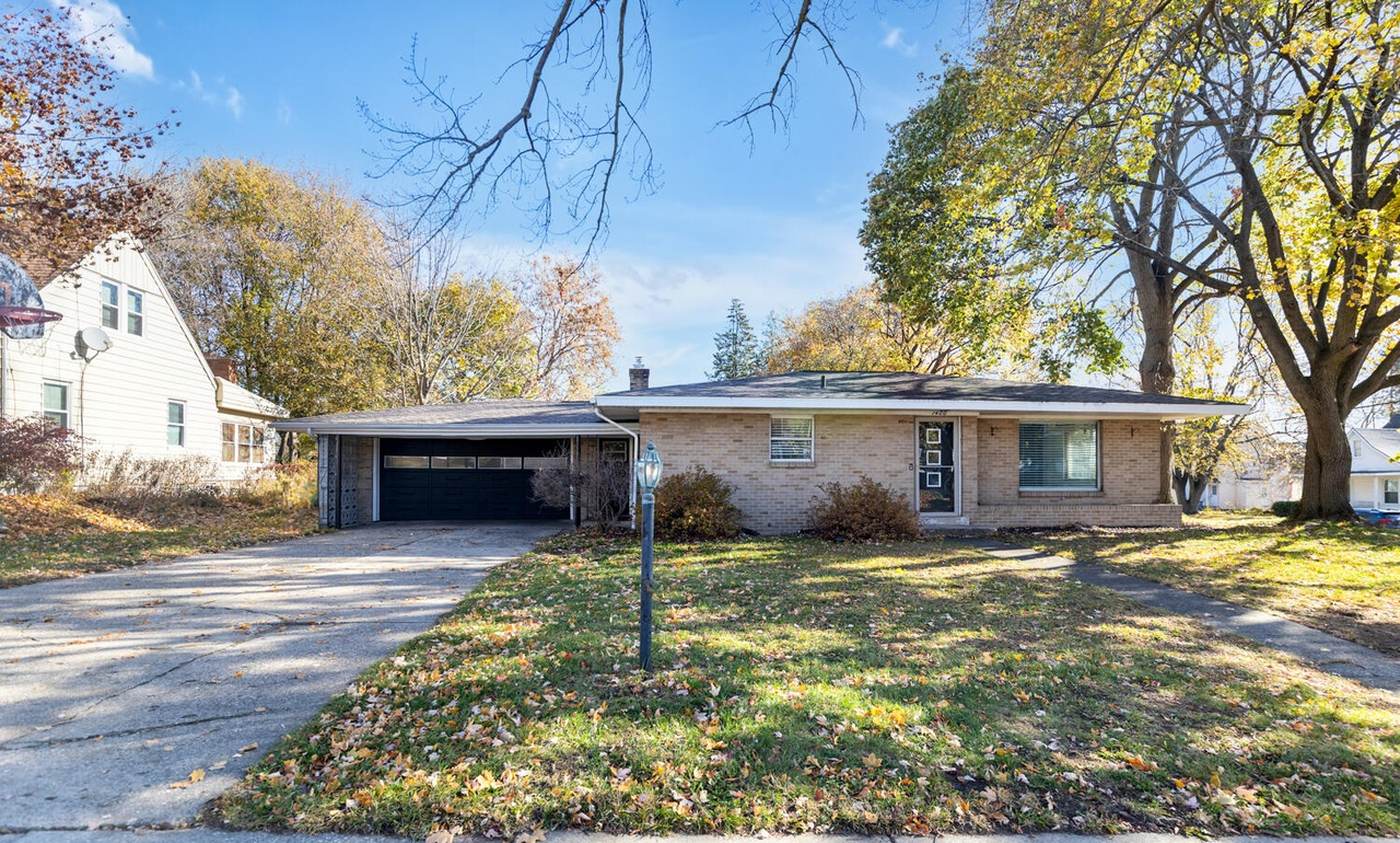
What is your Grand Rapids home worth today?
Curious what your home could be worth, and how much equity you have to work with? Use my free home-value tool below. Enter your address for an instant Grand Rapids estimate you can track over time, at no cost and no obligation.
Reverse Mortgage Calculator
Let’s calculate how much equity you can unlock.
A reverse mortgage is a loan. The balance grows over time and is repaid when the last borrower leaves the home. You keep the title, and you remain responsible for property taxes, homeowners insurance, and upkeep.
Aging in place in Grand Rapids with a reverse mortgage: what it really costs
Grand Rapids blends a low cost of living with strong home equity growth, making it one of Michigan’s most reverse-mortgage-friendly markets for retirees who want to age in place without a mortgage payment.
The oldest housing stock in the state, and what that means
Start here, because it decides everything else. Grand Rapids has a median build year of 1953, 75.7% of homes predate 1980, and 37.5% were built before 1940 (Census ACS). Kent County as a whole has a median of 1977, so the suburbs are a full generation newer. A 1920s house on the near east side is a beautiful thing and it was not built for anyone with a walker: doorways under 32 inches, a step up at the entry, and the only full bath at the top of a staircase too narrow for a lift.
That is the case for planning ahead rather than waiting for the fall that forces the decision.
Grand Rapids is genuinely affordable, which cuts both ways
The federal Bureau of Economic Analysis puts the Grand Rapids metro at 95.5 against a national 100, with housing at 86.6 (2024 regional price parities, housing measured on rents). Compared with Ann Arbor, the median listing price runs about 14% lower for a comparable academic-medical city. What that affordability means for a reverse mortgage is simple arithmetic: a lower home value means a smaller principal limit. It also means the fixed costs you are trying to cover are lower. Both are true, and which one matters more depends on your numbers.
A reverse mortgage does not uncap your taxable value
This is the question I get most often in Michigan and the fear is understandable. Under Proposal A, taxable value can only rise by the lesser of 5% or inflation until the property changes hands, and a long-held Grand Rapids home may be assessed far below market. Michigan’s State Tax Commission guidelines are explicit that the beginning of a mortgage, the end of a mortgage, and an assignment of a mortgage are not transfers of ownership (MCL 211.27a). A reverse mortgage is a security interest and you keep the title, so originating one or paying it off is not the event that uncaps you. Selling is. If your assessor tells you otherwise, ask them to point at the transfer-of-ownership guidelines.
The Principal Residence Exemption is worth exactly 18 mills
In the City of Grand Rapids the 2025 certified rate is 33.1249 mills with the PRE and 51.1249 without it. That is an 18-mill difference, and on a $150,000 taxable value it is roughly $2,700 a year. You claim it with Form 2368 through the city assessor, and the deadlines are June 1 and November 1. Because a HECM does not change ownership or occupancy, your PRE carries on. Just do not forget to rescind it if you ever stop living there.
How to claim the Principal Residence Exemption
Three more programs worth checking
The Homestead Property Tax Credit covers homeowners with taxable value under $165,400 and household resources under $71,500, with a maximum credit of $1,900 and seniors receiving the full computed amount at the lowest income bands. Reverse mortgage proceeds are loan advances, and Michigan’s instructions exclude loan proceeds from household resources, so a draw should not reduce this credit. The summer tax deferral (Form 471) lets owners 62 and older with household income under $40,000 push the July bill to February 14 with no penalty or interest. And the Home Heating Credit is filed separately by September 30 and pays an average of roughly $200 straight to your utility, whether or not you file an income tax return.
Apply for the Grand Rapids hardship exemption
One caution on the city poverty exemption
- Grand Rapids also grants a hardship property-tax exemption, but it carries a household asset cap of $9,642 that explicitly counts bank accounts.
- A reverse mortgage lump sum sitting in savings would count against that cap. An undrawn line of credit is not a bank balance.
- The city guidelines do not address reverse mortgages directly, so if you are receiving or applying for this exemption, talk to the assessor before you draw. Do not assume either way.
Corewell, Trinity Health, and an economy built on care
The Medical Mile is not marketing. Health care and social assistance employs about 88,100 people in the Grand Rapids metro, roughly 14% of all jobs (BLS, June 2026). Corewell Health Butterworth Hospital downtown and Trinity Health Saint Mary’s give you cardiac, orthopedic and geriatric care without leaving the city. For an older homeowner deciding whether to stay, proximity to that concentration is worth more than most people price in.
Cost of care in Michigan
Worth saying plainly: those numbers sit right on the national medians of $6,200 a month and $35 an hour. Michigan is affordable for housing and it is not cheap for care, which is exactly the gap a reverse mortgage is often used to close. Area Agency on Aging of Western Michigan is the place to start, and the Kent County Senior Millage funds 48 services through 32 agencies for residents 60 and older, from meal delivery to transportation. Voters approved it in 2022 and it raises over $15 million a year. Very few counties have anything like it.
Michigan income tax on retirement income
Michigan is a flat 4.25%, and under the retirement tax phase-out most pension, 401(k), IRA and Social Security income is fully exempt beginning with the 2026 tax year. HECM proceeds are loan advances rather than income, so they are not taxed and they do not affect that exemption.
Making the house work: local help that is not full price
Nationally a walk-in shower averages about $9,000, a tub-to-shower conversion runs $1,200 to $8,000, grab bars are $100 to $500 installed, and a straight stair lift averages roughly $7,050. Locally, a full bathroom remodel through a Grand Rapids contractor runs $30,000 to $60,000 and a bathroom addition $25,000 to $50,000. Before you pay any of that, check Home Repair Services of Kent County. They install ramps, grab bars, handrails and bathroom modifications for income-eligible Kent County homeowners on a sliding-scale co-payment. It is not free, but it is a fraction of market, and it is the first call I make for clients on a tight budget.
Snow is a legal obligation here, not just an inconvenience
Grand Rapids averages 77.6 inches of snow across about 51 days a year. Lake effect makes it frequent rather than dramatic. Here is the part people do not think about until it happens: city ordinance requires you to clear your sidewalk within 24 hours of a snow event, and if a city contractor has to do it the minimum charge is $183 with an average invoice around $290. For an owner in their eighties, that is fifty-one occasions a year when someone has to shovel or someone gets billed. A season of contracted snow removal is a real line item, and it is one of the more common things a reverse mortgage line of credit ends up covering.
Getting around, and one tip that saves real money
Grand Rapids scores 56 on Walk Score city-wide, but that average hides the actual answer. East Hills is 89, Midtown 87, Heritage Hill and Eastown 83. If walkability matters to your next twenty years, the neighborhood matters far more than the city. The Rapid charges riders 65 and older $0.85 against a $1.75 base fare. For GO!Bus paratransit, the fares are counterintuitive and worth knowing: an ADA-certified rider pays $3.50 one way, while a non-disabled rider aged 65+ pays $8.00. If you have a mobility limitation that qualifies, get ADA certified rather than riding on the age-65 rate. It costs less than half. Grand Rapids joined the AARP age-friendly network in 2016 and approved its action plan in 2024.
No Michigan estate or inheritance tax
Michigan charges no estate tax and no inheritance tax, so whatever equity remains after a HECM balance is repaid passes to your heirs without a state bill attached. The loan is non-recourse, meaning they can never owe more than the home is worth.
See how much equity your Grand Rapids home could unlock →
Sources: Zillow; U.S. Census ACS (B25034/B25035, B01001); BEA Regional Price Parities 2024; Kent County 2025 Certified Property Tax Rates; Michigan Dept. of Treasury (PRE, MI-1040CR, Form 471, Home Heating Credit); Michigan State Tax Commission Transfer of Ownership Guidelines (MCL 211.27a); City of Grand Rapids 2026 Poverty Exemption Guidelines; Genworth/CareScout Cost of Care; BLS Grand Rapids-Wyoming MSA; NOAA 1991-2020 normals; The Rapid; Walk Score; AARP Livable Communities; Home Repair Services of Kent County; Area Agency on Aging of Western Michigan. Figures are educational, verify your specific numbers before relying on them.
Wondering whether a home is one you could grow old in? Score any home in about 15 minutes, and see how a reverse mortgage can fund the upgrades.
Use the Aging-in-Place ScorecardQuick guide: is a reverse mortgage right for me?
First, answer four short questions, and the guide will point you toward the resource that fits your situation. Of course, it is general guidance for learning, not an approval or a quote, and nothing you tap is stored.
Free guide: Your Home Can Help
My complete guide to reverse mortgages for Michigan homeowners, the retirement squeeze, the myths, your options, real client stories, and what it really costs. No email required.
Learn how reverse mortgages work
Want the full details before we talk?
Reverse mortgage options in Grand Rapids: HECM vs. jumbo
HECM covers most Grand Rapids homes; a proprietary jumbo is built for higher-value homes above the FHA limit and for many condos. For the full side-by-side of HECM, jumbo, HELOC, and HEI, see the reverse mortgage comparison table, or the types of reverse mortgages for a plain-English rundown.
Buying a home? Consider a HECM for Purchase (H4P)
A HECM for Purchase lets you buy your next home using a reverse mortgage, so you put down a portion and finance the rest with no required monthly principal-and-interest payment. For a Grand Rapids owner trading an older two-story for a single-level place, it is a clean way to move without taking on a new monthly payment.
How much you can access depends on age, rates, and value. Start your own estimate with the reverse mortgage calculator below.
Full detail, including what you would need to bring at each age, is on the HECM for Purchase page.
How the process works, step by step
Consultation, HUD counseling, application, appraisal, closing, with a three-day right to cancel. Most HECM files fund in 30 to 45 days. Here is how a reverse mortgage works, step by step.
How much a reverse mortgage costs in Grand Rapids
The biggest cost is FHA mortgage insurance: 2% of the home’s value upfront, plus about 0.5% a year on the balance, and that upfront premium funds the FHA guarantee behind the non-recourse protection. On a typical Grand Rapids home at $312K that is about $6,200 at closing, and most of it rolls into the loan. Every fee, itemized.
The trade-offs (the balance grows, you still cover taxes and insurance, and it rewards a longer stay) are the same anywhere. I lay them all out in the pros and cons of a reverse mortgage.
Why work with a mortgage broker, not a bank
A bank sells you one rate sheet. I shop the same loan across more than 30 wholesale lenders, which also opens up the proprietary and jumbo programs a single bank cannot offer, and at Grand Rapids’s $312K median that is often the difference between a HECM and a materially bigger draw. C2 Financial Corporation, NMLS #135622.
What happens to your home and your heirs
You keep the title, and the loan is non-recourse, so you and your heirs can never owe more than the home is worth. Heirs can repay, refinance, or sell and keep the rest, and Michigan has no estate or inheritance tax to complicate it. Timelines and the 95% rule.
What about condos and HOA approval?
A HECM needs the whole project FHA-approved and plenty of Grand Rapids buildings are not. A proprietary loan can often finance one that is not, so check the building before you assume the answer is no. Property and eligibility rules.
The HUD counseling requirement, explained
Federal HUD rules require an independent HUD-approved session before closing, usually low-cost or free, and it has to be finished before I can pull an FHA case number. HUD publishes the approved counselors serving Kent County, so scheduling never has to stall your file. What the session actually covers.
Reverse mortgage FAQs for Grand Rapids homeowners
Can I get a reverse mortgage on a Grand Rapids condo?
A standard FHA HECM needs the whole condo project to be FHA-approved, and many buildings are not. When that is the case, a proprietary reverse mortgage can usually finance a non-approved or non-warrantable condo. I check your specific building first.
How much can I borrow in Grand Rapids?
It depends on the youngest borrower's age, current rates, and your home value. Most Grand Rapids homes fall within the standard FHA HECM limit, while higher-value homes may also fit a jumbo program that exceeds it.
Is HUD counseling required in Grand Rapids?
Yes. You must complete a session with a HUD-approved counselor before closing. It is usually low-cost or free. HUD publishes the approved counselors serving Kent County, so scheduling never has to slow you down.
Do I still pay property tax with a reverse mortgage in Grand Rapids?
Yes. With a reverse mortgage you keep title and remain responsible for property taxes, homeowners insurance, and upkeep. Depending on your age and income you may qualify for senior property-tax relief in Michigan (the programs vary by state and by county), and you can use reverse-mortgage funds to help cover those ongoing costs.
Have a question about a reverse mortgage in Grand Rapids? Call or text me at 720-449-6622.
Grand Rapids neighborhoods and nearby areas I serve
I work with homeowners across the city and greater Kent County. That includes Heritage Hill, Eastown, East Grand Rapids, Creston, West Side, Cascade, Alger Heights, and East Hills. Core ZIP codes include 49503, 49504, 49505, 49506, 49507, 49508, 49512, 49525.
In addition, I also help owners in nearby communities such as Wyoming, Kentwood, East Grand Rapids, Grandville, and Walker, and across Kent County. See every area I cover on my reverse mortgages across Michigan page. Do not see your area? Reach out and ask.
If aging in place is your goal, local resources like Area Agency on Aging of Western Michigan, and Kent County Senior Millage / Senior Neighbors can help you plan, and my free Aging-in-Place Home Scorecard lets you score any Grand Rapids home in about 15 minutes to see how ready it is to grow old in.
Reverse mortgages in nearby communities
About Christopher Gibson
Christopher Gibson (NMLS #1910430) is an independent mortgage and reverse mortgage broker with C2 Financial Corporation (NMLS #135622), serving homeowners across the states he is licensed in. Serving Grand Rapids and nearby communities. Call or text 720-449-6622. More about Christopher.
Read reviews of Reverse Mortgages & Home Loans with Christopher Gibson at C2 Financial
Google Business Profile → · Mortgage Matchup →
*This is general information, not tax advice. Reverse mortgage proceeds are loan advances rather than income and are generally not subject to federal income tax. Consult a CPA or tax advisor about your specific situation. Receiving loan proceeds may also affect eligibility for need-based government benefits such as Medicaid or Supplemental Security Income (SSI).